Alibaba brings Qwen into the physical world: introduces a set of AI models for robot control
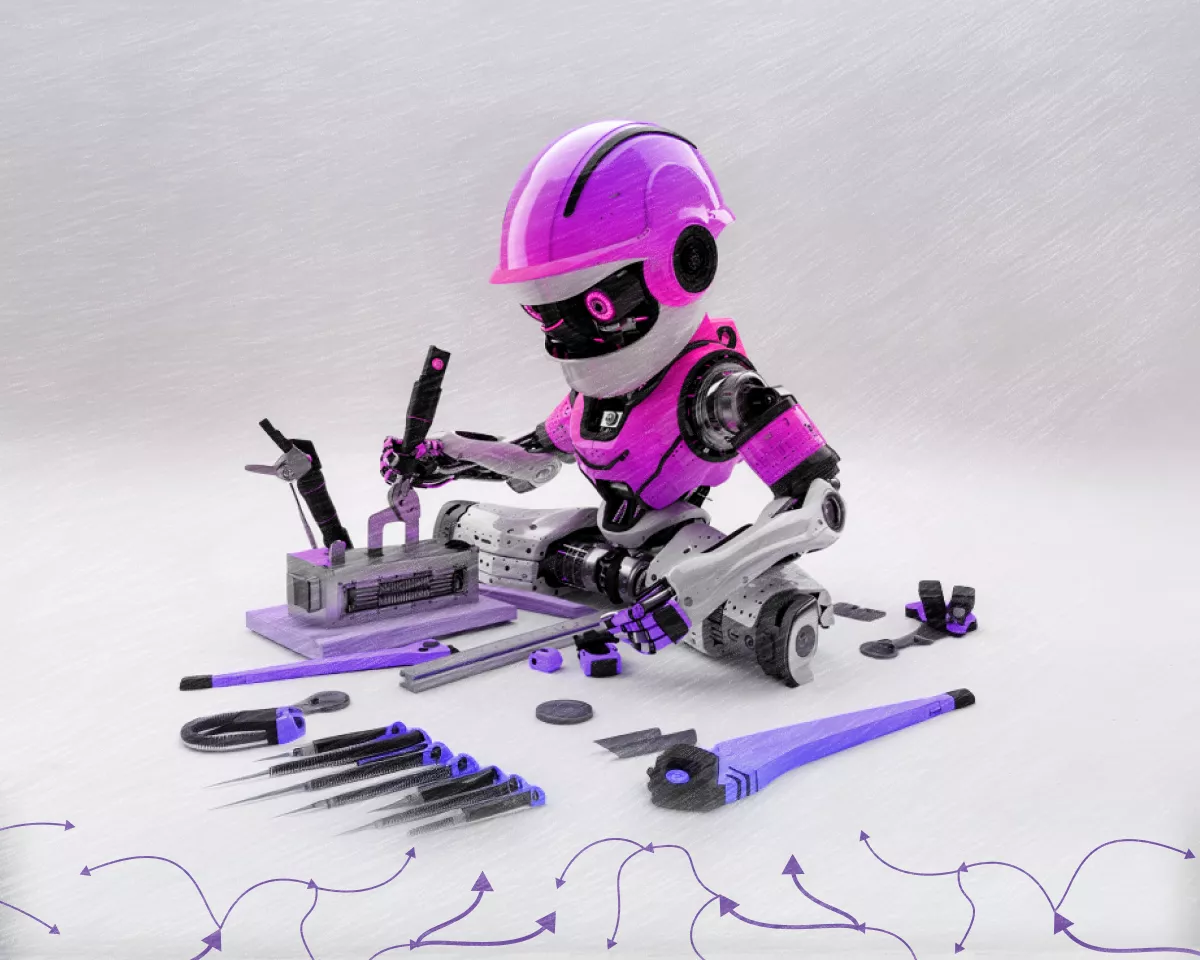
Chinese tech giant Alibaba has taken a significant step toward so-called "Embodied AI" by unveiling the Qwen-Robot Suite. This is not just another language model, but a full-fledged software stack consisting of three specialized foundational models designed to equip robots with the ability to perceive, plan, and act in the physical world. These include Qwen-RobotNav for navigation, Qwen-RobotManip for object manipulation, and Qwen-RobotWorld — a world model that predicts the consequences of actions.
The key difference of this approach from traditional LLMs is that physical agents cannot simply understand text or images. They need to convert natural language commands into precise movements, account for three-dimensional space, object physics, and the limitations of their own sensors. Alibaba Cloud has already launched pilot tests of this suite with corporate clients in the robotics sector.
Qwen-RobotNav: Universal Navigator
The Qwen-RobotNav model, built on the Qwen3-VL base, solves five key navigation tasks within a single architecture: instruction following, goal-oriented movement, object search, target tracking, and autonomous driving. Trained on 15.6 million samples, it demonstrates impressive results: 76.5% success rate on the VLN-CE RxR benchmark and 90% on EVT-Bench. Essentially, it is the "brain" for movement, which can be integrated into larger agent systems where a high-level model sets the task, and Qwen-RobotNav handles its physical execution.
Qwen-RobotManip: Mastery of Interaction
The second model, Qwen-RobotManip, focuses on physical interaction with objects — grasping, moving, and placing. The main innovation here is an attempt to solve the problem of data incompatibility across different types of robots (manipulators, dual-arm platforms, mobile systems). The model learns from a vast dataset exceeding 38,100 hours, including first-person human action videos. The result is first place in the universal model track of RoboChallenge Table30 v1 and, more importantly, robustness to new instructions and skill transfer across different robotic platforms.
Qwen-RobotWorld: Predicting the Future
Qwen-RobotWorld is a text-driven video world model. It takes the current observation and a command, then generates a probable video of how the environment will change. This is critical for planning complex actions and generating synthetic data for training. The Embodied World Knowledge corpus, on which the model was trained, includes 8.6 million video-text pairs and covers over 500 action categories. The model has already achieved first place in the EWMBench and DreamGen Bench benchmarks and, according to the developers, demonstrates high consistency with basic physical laws.
Analytical Commentary: Undoubtedly, the Qwen-Robot Suite is a powerful bid for leadership in the Physical AI segment. However, one should not be deceived: the distance from laboratory benchmarks to real-world work in a warehouse or home is enormous. Sensor noise, mechanical wear and tear, and millions of rare scenarios remain serious obstacles. Alibaba has not yet disclosed either the access cost or the timeline for a public launch, indicating that mass adoption of "smart" robots based on Qwen is still far off. Nevertheless, the very fact of such a "stack" emerging from one of the world's largest cloud providers sets a new direction for the entire industry.