Alibaba integrates AI into the physical world: introduces the Qwen-Robot Suite model stack for robot control
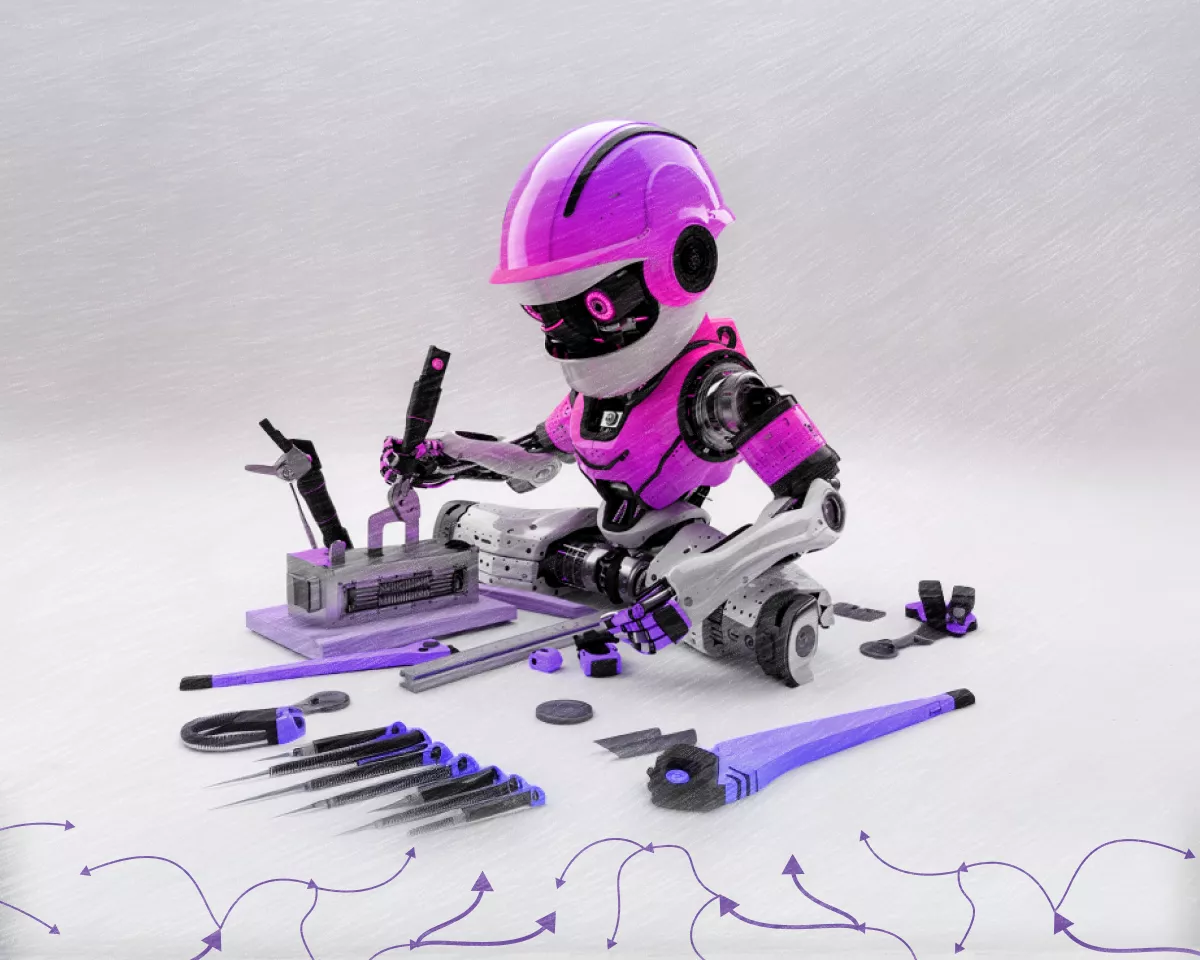
Chinese tech giant Alibaba has taken a significant step towards "Embodied AI" by introducing the Qwen-Robot Suite, a set of foundational models. This complex of three specialized models is designed to address key challenges facing physical robots: navigation, object manipulation, and scene development prediction. This is not about a ready-made robot, but rather a software "brain" that, according to the developers, is intended to become a universal tool for controlling various types of mechanisms.
Large Language Models (LLMs) have already proven their effectiveness in working with text, images, and video. However, this is not enough for robots. They need not only to understand a command in natural language but also to translate it into a sequence of physical actions, taking into account the geometry of space, object properties, and the limitations of their own sensors. It is precisely this problem that Qwen-Robot Suite aims to solve by combining perception, planning, and execution into a single stack.
Qwen-RobotNav: Universal Navigator
The first model in the set, Qwen-RobotNav, focuses on movement. It combines five different navigation tasks: following instructions, moving to a specified point, searching for objects, tracking a target, and elements of autonomous driving. Built on the multimodal model Qwen3-VL, it was trained on 15.6 million data samples related to route planning and visual-language reasoning.
Test results are impressive: the model demonstrates 76.5% success on the VLN-CE RxR benchmark and 90% on EVT-Bench. Alibaba positions Qwen-RobotNav not as an isolated solution, but as an execution module for larger agent systems, where a high-level model sets the task and the navigator handles its physical implementation.
Qwen-RobotManip: Master of Manipulation
The second model, Qwen-RobotManip, is responsible for interacting with objects: grasping, moving, and placing items. The key innovation here is an attempt to solve the problem of heterogeneity among robotic platforms. Different robots (manipulators, dual-arm systems, mobile platforms) use different coordinate systems and command formats. Qwen-RobotManip aims to create a universal representation of actions, allowing skills learned on one type of robot to be transferred to another.
To train the model, a colossal amount of data was collected — over 38,100 hours, including both open robotic datasets and videos of human actions. This allowed Qwen-RobotManip to take first place in the prestigious RoboChallenge Table30 v1 benchmark and demonstrate robustness to new, unfamiliar instructions and objects.
Qwen-RobotWorld: Predictor of the Future
The third model, Qwen-RobotWorld, is a language-driven "video world model." It analyzes the current state of the environment and a textual command, then generates a video predicting how the scene will develop after the action is performed. This approach is critically important for planning complex manipulations, autonomous driving, and creating synthetic data for training robots without the risk of damage in the real world.
The data corpus for Qwen-RobotWorld, named Embodied World Knowledge, includes 8.6 million video-text pairs and over 200 million frames, covering more than 20 robot types and 500 action categories. The model has already taken first place in the EWMBench and DreamGen Bench benchmarks, and has surpassed all open-source alternatives in WorldModelBench and PBench.
Analytical Conclusion
Despite impressive claims and high benchmark scores, Qwen-Robot Suite remains a set of research models, not a finished commercial product. Real-world robot operating conditions are full of "noise," wear and tear, and unforeseen situations that are difficult to simulate. Nevertheless, Alibaba's approach to creating a "full stack" for embodied AI is extremely promising. If the company manages to integrate these models into real production and service scenarios, we will witness a qualitative leap in the development of robotics. However, judging by the lack of specific timelines and pricing, mass adoption and public access are likely still at least several years of intensive testing away.