Alibaba introduces Qwen-Robot Suite: a full-stack AI for controlling robots in the physical world
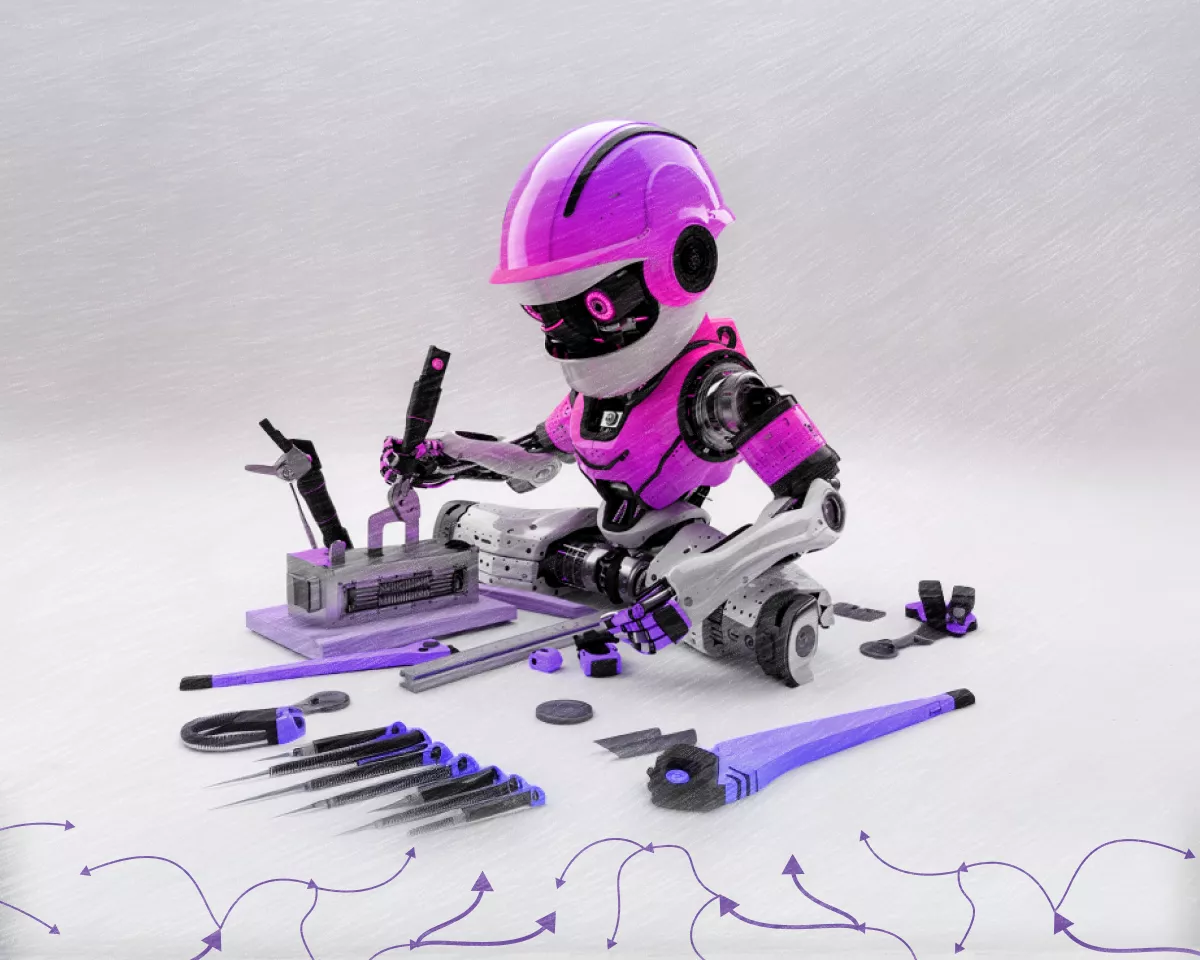
Alibaba has officially announced Qwen-Robot Suite, a comprehensive set of AI models designed for robot control and solving tasks in physical environments. The package includes three key models: Qwen-RobotNav for navigation, Qwen-RobotManip for object manipulation, and Qwen-RobotWorld for scene development prediction. The developers position this project as a "full stack for embodied artificial intelligence."
This is not about ready-made robots, but about software models that allow physical agents to perceive their environment, plan their actions, and execute commands given in natural language. Qwen-Robot Suite is already undergoing pilot testing with a number of Alibaba Cloud corporate clients working in the field of robotics.
Why Alibaba is bringing Qwen into the physical world
Modern large language and multimodal models handle text, images, and video well, but this is not enough for robots. Physical agents need not only to understand a command but also to translate it into movement, taking into account space, object properties, sensor limitations, and possible consequences. Alibaba calls this direction physical AI, or "embodied AI," where the model works not only with digital data but also with physical reality.
Qwen-RobotNav: Universal Navigation
The Qwen-RobotNav model is responsible for navigation and combines five key tasks: following instructions, moving to a given point, searching for objects, tracking a target, and autonomous driving. Built on the basis of Qwen3-VL, it is trained on 15.6 million samples related to route planning and visual-language reasoning.
The results are impressive: 76.5% success rate on the VLN-CE RxR benchmark (navigation by language instructions) and 90% on EVT-Bench (tracking moving targets). Notably, the model can act as a tool for larger agent systems, where a high-level model plans the task, and Qwen-RobotNav handles physical movement.
Qwen-RobotManip: Working with Objects
The Qwen-RobotManip model is designed for physical actions with objects: grasping, moving, and placing items. One of the main problems in robotics is the difference in describing actions by different types of robots. Manipulators, dual-arm platforms, and mobile systems use different coordinates and command formats. Qwen-RobotManip solves this problem by bringing data to a unified representation, allowing skills to be transferred between different devices.
To train the model, over 38,100 hours of data were used, including 11,320 hours of open robotics data, 1,933 hours of first-person human action videos, and 24,808 hours of synthetic demonstrations. The model has already taken first place in the RoboChallenge Table30 v1 in the universal models track and demonstrates robustness to new instructions and unfamiliar objects.
Qwen-RobotWorld: A World Model for Prediction
Qwen-RobotWorld is a video world model driven by natural language. It receives the current observation and a text command, then generates a probable future state of the environment. This can be applied to manipulation, autonomous driving, navigation, and creating synthetic training data.
For training, the Embodied World Knowledge corpus was collected, including 8.6 million video-text pairs and over 200 million frames, covering more than 20 types of robotic platforms and 500 categories of actions. The model took first place in EWMBench and DreamGen Bench, surpassing all open-source counterparts in WorldModelBench and PBench.
Mass-market robots are still far away
Despite impressive announcements, Qwen-Robot Suite remains a set of models for now, not a ready-made consumer platform. Real-world implementation faces sensor noise, drive wear, and a huge number of rare scenarios. Many benchmarks are conducted in simulation or limited experimental conditions. Alibaba has also not disclosed the cost of access or the timeline for public launch.
Expert opinion: From a technical standpoint, Qwen-Robot Suite is a significant step forward in the field of embodied AI. However, as with any fundamental models, the key challenge will remain the transition from controlled laboratory conditions to the real world with its chaos and unpredictability. Investors and developers should closely monitor how quickly Alibaba can scale these solutions beyond pilot projects.