
The Boundless project, previously focused on zero-knowledge proofs (ZKP) for the Bitcoin network, is making a strategic pivot. The company's management has announced an expansion of its distributed GPU network to support inference tasks for artificial intelligence models. This decision reflects a growing trend toward the convergence of crypto infrastructure and AI computing power.
According to Boundless CEO Shiva Shankar, the company operates a network of approximately 4,000 GPUs. Initially, this network served as a coordinator and verifier, facilitating communication between the Ethereum mainnet, the Base layer-2 network, and Bitcoin. However, developers have now optimized the hardware for AI computing needs.
The Economics of Inference: Cheaper Than Cloud Giants
A key argument in favor of the new strategy is cost. Initial benchmark tests show that inference costs on the Boundless network are nearly 50% lower than those of major cloud providers. This is especially noticeable for asynchronous tasks. This result is achieved by utilizing cheaper resources, including consumer-grade graphics cards and equipment previously purchased for cryptocurrency mining and ZKP proof generation.
The Role of the ZKC Token and the Future of ZKP
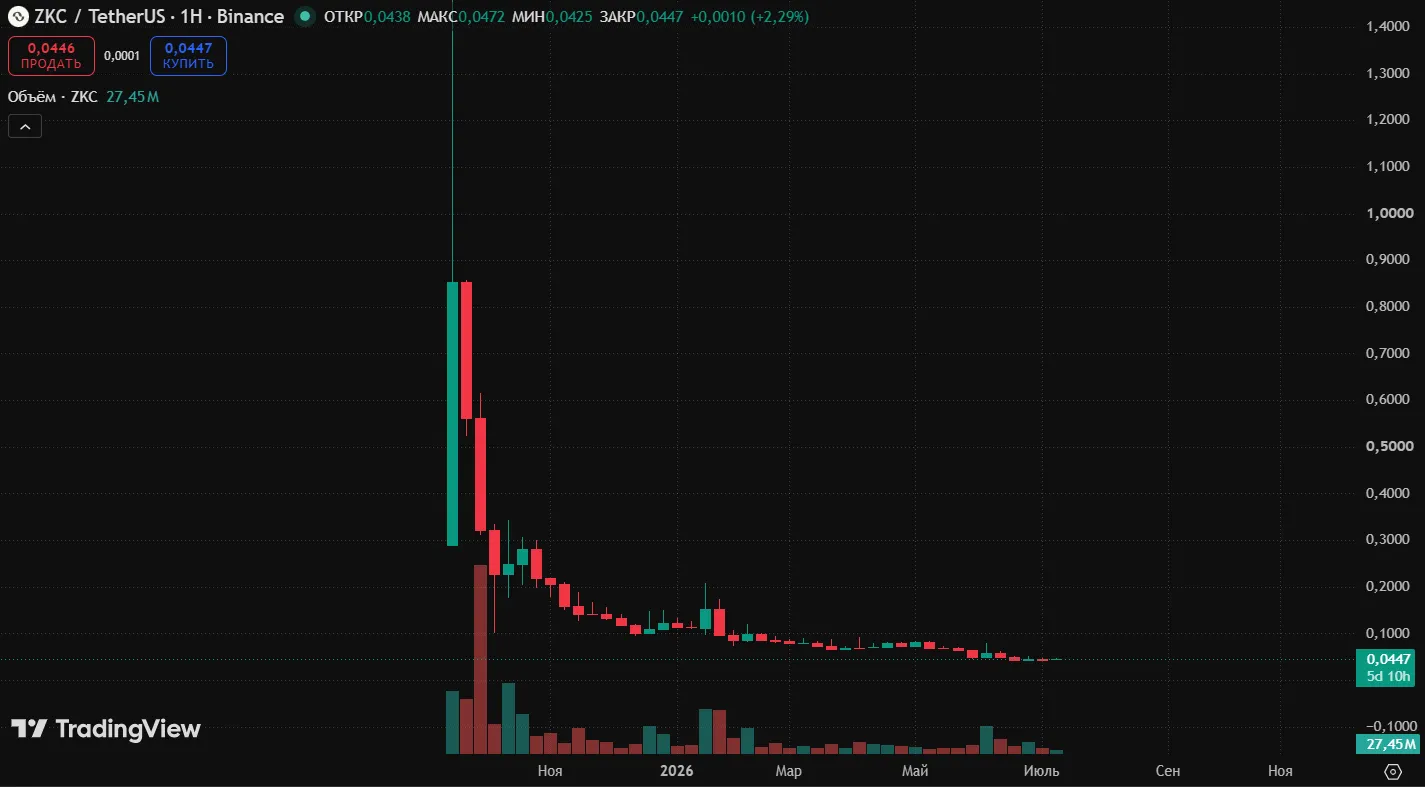
The company has confirmed it will continue working with ZKP, but details of this direction have not yet been disclosed. Meanwhile, the ZKC token is gaining a new, clearer role within the ecosystem. Boundless plans to require AI operators to stake ZKC tokens to join the network. The stake size will be "tied to the operator's potential revenue," creating a mechanism for economic incentives and security.
The Trend Toward AI Computing in the Crypto Industry
Although the Boundless announcement does not include details of its business strategy, the very fact of this strategic shift underscores a fundamental change in the crypto industry. Mining companies and projects previously tailored for Proof-of-Work or ZKP are increasingly redirecting their GPU resources toward AI computing. This is not just hype, but a rational response to the growing demand for cheap computing resources for training and inference of models.
My view: Boundless's decision seems logical and timely. The ZKP computing market is still in its infancy and does not generate enough demand to utilize thousands of GPUs. The shift to AI inference allows monetizing existing infrastructure, while staking the ZKC token creates an additional utility layer. However, the key challenge will remain competition with major cloud providers and specialized AI startups, which are also actively expanding their capacity.