
Boundless, a company originally specializing in zero-knowledge proof (ZKP) computations for Bitcoin, is making a strategic pivot. As CEO Shiva Shankar reported, the managed network of approximately 4,000 graphics processing units (GPUs) is now being optimized for AI model inference tasks. Previously, these resources were used to coordinate and verify the connection between Ethereum, the Base layer-2 network, and Bitcoin.
The Economics of Cheap Inference
The key advantage of the new direction is cost. Initial benchmarks show that the price of inference on the Boundless network is nearly 50% lower than that of major cloud providers. This effect is achieved by using consumer-grade graphics cards and equipment previously purchased for cryptocurrency mining and proof generation. This is especially beneficial for asynchronous tasks that do not require instant response.
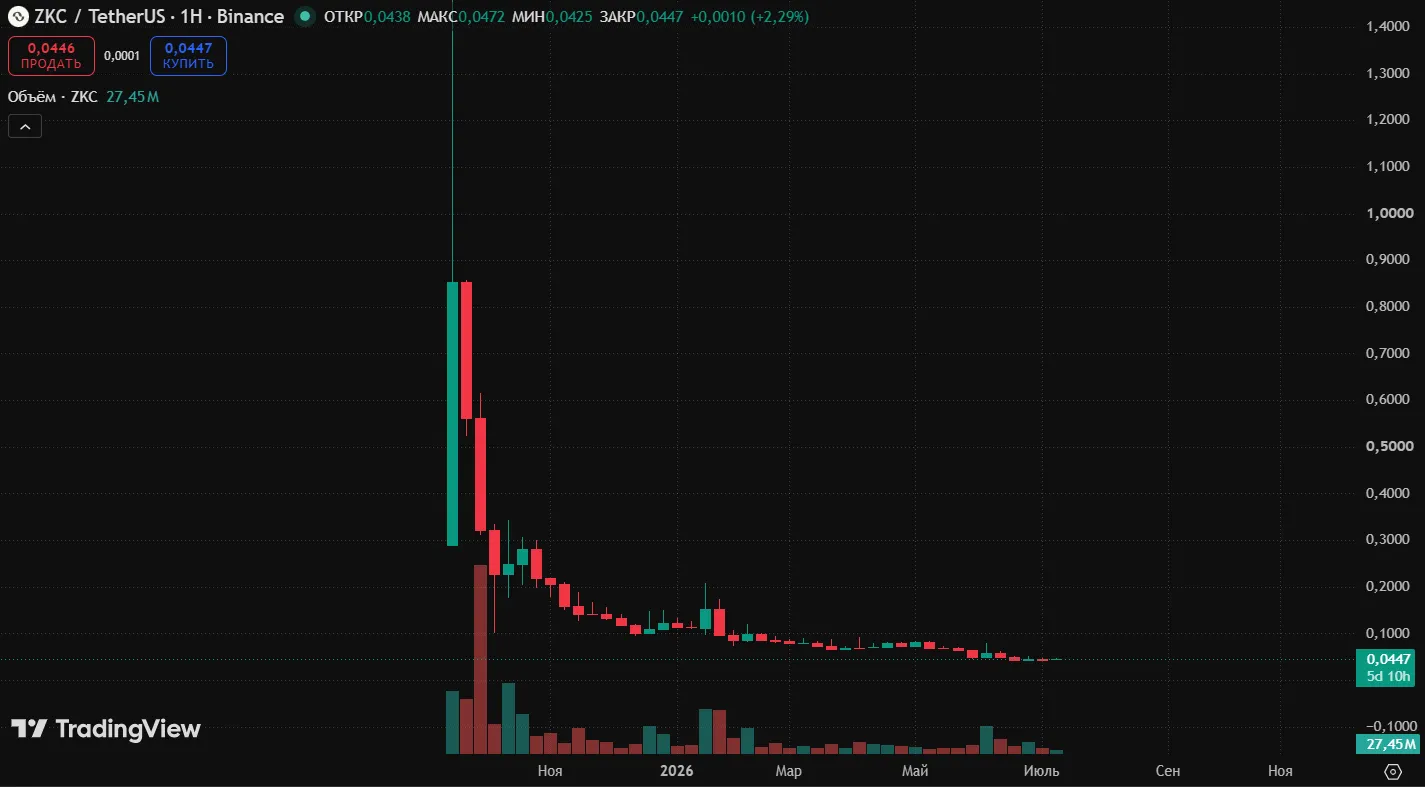
The Role of the ZKC Token
In the new ecosystem, the native ZKC token will gain a utility function. To join the network, AI operators will need to stake the token, with the stake amount tied to potential revenue. This creates an economic incentive and security mechanism, similar to Proof-of-Stake, but for computing power.
Boundless does not disclose details of further work with ZKP, but it is clear that this direction is not being completely closed. However, the current focus is clearly shifting towards AI.
The Trend Towards Convergence
This move is not an isolated case. The market is clearly moving towards the convergence of blockchain infrastructure and AI computing. In July, for example, mining company TeraWulf raised $3.5 billion to build a data center for Anthropic. Miners and ZKP computation providers are increasingly repurposing their resources, understanding that demand for GPUs for AI is growing exponentially, while profitability from traditional mining is declining.
Analyst Comment: Boundless's shift from ZKP to AI inference is not just a change in specialization, but a logical response to market realities. The problem of ZKP for Bitcoin remains niche and technically complex for mass adoption. At the same time, the AI computing market requires cheap and distributed resources, and Boundless, with its ready-made GPU network, can take a strong position here. However, investors should closely monitor how the company balances between the two directions and whether it will lose its expertise in ZKP, which may become in demand in the future.