
The cryptocurrency market continues to record a shift in strategic priorities: Boundless, a startup initially focused on zero-knowledge proofs (ZKP) for the Bitcoin network, has announced a significant expansion of its distributed GPU infrastructure. Now, the key focus is on supporting inference tasks for AI models.
According to management, the company's network comprises about 4,000 graphics processing units. The development team has optimized for artificial intelligence needs, although these resources were originally used to coordinate and verify interactions between Ethereum, the Base layer-2 network, and Bitcoin.
Economics and Performance: A Shift Toward Efficiency
The first benchmark results look impressive. Inference costs on the Boundless network are nearly 50% lower than those of major cloud providers. Savings are achieved through the use of cheaper computing resources, including consumer-grade graphics cards and equipment previously purchased for cryptocurrency mining and proof generation. This difference is particularly noticeable for asynchronous tasks.
Notably, the company is not abandoning work with ZKP, but specific details of this direction have not yet been disclosed. This hints at a possible synergy of technologies: zero-knowledge proofs could be in demand for verifying AI computations.
ZKC Tokenomics: A New Vector
The native ZKC token is gaining a new role in the ecosystem. AI node operators will be required to stake the coin to join the network. The collateral amount will be "tied to potential revenue" — this is a standard mechanism for ensuring validator honesty, but in the context of AI, it looks innovative.
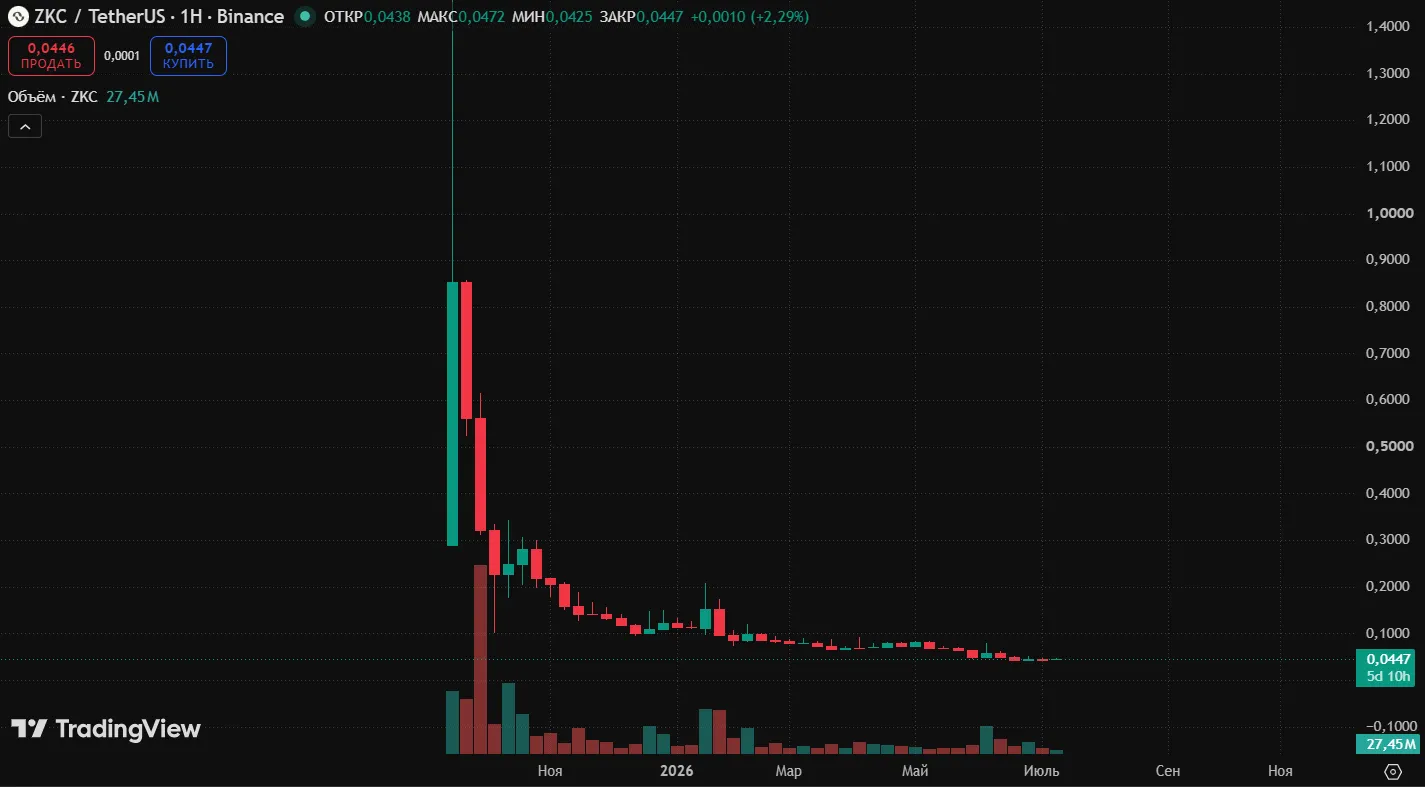
Although the announcement lacks details on business strategy, the very fact of reassessing the direction underscores a global trend: the crypto industry is actively migrating toward AI computations. Recall a recent example — mining company TeraWulf raised $3.5 billion to build a data center for Anthropic.
My expert opinion: Boundless's transition is not a coincidence but a logical response to market demand. Miners and ZKP projects possess a unique resource: cheap and distributed GPU power, which is now critically needed for AI inference. This is not a capitulation but an evolution. The question is whether Boundless can maintain cost competitiveness while ensuring reliability comparable to centralized cloud giants.