
Startup Boundless, originally building a distributed network for computing zero-knowledge proofs (ZKP) in the Bitcoin ecosystem, is making a strategic pivot toward artificial intelligence. The company has officially announced an expansion of its GPU infrastructure's functionality to support AI model inference tasks.
As Boundless CEO Shiva Shankar explained, the network comprises about 4,000 graphics processing units, and the team has already optimized them for AI computing workloads. Initially, this infrastructure served as a coordinator and verifier, connecting Ethereum, the Base layer-2 network, and Bitcoin. Now, the focus is shifting: cheap and accessible inference takes center stage.
Initial benchmark tests show impressive results: the cost of inference on the Boundless network is nearly 50% lower than that of major cloud providers, especially for asynchronous tasks. Such low pricing is achieved by utilizing cheaper computing power, including consumer-grade graphics cards and equipment previously purchased for cryptocurrency mining and ZKP proof generation.
It is important to note that Boundless is not abandoning ZKP entirely — the company will continue working in this direction, although specific details are not yet disclosed. Moreover, the native ZKC token will gain a new utility role in the AI segment: operators wishing to join the network to perform AI tasks will need to stake tokens. The stake size will be "tied to potential revenue," creating a direct economic link between the amount of locked funds and expected profit.
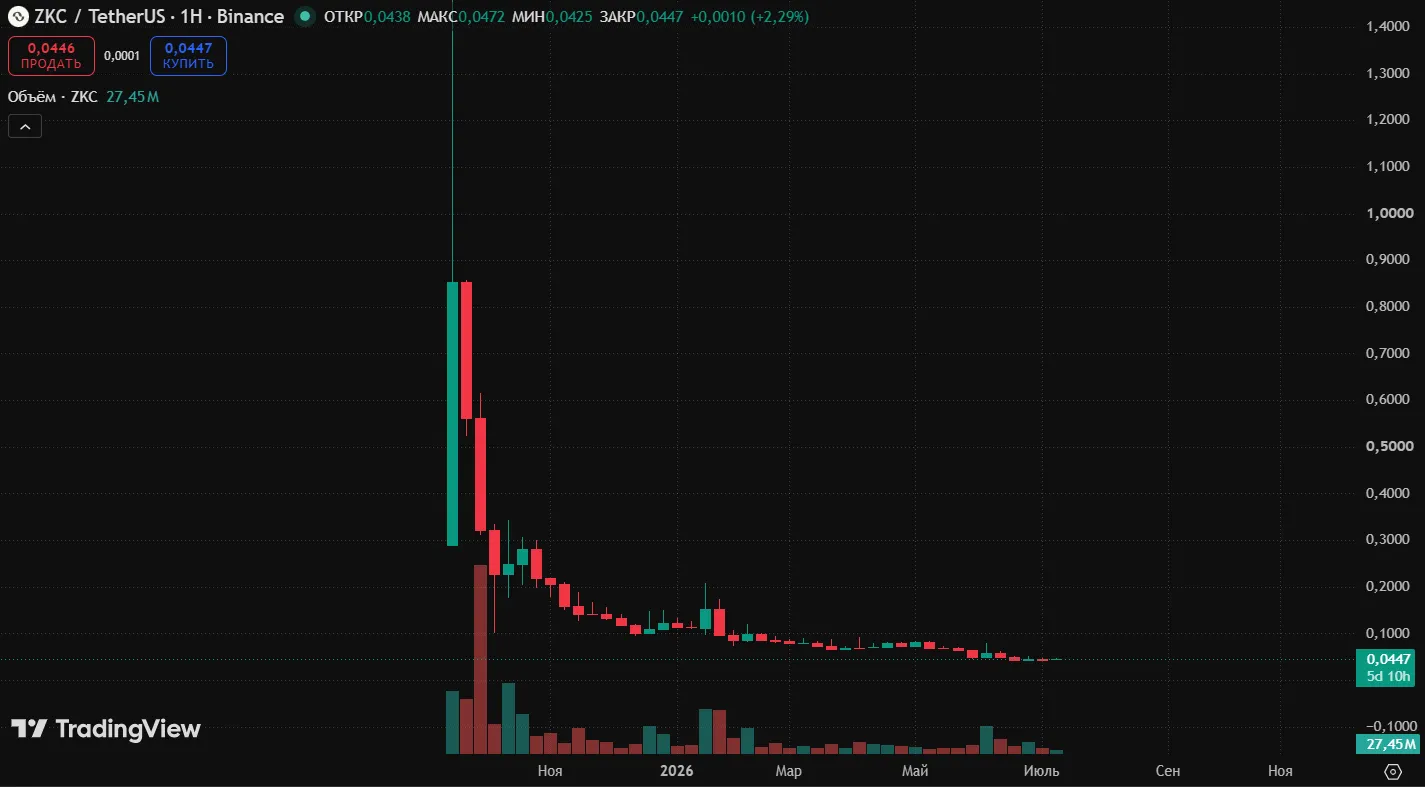
Although the announcement does not detail the business strategy, the very fact of reassessing the direction of activity underscores a general trend in the crypto industry — the migration of computing power toward AI. Earlier, in July, it was reported that TeraWulf raised $3.5 billion to build a data center for Anthropic, which only confirms the systemic nature of this shift.
Analyst's opinion: Boundless's transition from ZKP to AI is not just a change of priorities but a pragmatic response to market reality. Demand for cheap GPU resources for inference is growing exponentially, and a crypto network with already deployed infrastructure can carve out a unique niche by offering prices half those of cloud giants. However, success will depend on whether the team can maintain a balance between decentralization and performance without sacrificing computational quality.