Sunlight has been used for the first time to generate quantum entanglement: a breakthrough in photonic technologies
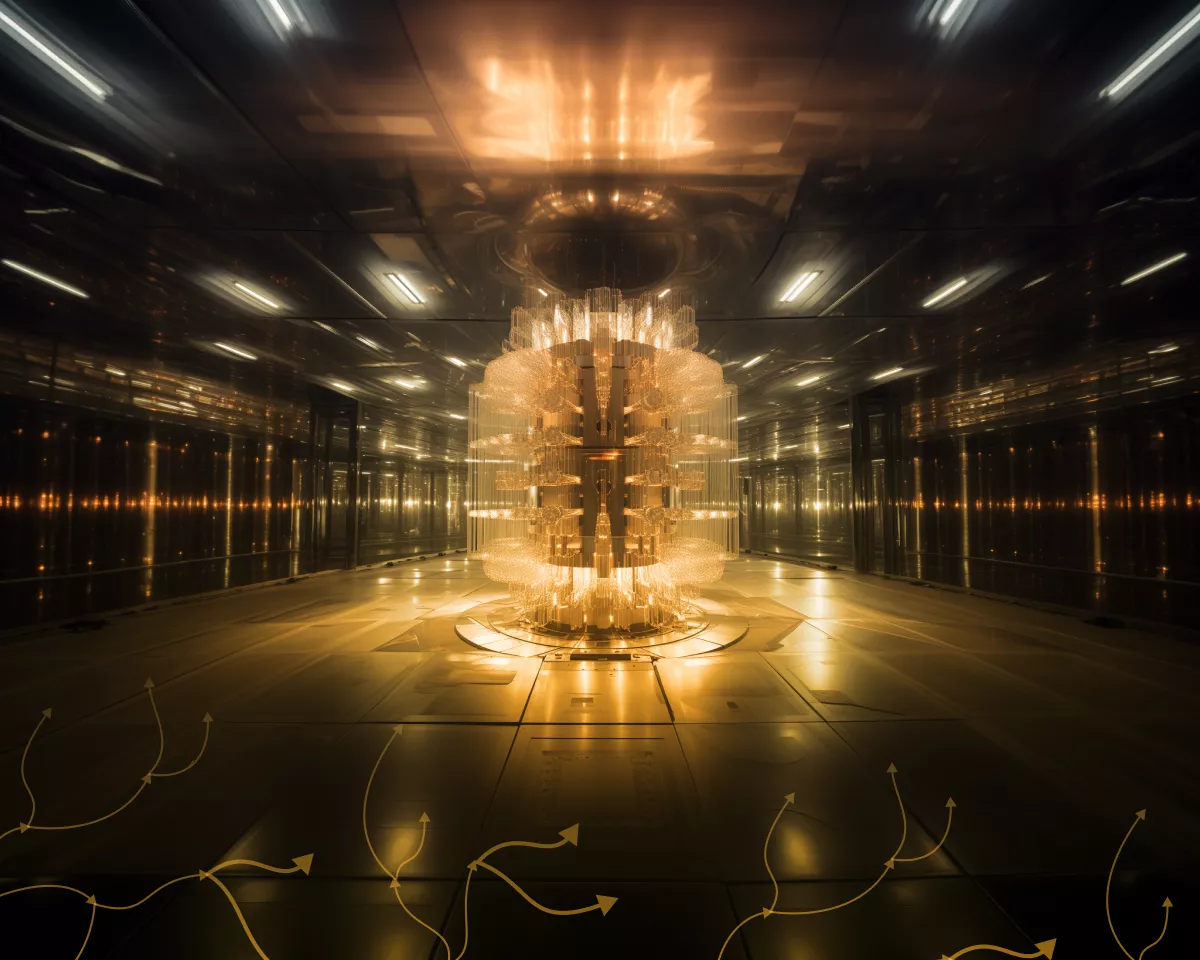
An international team of researchers has demonstrated that concentrated sunlight can create pairs of quantum-entangled photons. The experimental results were published in the authoritative scientific journal Optica.
The work involved specialists from the University of Ottawa and the Max Planck Institute for the Science of Light (Germany). A key aspect of the study is the use of solar radiation as a pump source for spontaneous parametric down-conversion, a standard method for producing entangled photon pairs. This directly challenges the established notion that lasers are the only viable tool for preparing quantum states of light.
Why this changes the game
Previously, lasers were considered practically indispensable due to their high coherence and power density. However, the new work convincingly shows that the spatial and temporal incoherence of sunlight is not a critical limitation for generating polarization entanglement, provided polarization is preserved and the flux is sufficiently focused.
To achieve the result, the team constructed a sunlight concentration system with a collection area of 1.4 m². The light was focused by a Fresnel lens, passed through a glass conical concentrator and multimode optical fiber, and was then directed into a nonlinear crystal.
At the output, polarization-entangled photons were recorded with an accuracy of nearly 94%, and the correlations violated Bell's inequality, which is irrefutable evidence of genuine quantum entanglement. According to the authors' estimates, the normalized generation efficiency is comparable to laser setups.
Practical significance and prospects
This approach could radically reduce the energy consumption of photonic quantum systems. It is particularly valuable for applications where energy resources are extremely limited—specifically, for satellite platforms and interplanetary missions.
In the context of recent assessments by AWS, Nvidia, and NASA regarding the need for supercomputers for quantum systems, this achievement looks especially timely, paving the way for more autonomous and energy-efficient quantum technologies.
My view: this is an elegant solution that could democratize access to quantum experiments. The ability to use a natural light source instead of expensive laser systems is not just a scientific curiosity, but a potential catalyst for new space and field applications of quantum cryptography and sensing.