AI assistant from Google DeepMind: a new approach to automating scientific discoveries
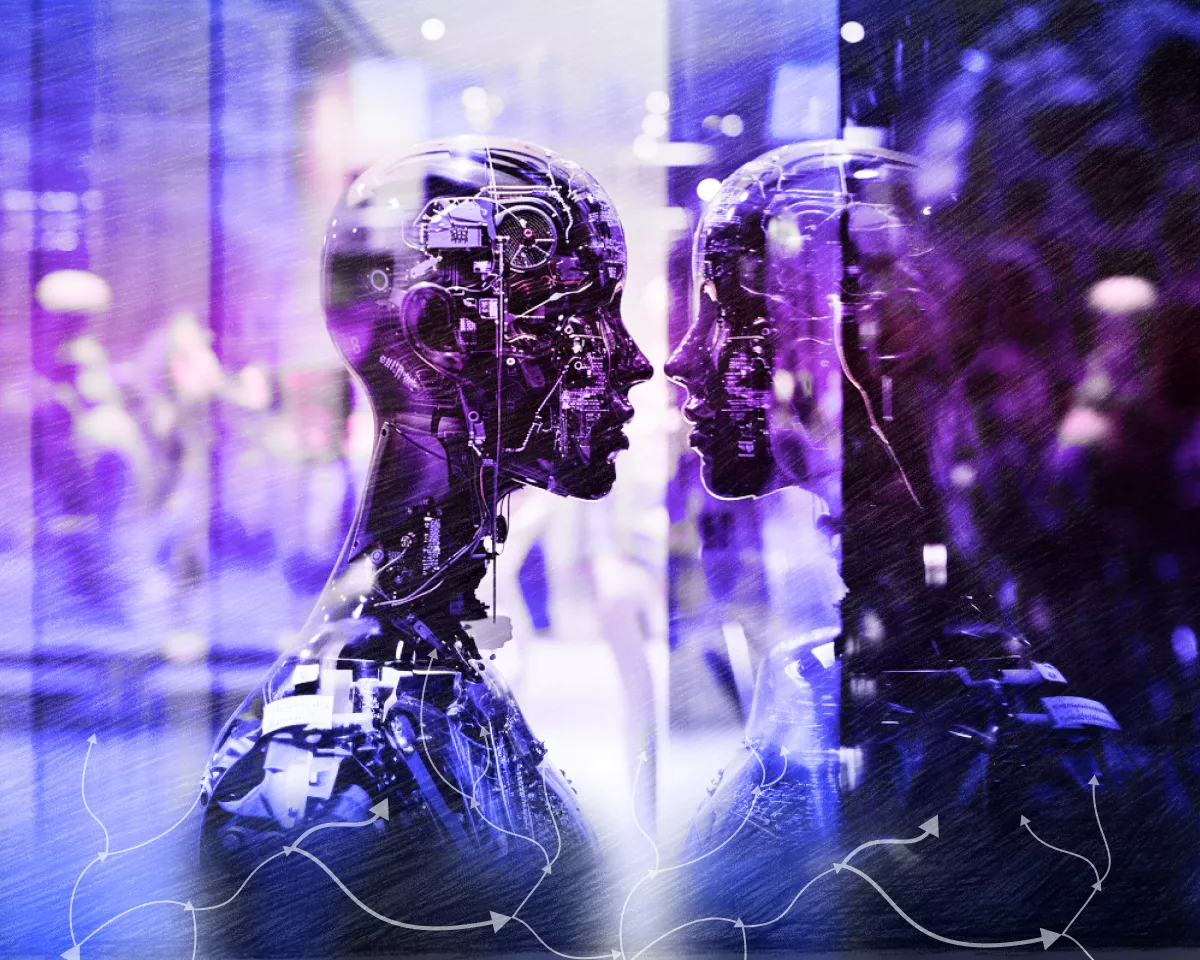
Scientific progress has always been constrained by two key limitations: the speed of hypothesis generation and the cost of testing them. Today, we are witnessing artificial intelligence begin to break down these barriers. At the center of attention is the work of Google DeepMind researcher Kevin Murphy, who has presented the Model Discovery Agent (MDA) system. This is not just another chatbot for scientists, but a full-fledged autonomous agent capable of driving the cycle of scientific discovery without constant human intervention.
The architecture of MDA is fundamentally different from typical machine learning tools. The system does not merely analyze static data—it actively generates possible mechanisms for the phenomena under study, independently determines which experiment would be most informative at the current stage, and then adjusts its hypotheses based on the results obtained. This is a closed loop that mimics the reasoning logic of a researcher, but with the difference that the speed of information processing and the scale of option exploration are orders of magnitude beyond human capabilities.
Of particular interest is the empirical testing base. Validation was conducted on tasks from three fundamental fields—physics, chemistry, and biology. According to the author, the results are impressive: MDA demonstrates superiority over existing methods in terms of the efficiency of training models on experimental data. In other words, the agent achieves a more accurate understanding of patterns with fewer conducted experiments, which is critically important for expensive laboratory research.
It is worth emphasizing that this is not about replacing scientists, but about transforming their role. Such agents take on the routine part—hypothesis exploration and experiment planning—freeing up time for humans to interpret qualitative shifts and set global objectives. However, a natural question also arises: how ready are we to trust a "black box" in matters where an error could cost millions of dollars in investment or lead to false scientific conclusions? The transparency of decision-making logic within MDA will remain a key challenge for integrating such systems into mainstream science.
My expert assessment: This development marks a transition from using AI as a passive analysis tool to an active agent participating in scientific creativity. In the context of the crypto industry and decentralized science (DeSci), such technologies could become the foundation for creating autonomous research DAOs, where AI agents would formulate and test hypotheses with minimal human involvement. This is not just optimization—it is a paradigm shift.