"Slop-pop": Pitchfork trashed Tyga's AI album — zero score and a wave of criticism
The music landscape continues to be shaken by the integration of artificial intelligence, and another high-profile precedent was not long in coming. Recently, the authoritative publication Pitchfork delivered its verdict on the new album by American rapper Tyga — the record $TARFACE received 0 points out of 10. This event is significant in itself: the last time such a scathing rating was given by the editorial board was back in 2007, for the compilation This Is Next.
The release, which came out on July 31, became the ninth studio album in Tyga's discography, recorded under his alter ego Starface. The conceptual work of ten tracks is inspired by the cult 1983 film "Scarface" and the aesthetics of the 1980s — from synth-pop to funk and R&B. On the day of the release, the rapper talked about working on analog equipment from that era, emphasizing that even the mixing was done on old hardware. However, just a week later, in an interview with VIBE, he admitted to using artificial intelligence, comparing the technology to autotune. According to him, part of the vocal parts was created using the Suno service.
"We definitely used AI as a tool. I know people will get angry at these words, but technology is moving exactly in that direction," Tyga stated.
Pitchfork reviewer Drew Millard did not mince words and dubbed the release "slop-pop." In his analysis, he demonstrated a telling experiment: tags with Tyga's name and 1980s genre markers were loaded into the free generator Treblo. The service produced a track that, according to the critic, sounds almost identical to the material on $TARFACE. At the same time, Millard noted that he is not claiming the album was entirely generated by a machine.
A wave of negativity also swept across other fronts. Already on August 14, renowned music critic Anthony Fantano released a video review of the album, in which, instead of a traditional rating, he placed the label "not music." This decision only fueled the debate about the boundaries of creativity in the era of generative models.
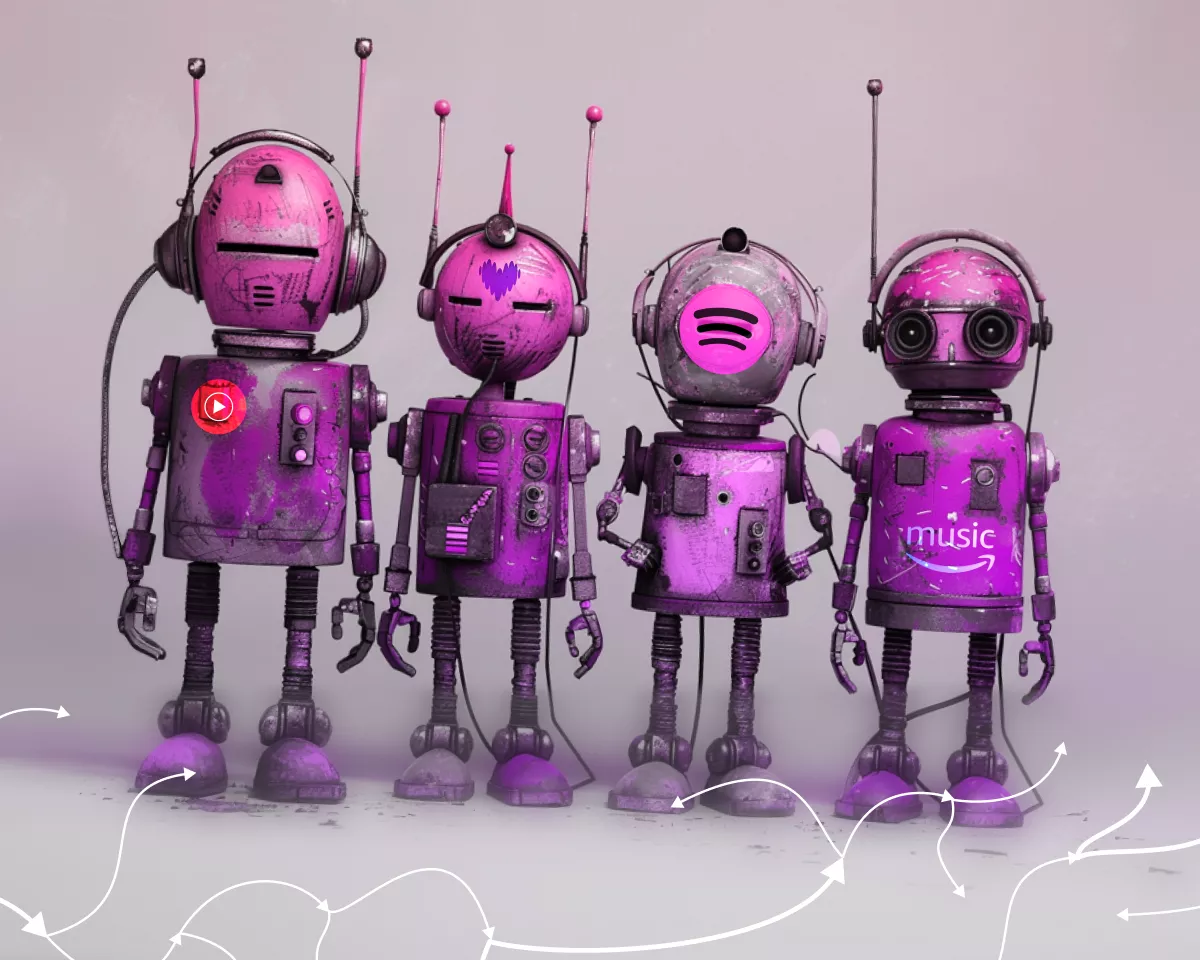
It is worth noting that the Tyga incident is not an isolated case, but a symptom of a systemic shift. Back in April, the French streaming service Deezer reported that AI tracks already account for 44% of all new daily uploads on the platform. The figure is impressive, and it poses a fundamental question to the industry: where does the tool end and the replacement of the artist begin?
My take: The zero rating from Pitchfork is not just an aesthetic verdict, but a signal to the market. The industry stands on the brink of a colossal restructuring: if AI generation becomes mainstream without clear rules and labeling, we risk getting a stream of homogeneous content that will devalue the very idea of authorial expression. Tyga may sincerely believe in evolution, but so far it is an evolution toward the degradation of artistic value.