Alibaba brings Qwen into the physical world: introduces an AI model stack for robot control
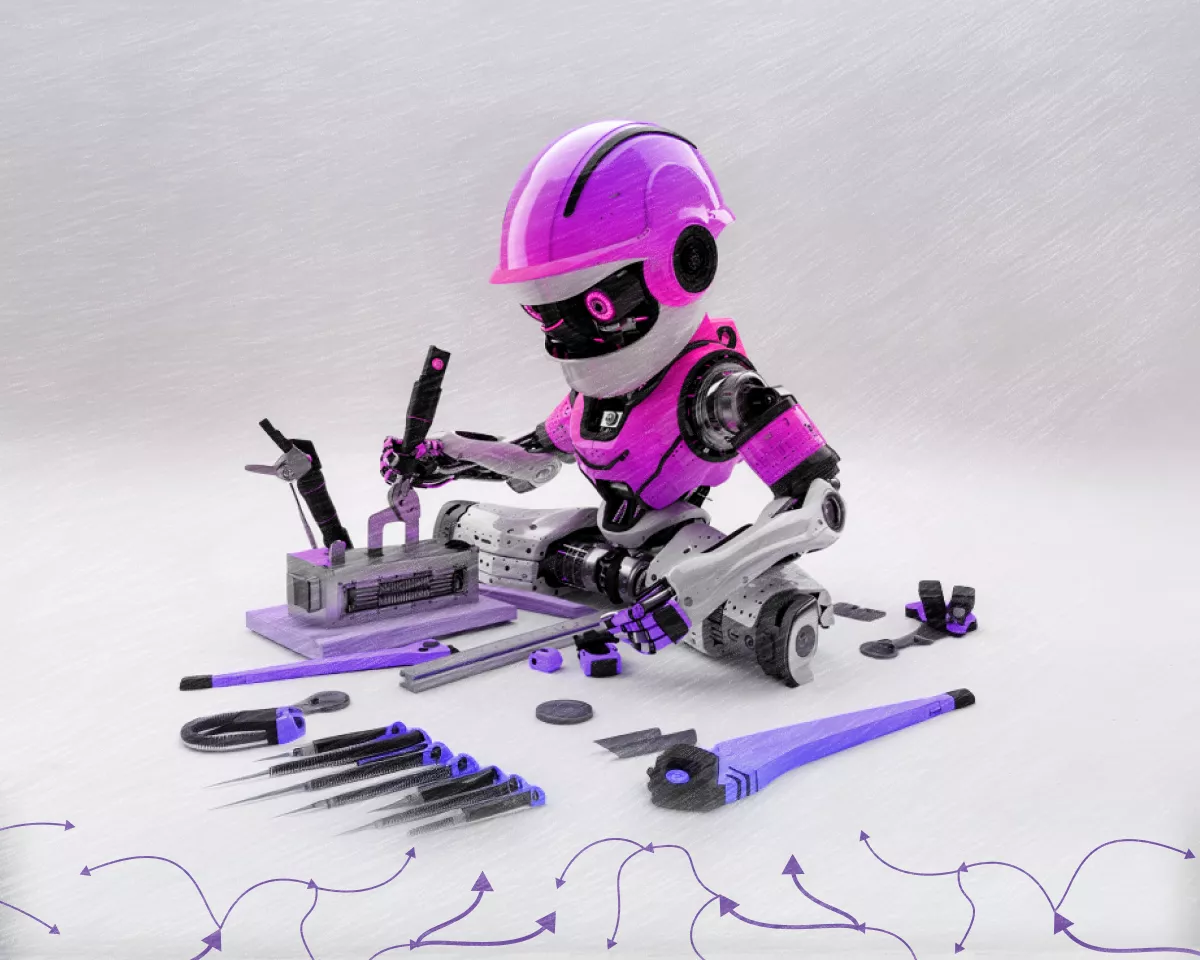
Chinese tech giant Alibaba has made a strategic breakthrough in robotics by unveiling the Qwen-Robot Suite — a comprehensive set of foundational artificial intelligence models designed to control physical agents. This move marks a transition from purely digital LLMs to so-called "embodied AI," where AI learns to interact with the real world.
The suite includes three key models: Qwen-RobotNav for navigation, Qwen-RobotManip for object manipulation, and Qwen-RobotWorld for scene development prediction. Unlike traditional language models that operate with text and images, these systems must perceive space, plan trajectories, and execute natural language commands in real-world conditions. The Suite is already undergoing pilot testing with Alibaba Cloud's corporate clients in the robotics sector.
Five navigation tasks in one model
The Qwen-RobotNav model, built on Qwen3-VL, addresses a wide range of tasks: from following instructions and moving to a specified point to object search, target tracking, and autonomous driving. It has been trained on 15.6 million samples related to visual-language reasoning. The results are impressive: 76.5% success rate on the VLN-CE RxR benchmark and 90% on EVT-Bench. This allows the model to serve as an "engine" for larger agent systems, where a high-level planner sets the task and Qwen-RobotNav handles physical movement.
Universal manipulator and world model
Qwen-RobotManip tackles one of the most challenging problems in robotics — data heterogeneity. Different robots (manipulators, dual-arm platforms, mobile systems) use various coordinate systems and command formats. The model unifies this data into a common representation, learning from over 38,100 hours of data, including 11,320 hours of open robotic data and 24,808 hours of synthetic demonstrations. The result is first place in RoboChallenge Table30 v1 and robustness to new instructions and unfamiliar objects.
Qwen-RobotWorld is a video world model driven by natural language. It predicts how a scene will change after a given action, which is critical for planning and generating synthetic training data. The Embodied World Knowledge corpus includes 8.6 million video-text pairs and over 200 million frames, covering 20 types of robotic platforms. The model achieved first place in EWMBench and DreamGen Bench, demonstrating high consistency with physical laws, including gravity and mass conservation.
My analysis: Alibaba is betting on creating a universal "brain" for robots, which is a logical continuation of the LLM race. However, the path from impressive benchmarks to mass adoption in the real world, with its sensor noise and rare scenarios, remains extremely challenging. For now, this is more of a powerful tool for developers rather than a ready-made product for consumers.