Alibaba brings AI into the physical world: unveils the Qwen-Robot Suite model stack for robot control
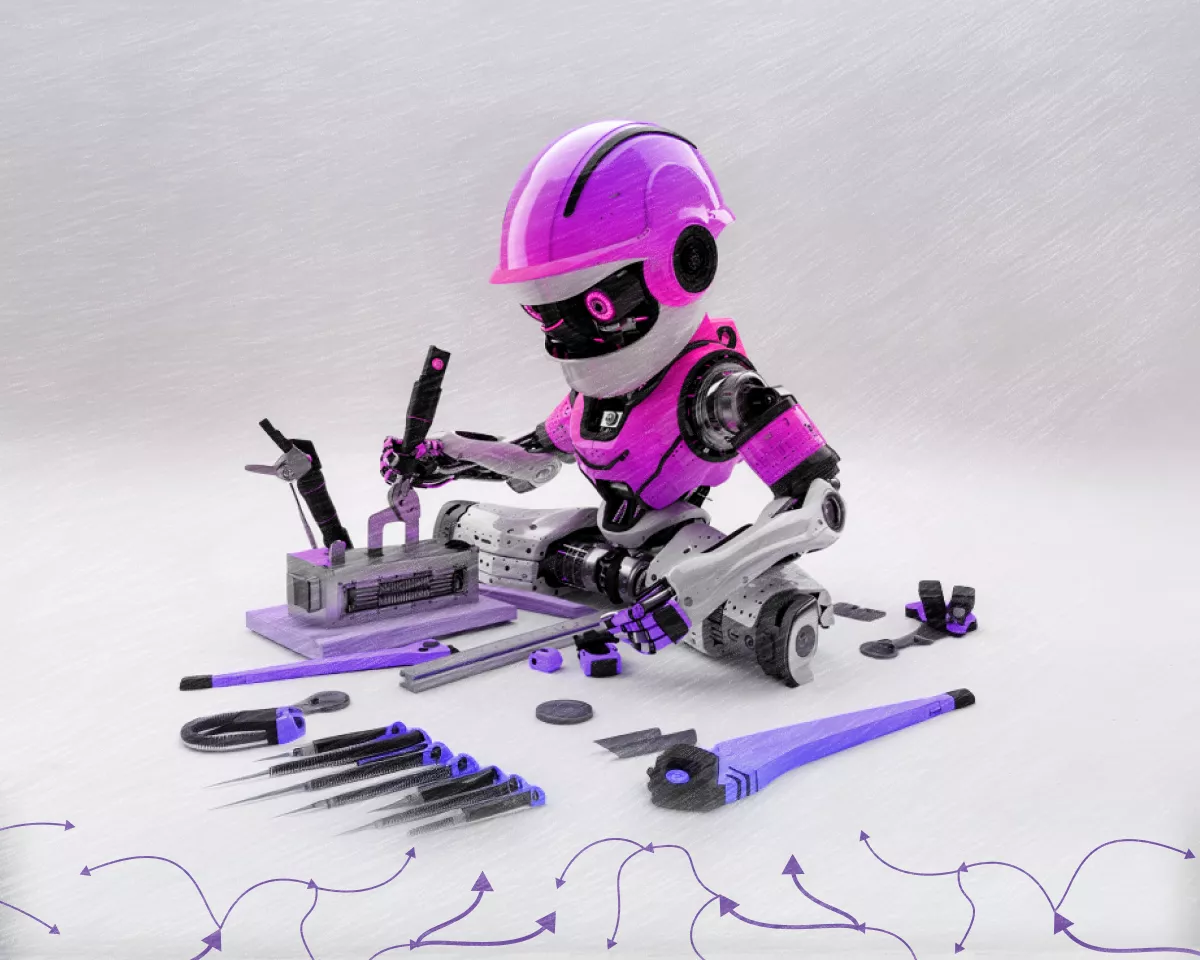
Alibaba Cloud has taken a significant step in the development of Physical AI by introducing Qwen-Robot Suite. This is not just another language model, but a full-fledged stack of three specialized models, each solving a specific robotics task: navigation, object manipulation, and physical scene prediction. The Qwen team calls this project a "full stack for embodied intelligence."
The essence of the breakthrough is that large language models (LLMs) already work excellently with text, images, and video, but this is insufficient for interacting with the real world. Robots need not only to understand a command in natural language but also to translate it into physical action: moving, grasping, accounting for gravity and object properties. Qwen-Robot Suite is designed to bridge this gap between the digital and the physical.
Qwen-RobotNav: Universal Navigator
The first model in the stack, Qwen-RobotNav, is built on Qwen3-VL and serves as a universal solver for five types of navigation tasks: instruction following, point-to-point movement, object search, target tracking, and autonomous driving. The model is trained on 15.6 million samples related to visual-language reasoning.
The results are impressive: 76.5% success rate on the complex VLN-CE RxR benchmark and 90% on EVT-Bench. In real-world scenarios, this means a robot can not only move around but also, for example, find a lost item in an office and provide visual evidence to the user. Qwen-RobotNav can function as an executive module for larger agent systems, where a high-level model plans the task and this model handles the movement.
Qwen-RobotManip: Master of Manipulation
The second model, Qwen-RobotManip, addresses one of the key problems in robotics—hardware heterogeneity. Different robots (manipulators, dual-arm platforms, mobile systems) use different coordinate systems and command formats. Qwen-RobotManip attempts to create a unified representation, allowing skills to be transferred between different types of robots.
Training utilized over 38,100 hours of data, including 11,320 hours of open robotics data, 1,933 hours of human action videos, and 24,808 hours of synthetic demonstrations. The model has already taken first place in RoboChallenge Table30 v1 and demonstrates robustness to new instructions and unfamiliar objects.
Qwen-RobotWorld: Future Predictor
The third model, Qwen-RobotWorld, is a text-driven video world model. It receives the current observation and a command, then generates the likely future state of the environment. This is critically important for action planning and generating synthetic data for training.
The Embodied World Knowledge corpus, on which the model was trained, includes 8.6 million video-text pairs and over 200 million frames, covering 20 types of robots and 500 action categories. Qwen-RobotWorld has already achieved first place in the EWMBench and DreamGen Bench benchmarks, and has surpassed all open models in WorldModelBench and PBench, demonstrating a high understanding of physics (motion, gravity, liquids).
My analysis: Qwen-Robot Suite is a strategically sound move. Alibaba is not trying to create a toy robot but is building a fundamental platform for the future. However, mass adoption is still far off. Real-world conditions are full of noise, wear and tear, and non-standard situations that simulators do not account for. Nevertheless, it is precisely such "stacks" that are the key to a future where AI not only talks but also acts.