Alibaba launches Qwen-Robot Suite: a full-stack AI for managing physical robots
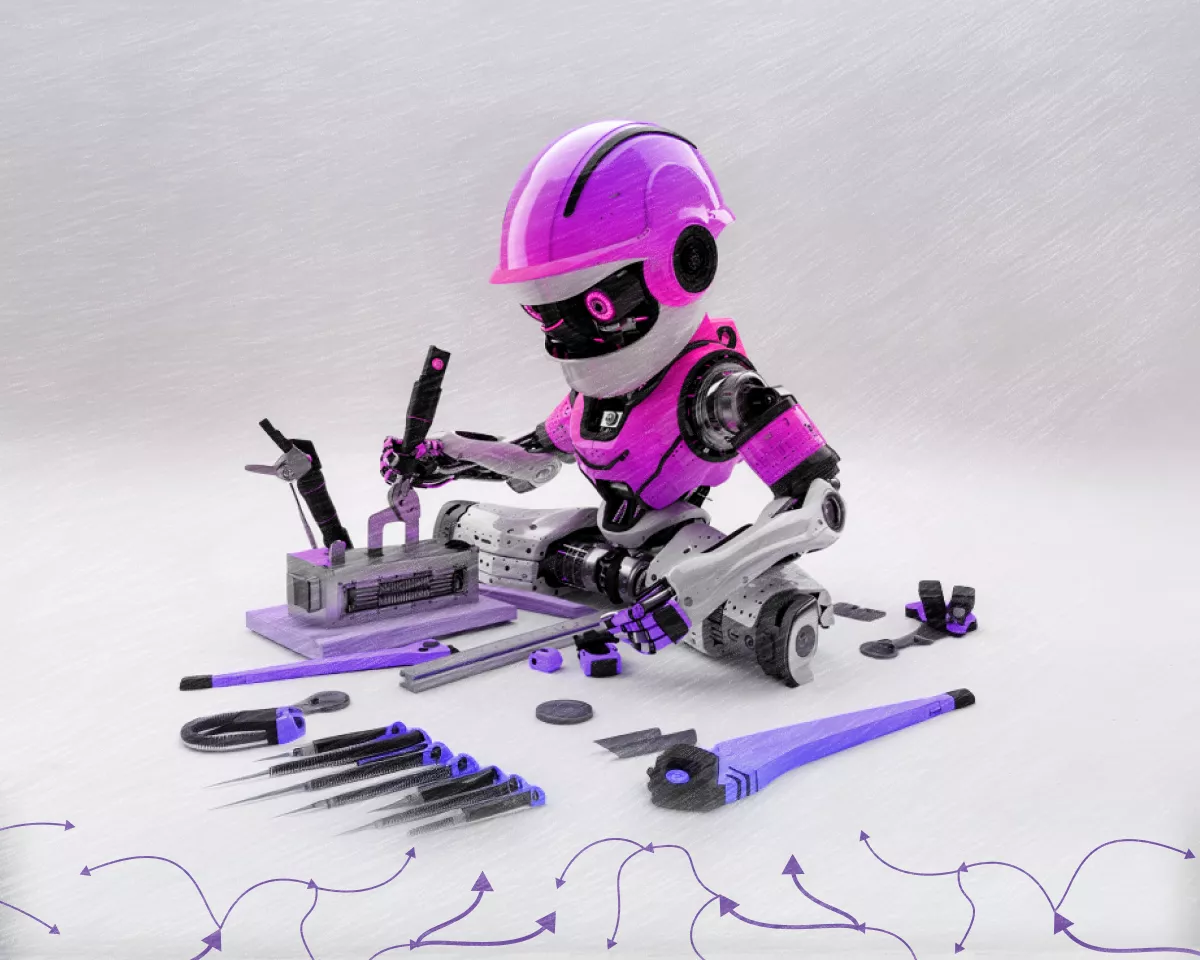
Alibaba Cloud has introduced a comprehensive solution, Qwen-Robot Suite — a set of foundational AI models designed for controlling robots in physical environments. This stack includes three key models: Qwen-RobotNav for navigation, Qwen-RobotManip for object manipulation, and Qwen-RobotWorld for scene development prediction. The project is positioned as a "full stack for embodied artificial intelligence," integrating perception, planning, and action execution.
This is not just another language model update. Alibaba is betting on physical AI — a field where AI must not only process text and images but also interact with the real world. Qwen-Robot Suite is already undergoing pilot testing with Alibaba Cloud's corporate clients in the robotics sector, indicating the seriousness of the company's intentions.
Qwen-RobotNav: Universal Navigation
The Qwen-RobotNav model, built on Qwen3-VL, combines five types of navigation tasks: instruction following, movement to a specified point, object search, target tracking, and autonomous driving. It is trained on 15.6 million samples related to route planning and visual-language reasoning.
The results are impressive: 76.5% success rate on the VLN-CE RxR benchmark and 90% on EVT-Bench. The model can act as an executive module within larger agent systems, where a high-level model plans the task, and Qwen-RobotNav handles physical movement.
Qwen-RobotManip: Object Manipulation
Qwen-RobotManip addresses one of the key challenges in robotics — data heterogeneity. Different types of robots (manipulators, dual-arm platforms, mobile systems) use various coordinates and command formats. The model unifies this data into a single representation, enabling skill transfer between devices.
Training utilized over 38,100 hours of data, including 11,320 hours of open robotic data, 1,933 hours of human action videos, and 24,808 hours of synthetic demonstrations. The model ranked first in RoboChallenge Table30 v1 and demonstrated resilience to new instructions and unfamiliar objects.
Qwen-RobotWorld: World Model
Qwen-RobotWorld is a video world model driven by natural language. It predicts scene development after a given action, which is critical for manipulation, autonomous driving, and planning. The Embodied World Knowledge corpus includes 8.6 million video-text pairs and over 200 million frames, covering 20 types of robotic platforms and 500 action categories.
The model achieved top rankings in EWMBench and DreamGen Bench, surpassing all open-source alternatives. Alibaba claims that Qwen-RobotWorld demonstrates high consistency with basic physical principles — motion, mass conservation, and gravity.
However, it should be noted that Qwen-Robot Suite remains a set of models, not a ready-made consumer platform. Real-world implementation faces challenges such as sensor noise, actuator wear, and rare scenarios that are difficult to replicate in simulation. Alibaba has not yet disclosed access costs or public launch timelines.
My analysis: Alibaba is taking a strategically sound step by expanding the Qwen ecosystem into the physical world. However, the path from benchmarks to real-world industrial deployment will be long. The key success factor will be not so much the accuracy of the models, but their ability to adapt to non-standard situations and hardware limitations. Investors and developers should closely monitor the pilot projects — they will reveal how ready Qwen-Robot Suite is for real-world tasks.