The 98-qubit Helios quantum computer: Sandia and Quantinuum publish record accuracy results
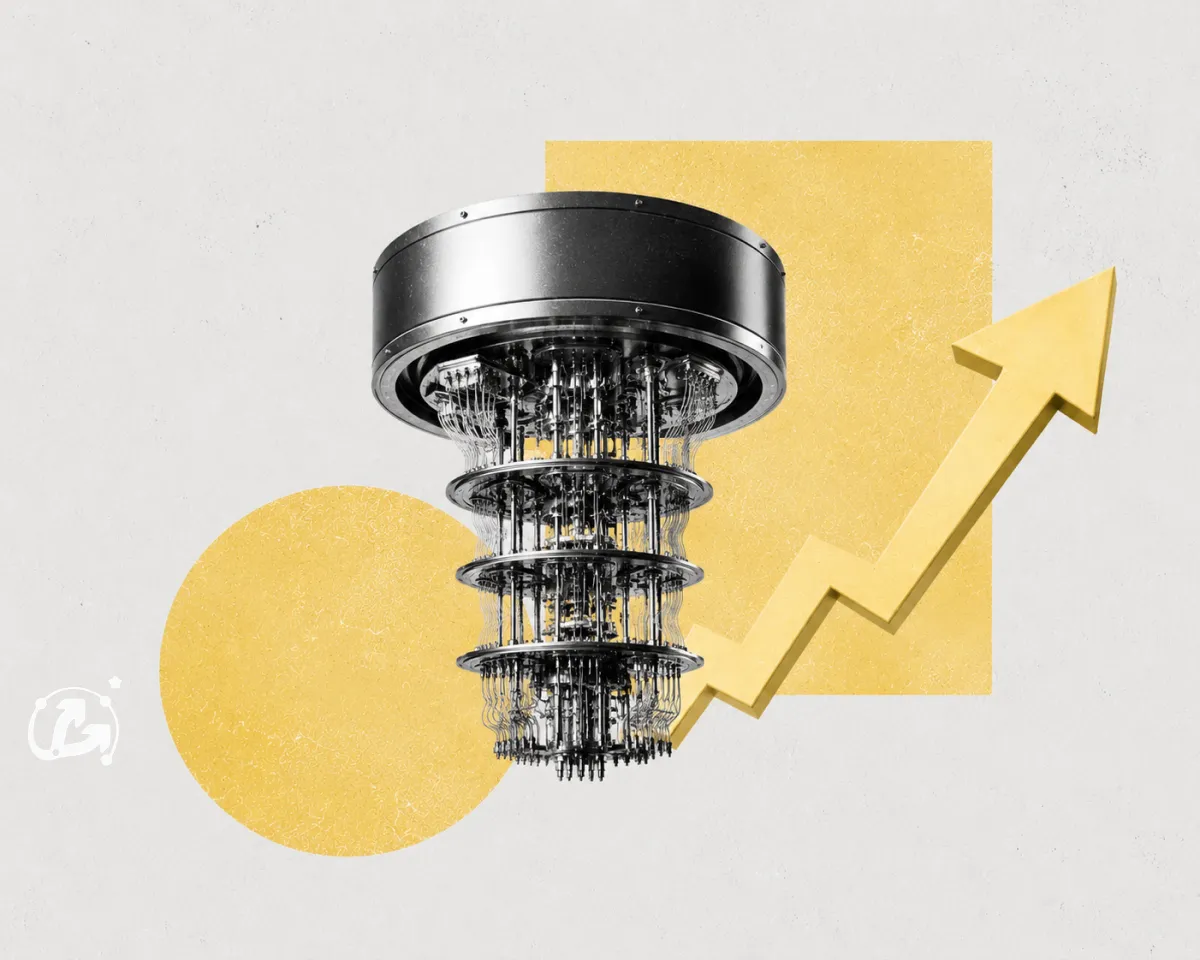
On June 17, Sandia National Laboratories, one of the leading national laboratories of the U.S. Department of Energy, together with quantum systems developer Quantinuum, published a peer-reviewed paper on the 98-qubit quantum processor Helios. This is not just another report — it is official confirmation that commercial quantum computing technology is reaching a fundamentally new level of reliability.
According to the published data, the average fidelity of single- and two-qubit operations in the Helios system was 99.9975% and 99.921%, respectively. For comparison, this is an order of magnitude higher than most modern counterparts. These figures suggest that Helios is capable of executing complex algorithms with minimal noise levels, which is critical for practical applications. The researchers also conducted testing on random Clifford circuits and the random circuit sampling (RCS) benchmark. The RCS results showed that the system's performance is "far beyond" the capabilities of classical simulation — meaning Helios genuinely solves problems that cannot be efficiently modeled on traditional supercomputers.
Architecture and Reliability
Helios is built on barium ions using the QCCD (Quantum Charge-Coupled Device) architecture. A key feature is full connectivity: any qubit can interact with any other without additional overhead. This provides flexibility in executing algorithms and reduces the number of data exchange operations, which directly impacts accuracy.
Sandia National Laboratories not only confirmed Helios's characteristics — the laboratory developed and applied several benchmarking methods, including its own technique for mid-circuit measurements. Such operations are critical for quantum error correction, especially when scaling the system. As noted by co-author Robin Blume-Kohout from Sandia, "the most important aspect of modern quantum computers is not speed, but reliability." Errors can arise from dozens of factors — from laser tuning failures to the movement of individual atoms — and only thorough component verification allows progress toward fault-tolerant systems.
Commercial Launch and Prospects
The partnership between Sandia and Quantinuum has lasted four years under a cooperative research agreement, which was renewed in May 2026. Helios was introduced by Quantinuum in November 2025 as a commercial product, available through a cloud service and as an on-premises deployment. Early users include Amgen, BMW Group, JPMorganChase, and SoftBank Corp. This indicates that quantum computing is ceasing to be an exclusively laboratory technology and is beginning to integrate into real business processes.
Expert opinion: The publication of peer-reviewed data on Helios is an important signal for the market. We see that operation fidelity is approaching the threshold necessary for practical error correction. If Quantinuum can scale this architecture to hundreds of qubits without a significant drop in accuracy, it will be a breakthrough in quantum machine learning and cryptography. At the same time, we should not forget about competition — for example, Singapore's Horizon Quantum already launched a commercial quantum computer in December 2025. The market is entering a phase of active competition, and that is excellent for the entire industry.