Quantinuum's 98-qubit Helios: A breakthrough in quantum computing accuracy or another step toward fault tolerance?
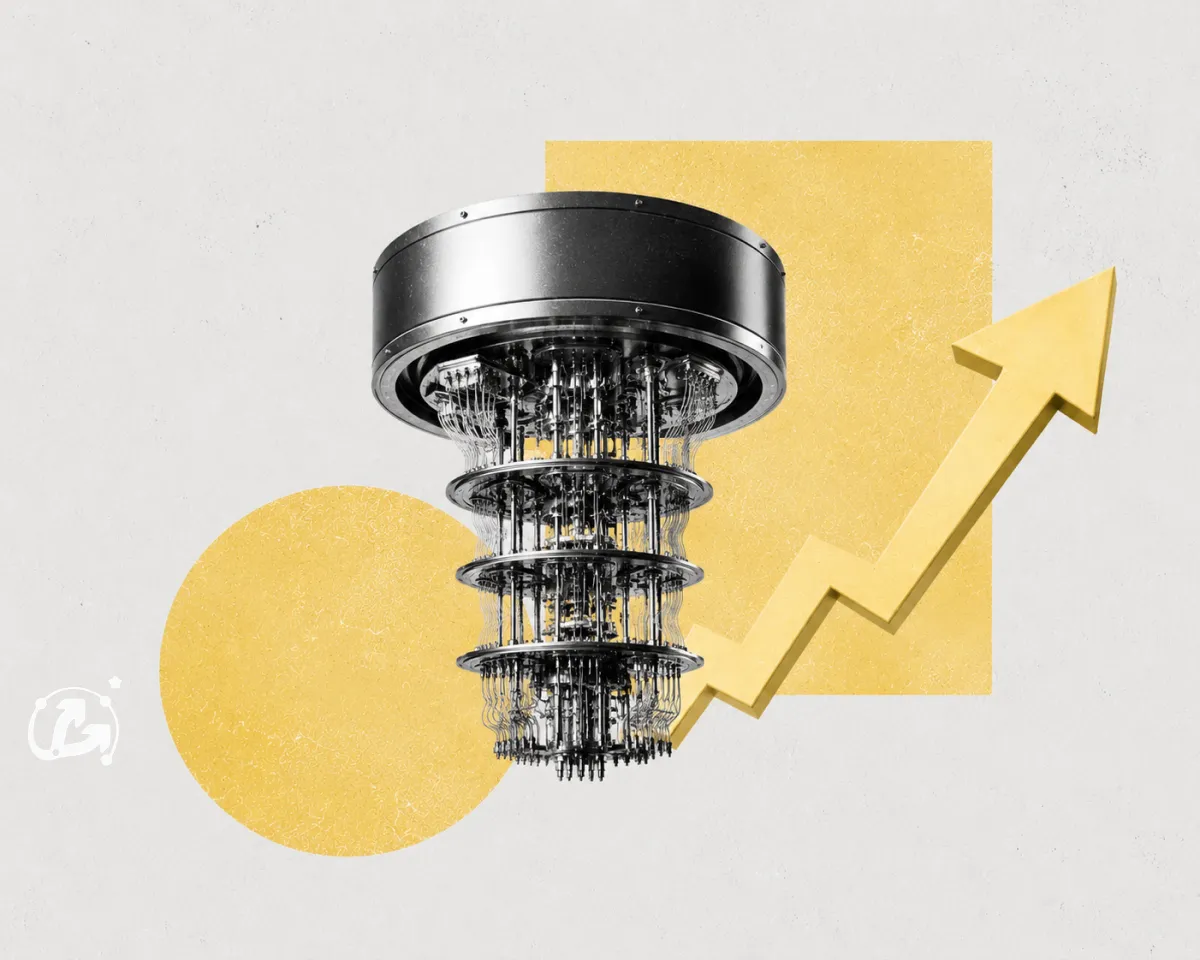
Sandia National Laboratories and Quantinuum have presented the results of a peer-reviewed study of their 98-qubit quantum processor, Helios. This data is not just another demonstration of power, but a serious step towards the commercial reliability of quantum systems.
Key Metrics
The average fidelity of single-qubit operations reached 99.9975%, and two-qubit operations reached 99.921%. These are outstanding figures, especially considering that errors in quantum computing are the main enemy of scaling. Helios was tested on random Clifford circuits and in the random circuit sampling (RCS) benchmark. RCS results showed that the system operates "far beyond" the capabilities of classical simulation — a direct challenge to those who doubt quantum supremacy.
Architecture and Commercial Potential
Helios is built on barium ions with a QCCD (Quantum Charge-Coupled Device) architecture. The main advantage is full connectivity: any qubit can interact with any other. This is critically important for complex algorithms that require flexible topology. Sandia did not just conduct tests — it certified the metrics using its own methodologies, including mid-circuit measurements for error correction.
Expert Opinion
As I have repeatedly emphasized, in the modern quantum race, the main thing is not the number of qubits, but their quality. The co-author of the study from Sandia, Robin Blume-Kohout, accurately noted: "The most important aspect of modern quantum computers is not speed, but reliability." Errors arise from dozens of factors — from laser drift to thermal motion of atoms. Verifying each component is the only path to fault-tolerant systems that can crack cryptography or simulate complex molecules.
Partnership and Accessibility
Sandia and Quantinuum have been working together for four years, and in May 2026, the agreement was renewed. Helios, first introduced in November 2025, is already available via a cloud service and in a local deployment format. Among the first clients are Amgen, BMW Group, JPMorganChase, and SoftBank Corp. This is not just a laboratory experiment — it is a commercial product that is already delivering value to real businesses.
My Conclusion
Helios is not a revolution, but an evolution. But an evolution in the right direction. While competitors chase hundreds of qubits with high noise levels, Quantinuum proves that 98 highly reliable qubits are worth more than 1,000 "raw" ones. If this trend continues, we will see the first practically useful quantum computations within 2-3 years. And for the crypto industry, this means one thing: post-quantum cryptography must be implemented now, not when Helios becomes the standard.