Quantum breakthrough without magnets: how light "programs" atoms for data transmission
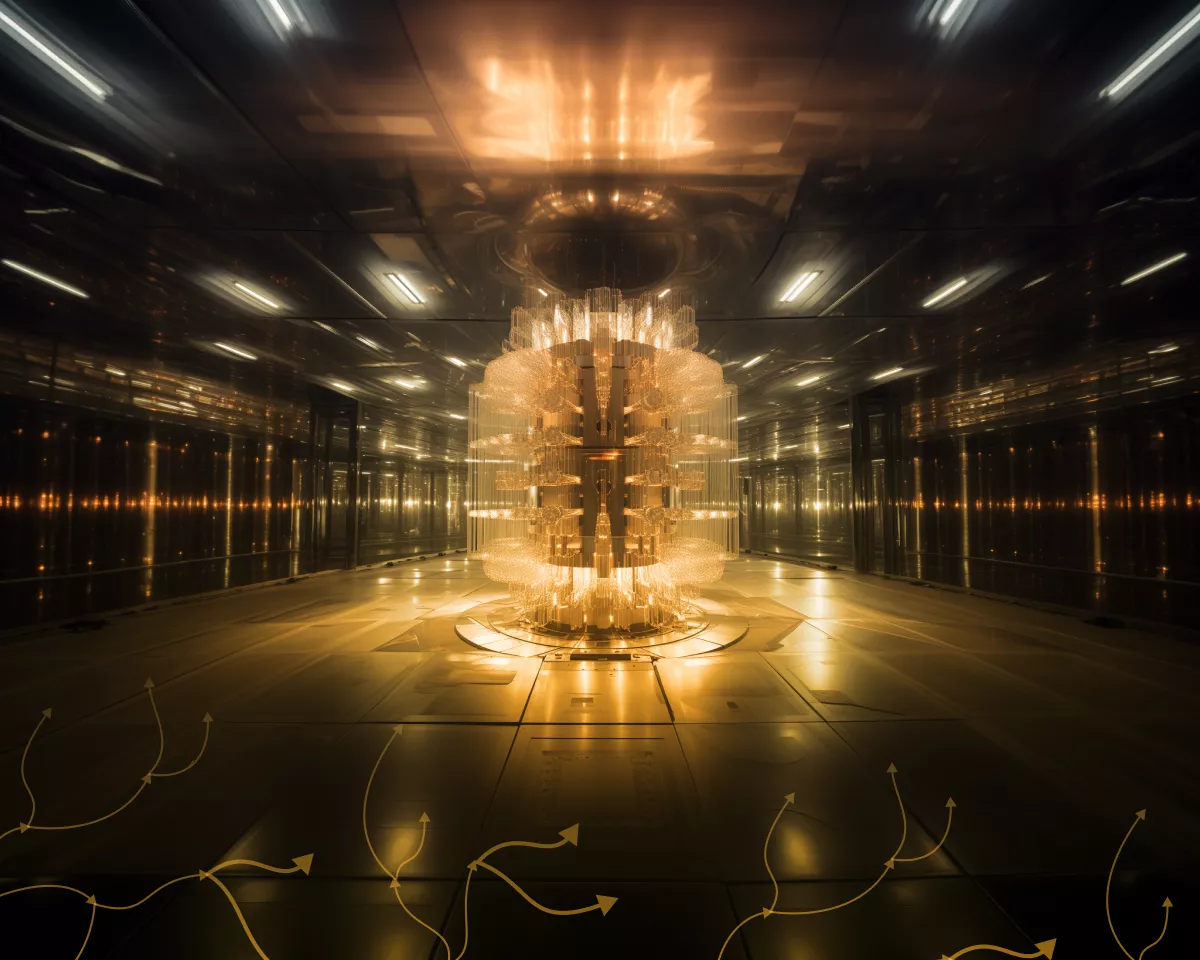
Physicists from Vilnius University have presented a theoretical model that fundamentally changes the approach to controlling quantum systems. They propose "programming" atoms using light, completely abandoning external magnetic fields. This is not just a laboratory curiosity—it is a potential paradigm shift in the architecture of quantum computers and secure communications.
The model is based on optical vortices—laser beams with a spiral wavefront. At the center of such a beam, the intensity drops to zero, forming a dark "core." The size of this core is determined by the topological charge, which can take any integer value—both positive and negative. The key point: the number of possible states here is practically unlimited. In practice, this involves 10,000 different states, allowing information to be encoded in qudits—multidimensional units of quantum information, rather than binary qubits.
The mechanism of operation looks elegant. Light first "tunes" atoms in a three-energy gaseous medium. The prepared medium inherits the spatial pattern of the beam: in some areas, atoms actively absorb radiation, while in others, they become almost transparent. Then feedback begins—the atomic response restructures the beam itself, turning a simple ring structure into a complex petal-like pattern with several bright regions around the center. The polarization structure also changes. Previously, such control required massive magnetic systems and bulky equipment.
Theoretically, this development opens the door to faster quantum processors, highly secure quantum networks, and ultra-precise optical sensors. The absence of magnetic fields simplifies scaling and integration with existing semiconductor infrastructure.
My analysis: This is an important step, but purely theoretical for now. The main challenge is experimental implementation and control over the topological charge in real-world conditions. If the model is confirmed in practice, we will get a fundamentally new class of quantum devices where light acts as both processor and memory simultaneously. However, commercial products are at least 5–7 years away.