Quantum breakthrough without magnets: Lithuanian physicists find a way to 'program' atoms with light
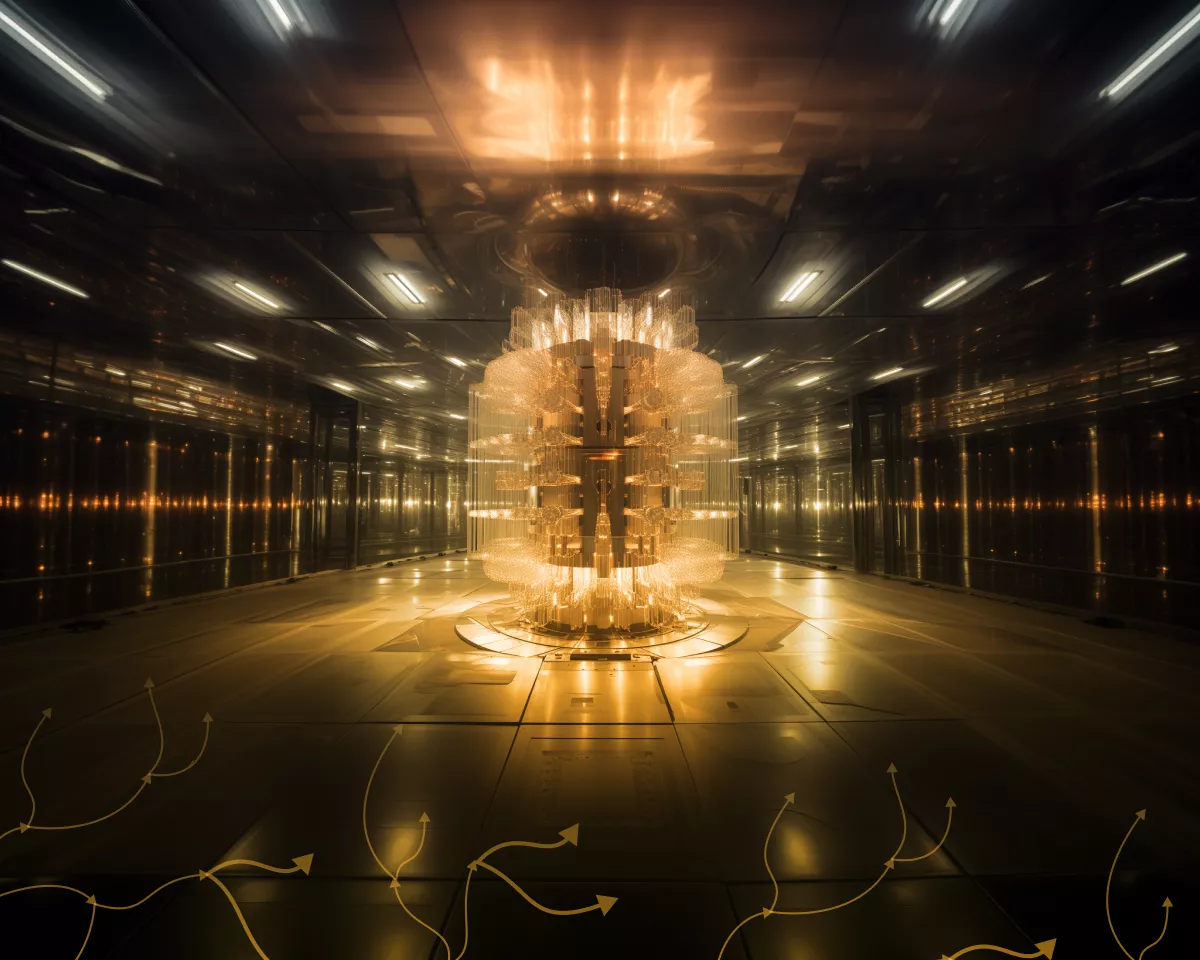
A group of researchers from the Faculty of Physics at Vilnius University has presented a theoretical model that fundamentally changes the approach to controlling quantum systems. The essence of the development is the use of structured light for "pre-programming" atoms, completely eliminating the need for external magnetic fields. This is not just a laboratory curiosity, but a potentially revolutionary step for quantum computing and communications.
The model is based on optical vortices — laser beams with a spiral wavefront structure. At the center of such a beam, the intensity drops to zero, forming a dark "core." The size of this region is determined by the topological charge, which, unlike traditional limitations, can take any integer value — both positive and negative. In practice, this opens access to 10,000 different states, allowing information to be encoded in qudits — multidimensional analogs of qubits.
The operating mechanism is as follows: light first "programs" the atomic medium, and then this medium, possessing predetermined properties, alters the shape and polarization of complex laser beams. To control vector vortices, the scientists modeled the interaction of the beam with an atomic gas, where atoms have three energy levels. The prepared medium inherits the spatial pattern of the light: in some areas, atoms become strong absorbers, in others, almost transparent. A feedback loop emerges: the atomic response reshapes the beam itself.
The result is impressive: instead of a simple ring structure, a complex petal pattern forms with several bright regions around the center, and the polarization structure of the beam is completely transformed. Previously, such control required bulky magnetic systems and powerful equipment. Now, all of this is replaced by a single laser pulse.
From a practical standpoint, this theoretical work paves the way for creating faster quantum processors, highly secure quantum communication networks, and ultra-precise optical sensors. For now, it is a model, but if experiments confirm the calculations, we will witness quantum technologies shedding one of their most expensive and complex components — magnetic systems.
My analysis: This approach is particularly interesting because it addresses the issue of scalability. Magnetic fields are always an engineering compromise: they require cryogenic cooling and create interference. If "programming" with light becomes a working tool, we could build quantum networks without giant magnets — and that is a direct path to the commercialization of the technology.