A quantum breakthrough from Lithuania: light 'programs' atoms without magnetic fields
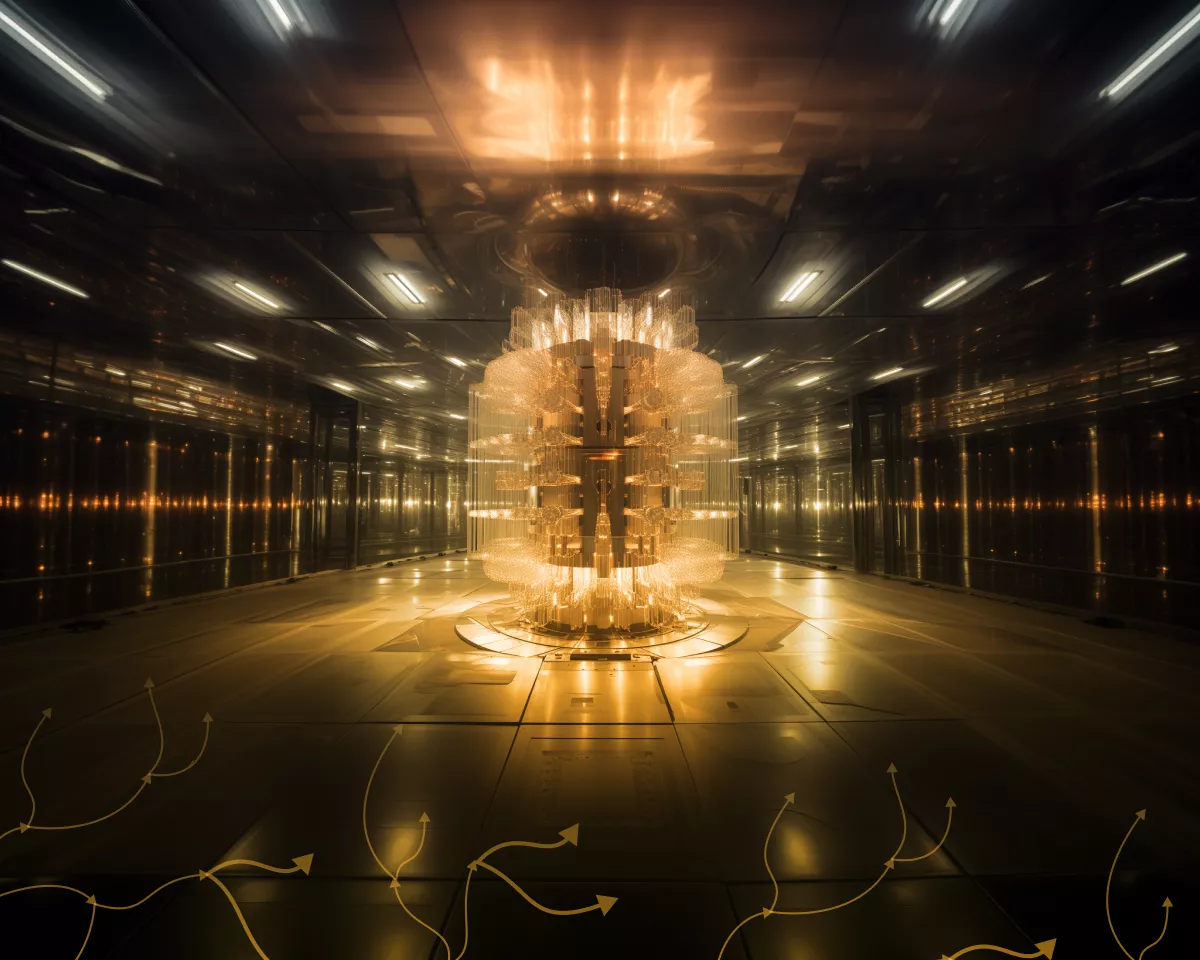
Physicists from the Faculty of Physics at Vilnius University have presented a fundamentally new theoretical model that allows "programming" atoms using light, completely eliminating the need for external magnetic fields. This is not just another laboratory trick—it is a potential paradigm shift in the control of quantum systems.
The essence of the model is as follows: a light beam first forms a predetermined spatial structure in the atomic medium—a kind of "template." Then, this pre-prepared medium itself begins to actively influence the laser beam passing through it, altering its shape and polarization. A key role here is played by optical vortices—beams with a spiral wavefront, where the intensity drops to zero at the center.
The size of this dark region is determined by the so-called topological charge. And here is what matters: this charge, according to the researchers, "is not limited and can take any positive and negative integer values." In practice, this means that using a single such vortex, up to 10,000 different states can be achieved. This is a direct path to utilizing qudits—multilevel quantum units that are immeasurably more powerful than traditional two-level qubits.
To demonstrate the control of vector vortices, the scientists simulated the interaction of a beam with an atomic gas, where each atom has three energy levels. In such a medium, a feedback effect occurs: atoms in some regions begin to absorb light more strongly, while in others they become almost transparent. As a result, instead of a simple ring, a complex petal-like pattern with altered polarization is formed. Previously, such control required bulky and powerful magnets—now it is done with light.
Theoretically, this development paves the way for faster quantum processors, highly secure quantum communication networks, and ultra-precise optical sensors. For now, it is only a model, but it demonstrates how to bypass one of the most critical bottlenecks in modern quantum physics—the dependence on external fields.
My analysis: This is precisely the case where "theory" sounds like a ready-made recipe for engineers. Eliminating magnetic fields radically simplifies the scaling of quantum systems, and the potential of 10,000 states per vortex makes qudits a real alternative to qubits. If the model is confirmed experimentally, we will witness not an evolution, but a true leap in quantum computing.