A quantum breakthrough without magnets: Lithuanian physicists have learned to "program" atoms with light
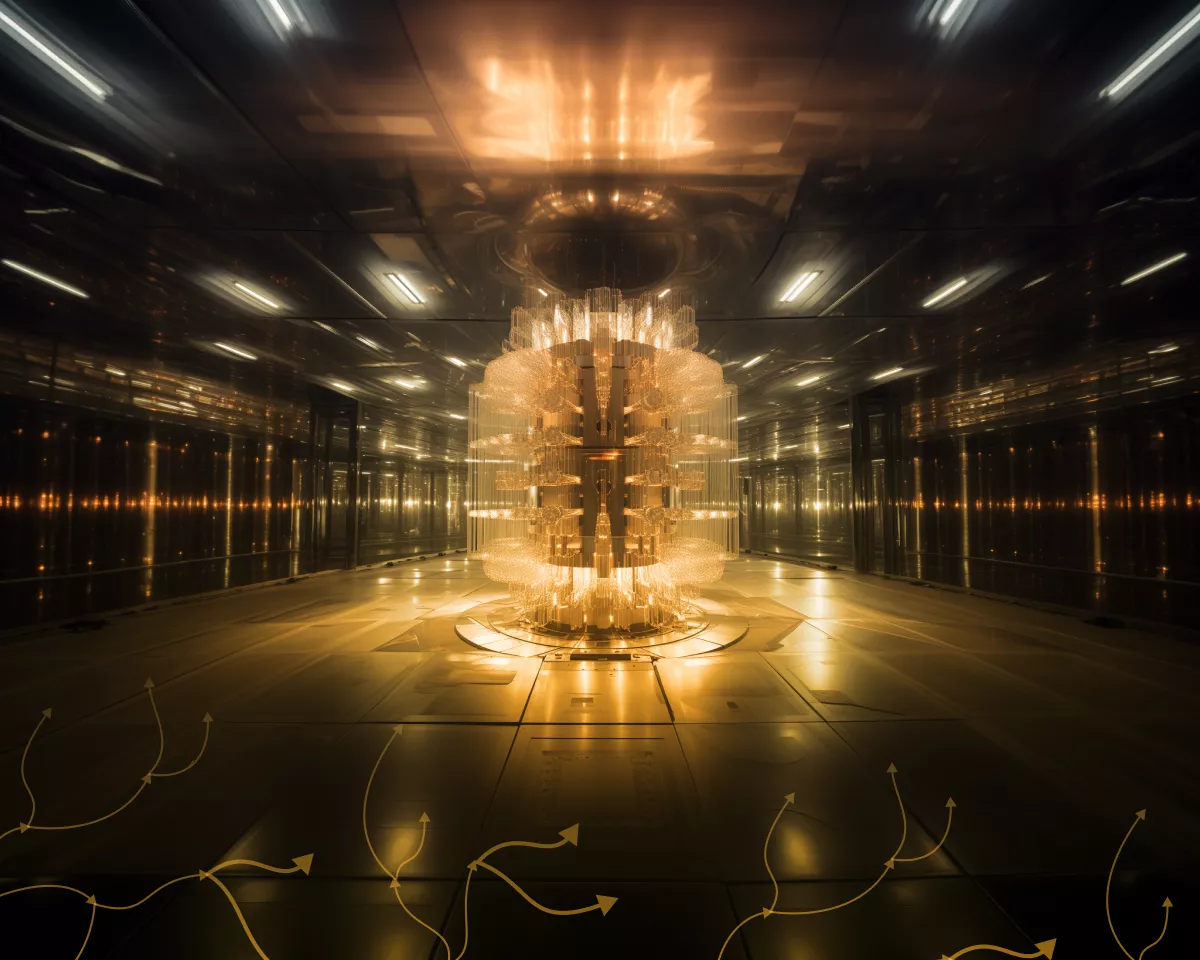
A research group from the Faculty of Physics at Vilnius University has presented a theoretical model that radically changes the approach to controlling quantum states. Instead of traditional bulky magnetic systems, the researchers propose using light to pre-"program" atoms. This discovery could accelerate the development of quantum computing and communications.
The essence of the method is simple and elegant: a laser beam first sets atoms to a specific state, and then this prepared atomic medium actively alters the shape and polarization of complex light beams. A key role in the model is assigned to optical vortices—beams with a spiral wavefront structure, where intensity drops to zero at the center. The size of this dark region is determined by the topological charge, which, as the authors emphasize, can take any integer value—both positive and negative.
The practical potential is impressive: using such vortices, up to 10,000 different states can be generated. This means information is encoded not in the familiar qubits (a two-level system), but in qudits—multidimensional quantum units—significantly increasing computational capacity and stability.
During the simulation, scientists examined the interaction of a vector vortex with an atomic gas, where each atom has three energy levels. The prepared medium inherits the spatial pattern of light: in some zones, atoms actively absorb radiation; in others, they become almost transparent. A feedback loop emerges: the atomic response reshapes the beam itself. Instead of a simple ring, a complex petal-like pattern appears with several bright regions around the center, and the polarization structure is completely transformed.
Previously, achieving such control required powerful external magnetic fields and expensive equipment. The new model promises to eliminate this need, paving the way for faster quantum processors, ultra-secure communication networks, and high-precision optical sensors.
My analysis: This is an important step toward simplifying and miniaturizing quantum systems. Eliminating magnetic fields not only reduces energy consumption but also removes one of the main sources of noise that interferes with stable qubit operation. If the model is confirmed experimentally, we could see commercial quantum devices without superconducting magnets within the next 5–7 years.