Quantum breakthrough without magnets: physicists find a way to 'program' atoms with light
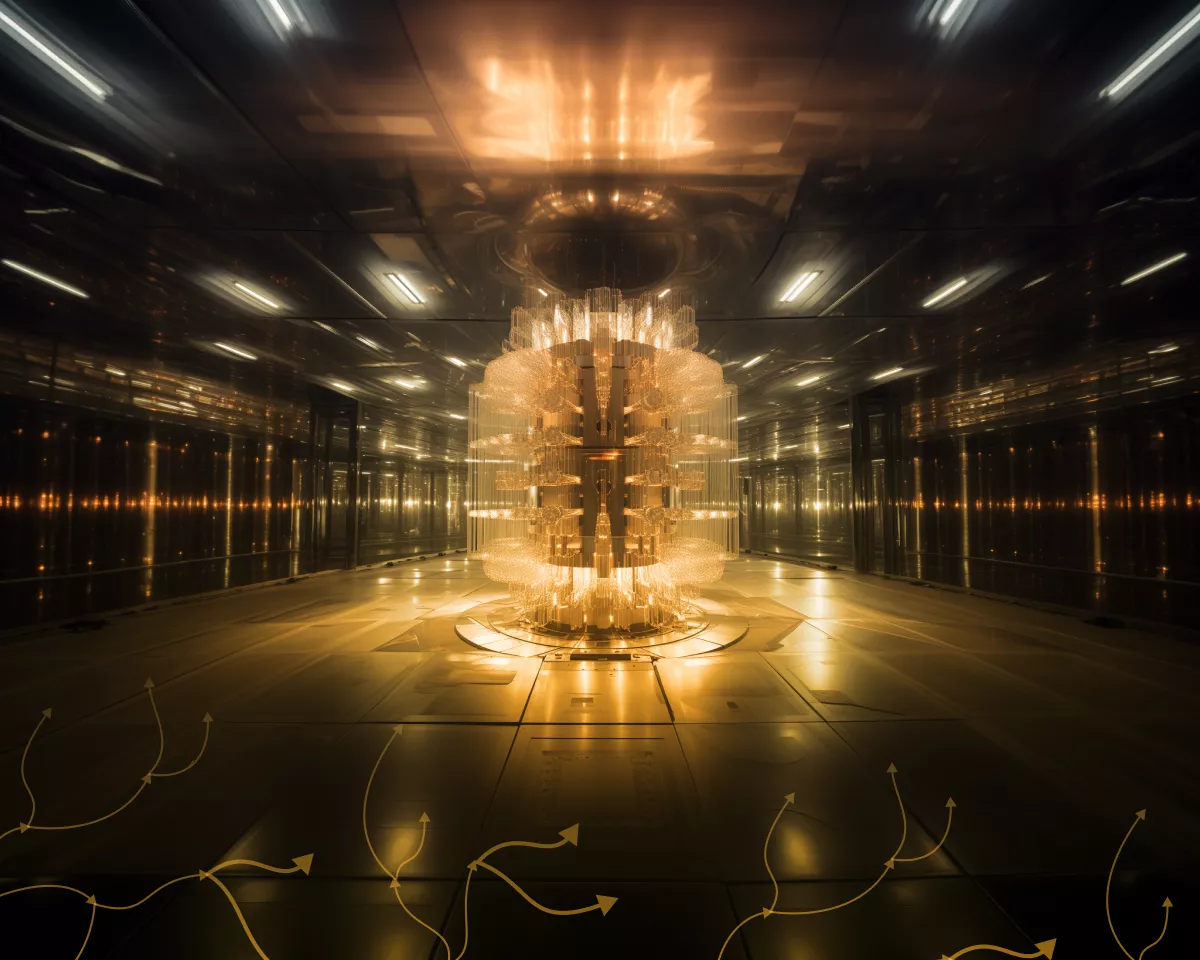
A group of researchers from the Faculty of Physics at Vilnius University has presented a theoretical model that fundamentally changes the approach to controlling atomic systems. Instead of the traditional use of bulky external magnetic fields, scientists propose "programming" atoms using structured light. This discovery could accelerate the development of quantum computing and communications.
Optical Vortices as a Basis for Control
The model is based on optical vortices—laser beams with a spiral wavefront structure, where the intensity drops to zero at the center. The key parameter here is the topological charge, which, as the authors emphasize, "is not limited and can take any positive or negative integer values." In practice, this means the ability to create up to 10,000 different states. Instead of conventional qubits operating in a two-state system, researchers propose using qudits—multilevel units of quantum information—which exponentially increases computational power.
Feedback Principle: How Light Rearranges Atoms
The mechanism works as follows: the light beam interacts with an atomic gas, where atoms have three energy levels. During the "programming" process, the medium inherits the spatial pattern of the light—in some areas, atoms begin to actively absorb radiation, while in others they become nearly transparent. Then, feedback is triggered: the atomic response modifies the beam itself. Instead of a simple ring structure, a petal-like pattern forms with several bright regions around the center, and the beam's polarization transforms. Previously, achieving such control required powerful external magnetic fields and complex, expensive equipment.
Practical Prospects and Expert Assessment
Theoretically, this development paves the way for creating faster quantum processors, highly secure quantum communication networks, and ultra-precise optical sensors. Eliminating magnetic fields not only simplifies the design but also reduces energy consumption, which is critical for scaling quantum systems.
My analytical assessment: This is exactly the kind of fundamental breakthrough that goes unnoticed by the general public but has the potential to revolutionize the industry. If the model is confirmed experimentally, we will see not just an evolutionary step but a paradigm shift—moving from "heavy hardware" to "pure light." For the crypto industry, this means a potential acceleration in the emergence of quantum-resistant algorithms and new encryption methods based on qudits, which could render current discussions about post-quantum security obsolete within a few years.