A quantum breakthrough without magnets: how light "programs" atoms for ultra-fast computing
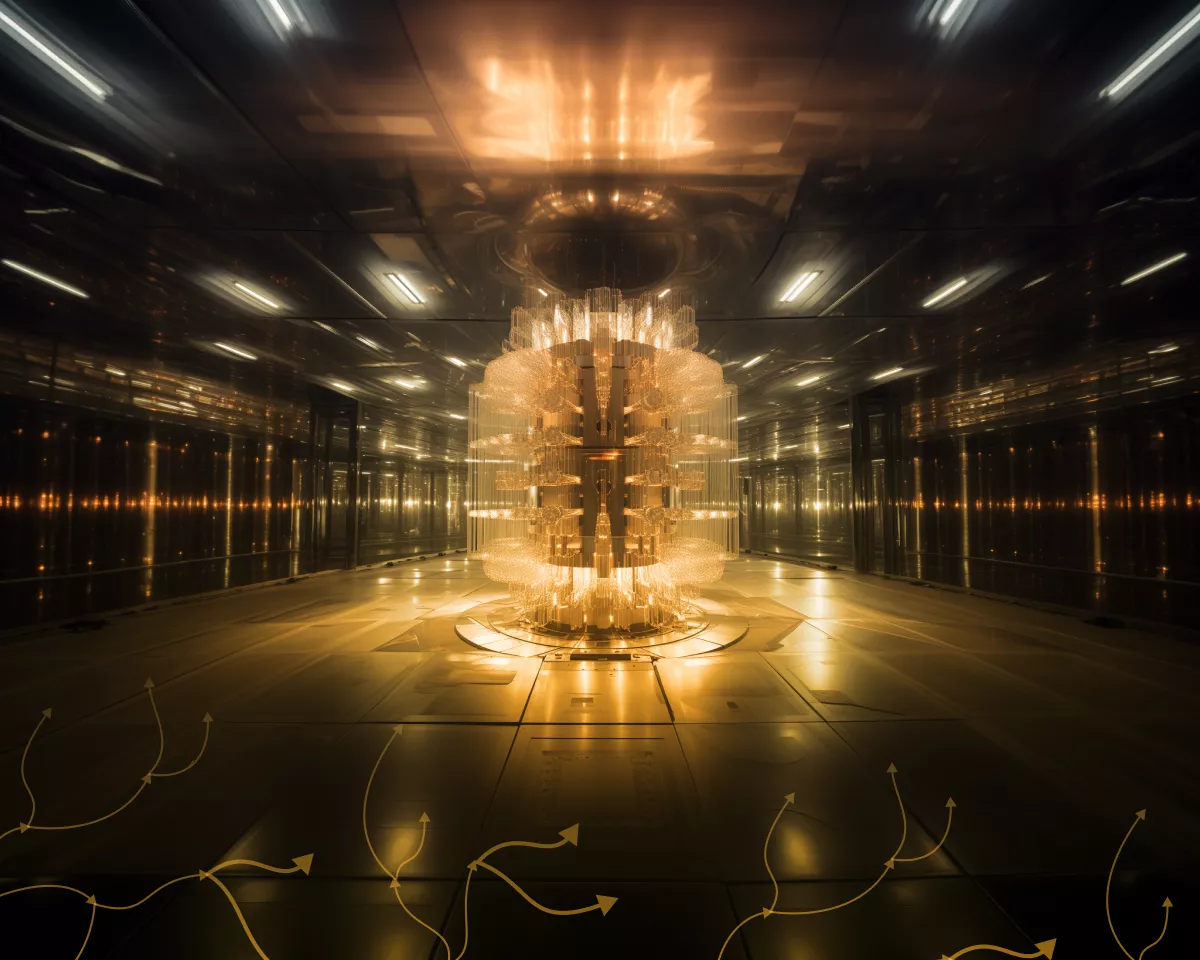
Physicists from Vilnius University have presented a theoretical model that radically changes the approach to controlling quantum systems. The essence of the development is the use of light to "program" atoms without applying external magnetic fields. This is not just a laboratory curiosity, but a potential foundation for a new generation of quantum technologies.
The model is based on optical vortices — laser beams with a spiral structure of the wavefront. In their "core," the intensity drops to zero, forming a dark region whose size is determined by the topological charge. The key feature: this charge is not limited and can take any positive or negative integer values. In practice, this opens access to 10,000 different states, allowing information to be encoded in qudits — multidimensional quantum units, unlike standard two-level qubits.
The authors examined the interaction of a vector vortex with an atomic gas, where atoms have three energy levels. The light first "programs" the atomic medium: in some areas, atoms begin to actively absorb radiation, while in others they become almost transparent. Then feedback begins — the atomic response restructures the beam itself. Instead of a simple ring structure, a petal-like pattern forms with several bright areas around the center, and the polarization structure completely changes.
Previously, such control required powerful external magnetic fields and bulky equipment. Now it all comes down to precise tuning of light.
Theoretically, this development paves the way for faster quantum processors, highly secure quantum communication networks, and ultra-precise optical sensors. If the model is experimentally confirmed, we may see a transition from the qubit race to the qudit race — with fundamentally different performance.
Expert comment: This is one of those works that are not yet widely known but could change the landscape. Abandoning magnetic fields is not just a simplification; it removes fundamental limitations on scaling quantum systems. Keep an eye on this direction: if the Vilnius model receives experimental confirmation, we can expect a revision of the basic principles of quantum computing.