Quantum breakthrough without magnets: how light learned to program atoms
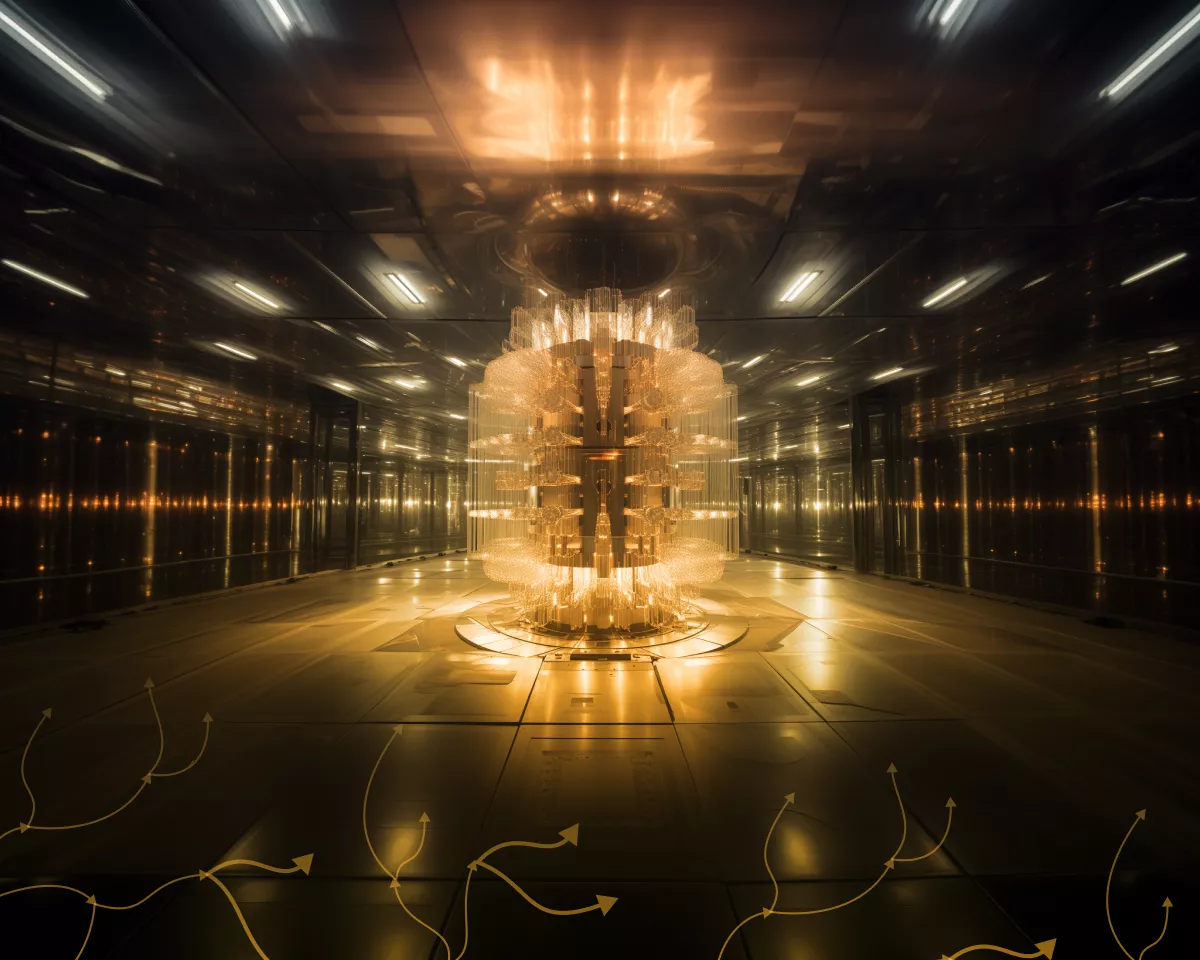
The world of quantum technologies has received a new theoretical framework that could radically simplify the control of atoms. Researchers from the Faculty of Physics at Vilnius University have presented a model in which light acts as a "programmer" for the atomic environment — and all this without cumbersome external magnetic fields.
At the core of the concept are optical vortices — laser beams with a spiral wavefront structure. In their "core," the intensity drops to zero, and the size of this dark zone is determined by the topological charge. The uniqueness lies in the fact that this charge has no limitations: it can take any positive or negative integer values. In practice, this provides access to 10,000 different states, allowing information to be encoded in qudits — multidimensional quantum units that significantly surpass ordinary qubits in capacity.
How does it work? Light first "programs" the atoms, creating a spatial absorption pattern in a gaseous medium with three-level atoms. In some areas, the atoms become almost opaque; in others, they transmit radiation. Then feedback begins: the prepared medium changes the shape and polarization of the laser beam itself. Instead of a simple ring structure, a complex petal-like pattern emerges with several bright zones around the center. Previously, such control required powerful magnetic fields and complex equipment.
Theoretically, this development paves the way for faster quantum processors, highly secure quantum communication networks, and ultra-precise optical sensors. Notably, on June 17, Sandia National Laboratories and Quantinuum already published a peer-reviewed article on the 98-qubit quantum computer Helios, confirming the growing interest in alternative methods of controlling quantum systems.
Analytical commentary from Cryptalist: This work is an elegant bypass of technological limitations. Abandoning magnetic fields not only simplifies hardware implementation but also reduces the noise level that often destroys quantum coherence. If the model is confirmed experimentally, we could see a new class of compact quantum devices where light and matter operate in a unified, self-tuning cycle. For cryptography, this means potentially more stable and secure quantum communication channels.