Exclusive: Scientists create three-way quantum entanglement on remote atomic qubits for the first time — a breakthrough toward a modular quantum internet
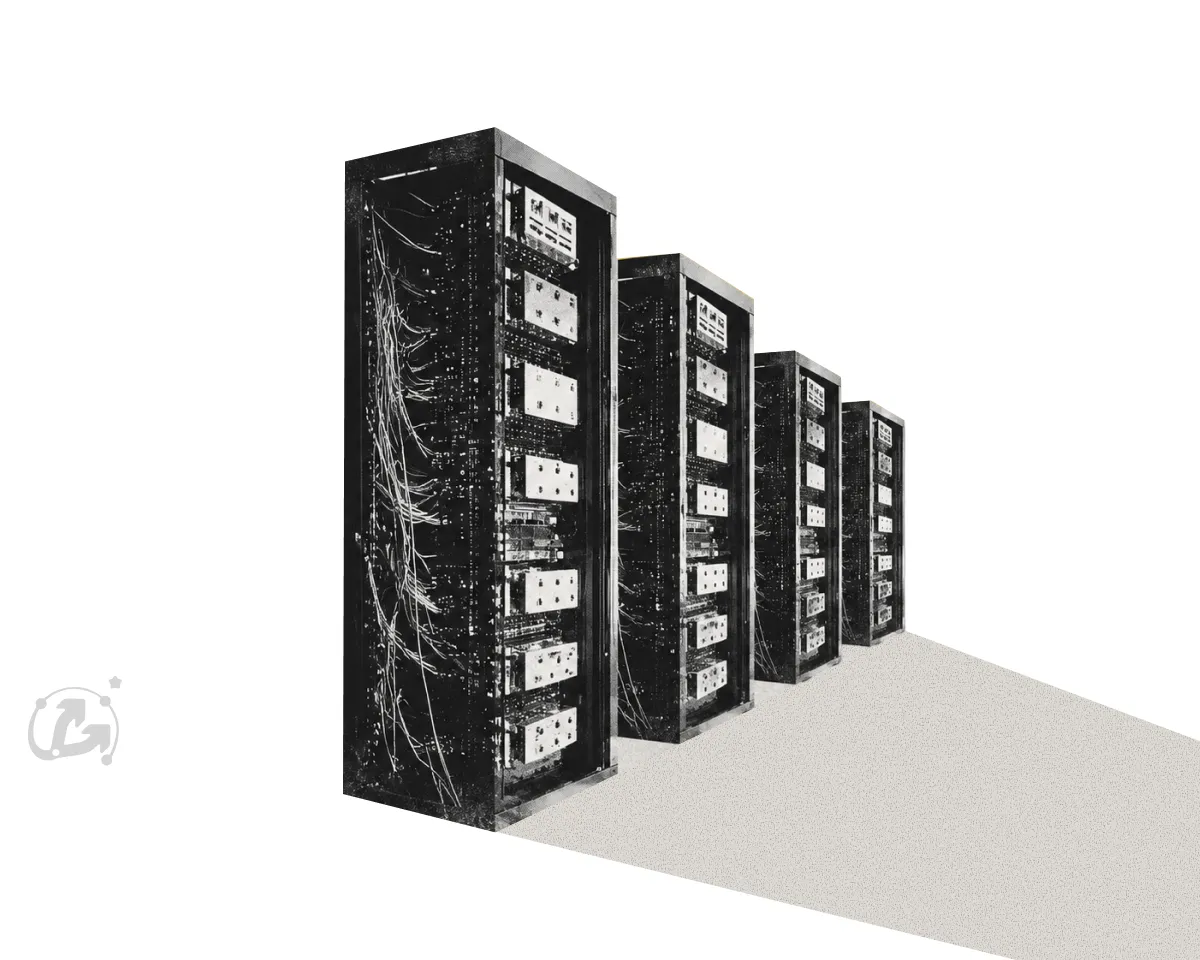
The world of quantum computing has taken a significant step forward. A team of researchers from Duke University and IonQ has announced the creation of the first-ever fully distributed three-node quantum network based on individual atomic qubits. This achievement marks a transition from two-party experiments to more complex, scalable architectures.
Essence of the Experiment: GHZ State on Three Nodes
The specialists managed to form a so-called three-party entangled state, known as the Greenberger-Horne-Zeilinger (GHZ) state, between three remote quantum nodes. These nodes were interconnected via photonic channels, a key element for building distributed quantum systems. Previously, demonstrating entanglement between two remote nodes was already a routine task, but achieving three-party connectivity on atomic qubits represents a fundamentally new level of complexity.
Why This is a Breakthrough: Scaling and Precision
The main problem with modern quantum computers is scaling. Building a single giant processor without errors is practically impossible. Therefore, the industry is moving toward a modular architecture, where computing resources are distributed across multiple quantum nodes connected by photons. This experiment is direct proof of the viability of such an approach.
The scientists demonstrated that individual atomic memories can form a shared quantum state through photonic connections while maintaining high operational fidelity. During the experiment, the fidelity of the entangled state reached an impressive 84–88%. Moreover, for the first time, it was possible to close the so-called "detection loophole" for a fully distributed multi-component quantum state. The results also confirmed the violation of Mermin's inequality, one of the key tests proving the presence of genuine quantum correlations rather than classical ones.
A Step Toward the Quantum Internet
This work continues a series of IonQ studies on photonic quantum connections. Previously, the company demonstrated entanglement between two remote ion systems, and now it has expanded the architecture to three full-fledged nodes. Although the technology is still far from commercial application, such experiments are critically important building blocks for future distributed quantum computers, secure communication networks, and ultimately, the quantum internet.
Expert Opinion: This achievement is not just a laboratory curiosity. It demonstrates that a modular architecture based on atomic qubits can be scaled without losing quantum coherence. For the cryptocurrency world, this means that the threat of quantum hacking of current encryption algorithms (e.g., ECDSA) is becoming not just theoretical but increasingly tangible. With each such step, the need to implement post-quantum cryptography in blockchain projects becomes more urgent.