Quantum Breakthrough: First Three-Node Network Created on Individual Atomic Qubits
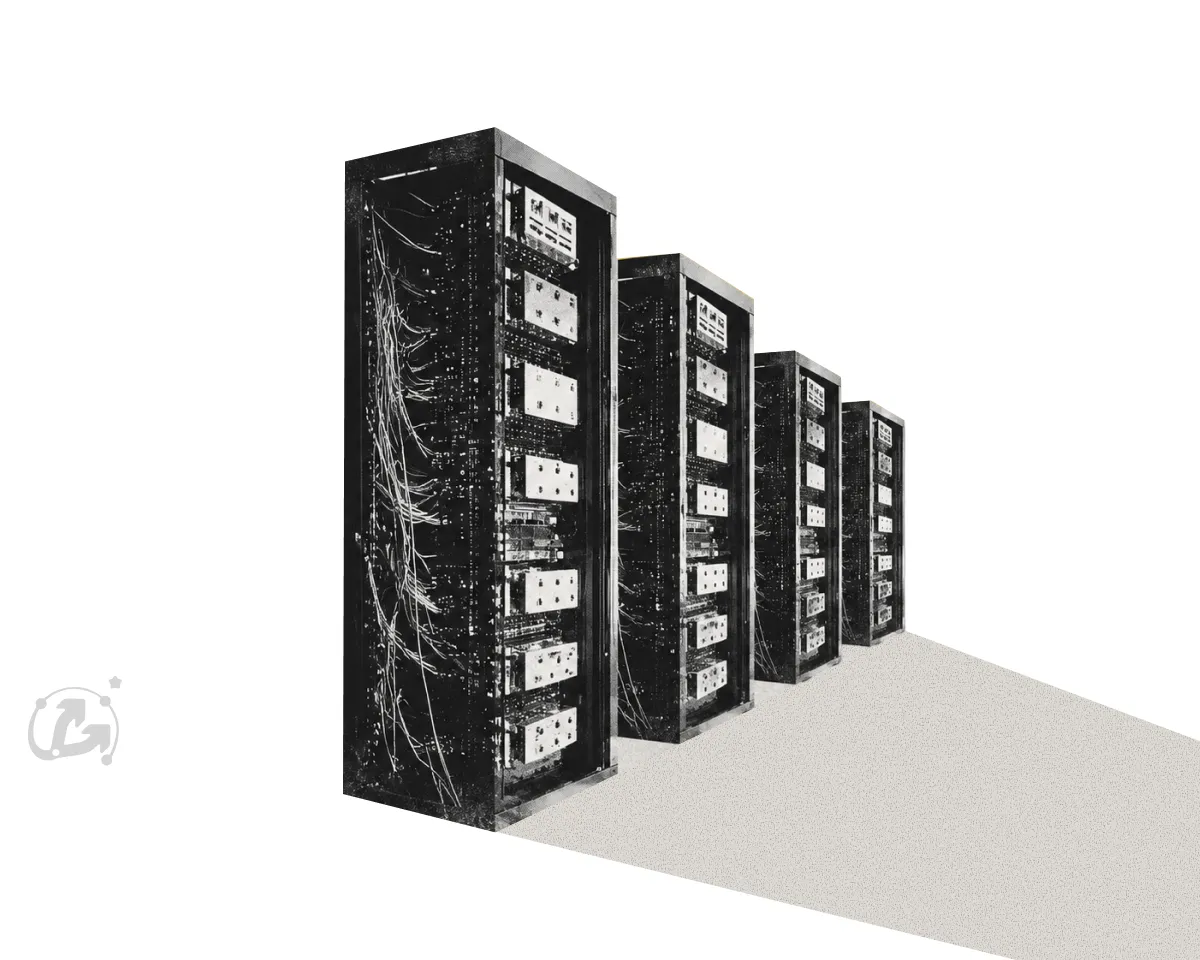
The world of quantum computing has taken a significant step forward. A team of researchers from Duke University and IonQ has announced the creation of the first-ever fully distributed three-node quantum network operating on the basis of individual atomic qubits. This achievement marks a transition from two-party experiments to a more complex, scalable architecture.
A key element of the work was the formation of the so-called Greenberger–Horne–Zeilinger (GHZ) state — a three-party quantum entanglement. Unlike the familiar pair of particles, here three remote quantum nodes, connected by photonic channels, demonstrate instantaneous state correlation. It is precisely such multi-particle states that form the foundation for building a quantum internet and distributed computing power.
Why is this a turning point?
Previously, entanglement between two remote nodes had been proven many times. However, scaling to three nodes on a platform of individual atomic qubits faced fundamental challenges: the need for independent control, readout, and coherence maintenance. Scientists from Duke and IonQ not only solved this problem but also demonstrated high operational fidelity.
The fidelity of the resulting entangled state was an impressive 84–88%. Moreover, for the first time, it was possible to fully close the so-called "detection loophole" for a distributed multi-component state. The results also confirmed the violation of Mermin's inequality — a rigorous mathematical test proving the presence of genuine quantum correlations rather than classical statistical coincidences.
A modular approach as a path to scaling
Modern quantum engineering faces a severe limitation: building a single giant quantum processor with thousands of qubits is extremely difficult due to error accumulation and physical constraints. This is why more and more developers, including IonQ, are betting on a modular architecture. The idea is simple and elegant: instead of one monolithic computer, a network of many quantum nodes connected by photons is created. This resembles the evolution of the classical internet, where computing resources are distributed across thousands of servers.
The new experiment is direct proof of the viability of this concept. The researchers showed that individual atomic memories can form a common quantum state through photonic connections while maintaining high fidelity. The work continues a series of successful IonQ experiments in photonic connections: previously, the company demonstrated entanglement between two remote ion systems, and now it has expanded the architecture to three full-fledged nodes.
My analysis: This is not just a laboratory curiosity. Closing the "detection loophole" and violating Mermin's inequality are indicators that the system operates in a truly quantum regime, rather than on the edge of classical physics. Although a commercial quantum internet is still far off, such experiments lay the foundation for future secure communication networks and distributed quantum computing. The technology is moving from the realm of "possible" to the realm of "when."