Quantum entanglement of three remote atomic qubits: a new frontier for distributed quantum networks
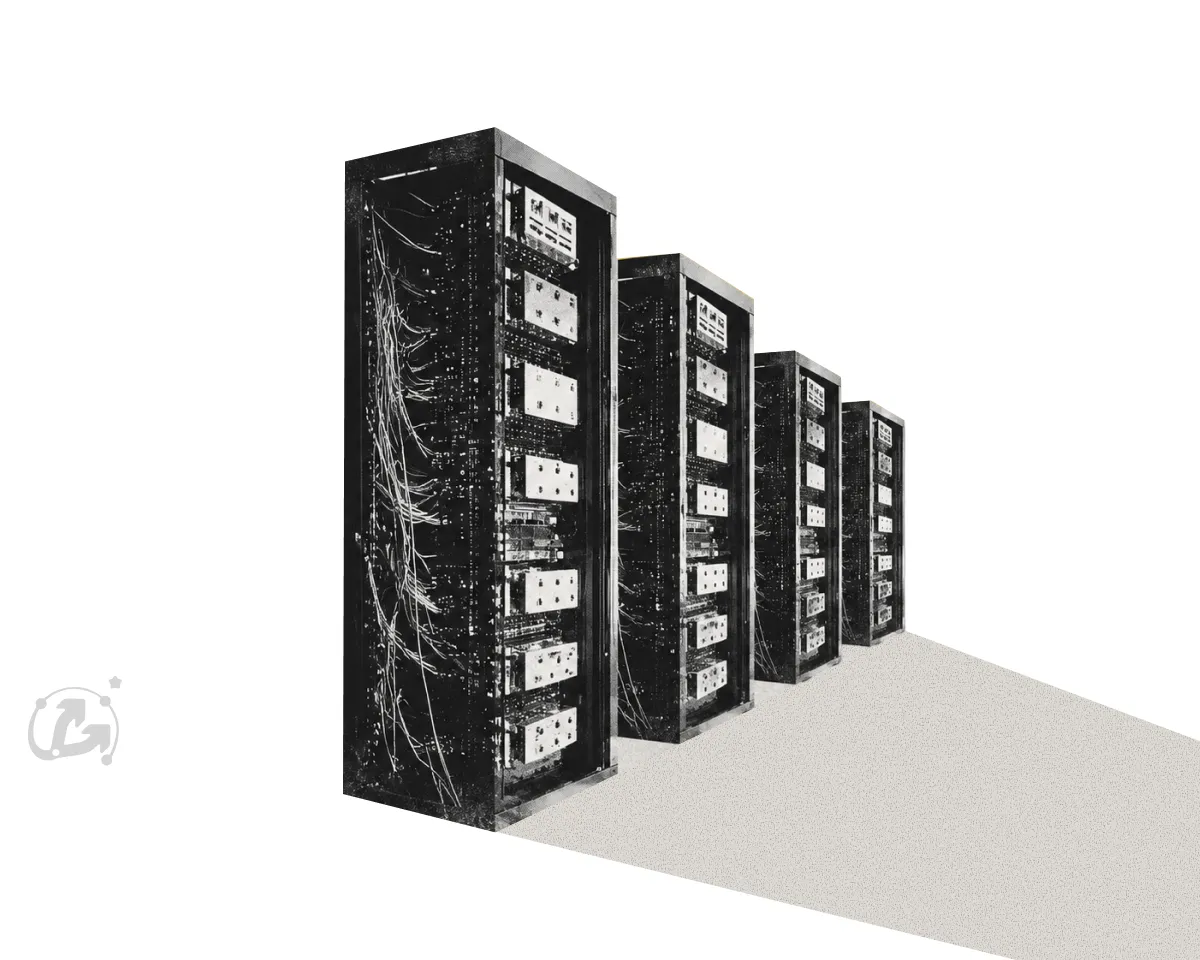
A landmark breakthrough has occurred in the world of quantum computing. A group of researchers from Duke University and the company IonQ has successfully implemented the first fully distributed three-node quantum network based on individual atomic qubits. This achievement marks a significant step toward creating a scalable quantum internet.
The key result of the work was the formation of a so-called three-party entangled state (Greenberger–Horne–Zeilinger, or GHZ state) between three remote quantum nodes connected via photonic channels. Previously, entanglement had only been demonstrated for two remote qubits, and three-node networks existed only on other physical platforms. Now, for the first time, this has been achieved on atomic qubits, which offer unique advantages: they can be independently controlled, read out, and, critically, scaled to build computing systems.
Why is this a turning point?
The main headache for quantum computer developers is scaling. Building a single giant quantum processor with thousands of qubits is practically impossible due to error accumulation and physical limitations. This is precisely why the industry is increasingly moving toward a modular architecture. Instead of one monolithic device, the proposal is to create a network of many quantum nodes connected by photons. This resembles the evolution of the classical internet, where computing resources are distributed across thousands of servers.
The new experiment is direct proof of the viability of this approach. The researchers showed that individual atomic memories can form a common quantum state through photonic connections while maintaining high fidelity of quantum operations.
During the experiment, the fidelity of the entangled state was an impressive 84–88%. Moreover, the scientists closed the so-called "detection loophole" for a fully distributed multi-component quantum state for the first time, and also confirmed the violation of the Mermin inequality — one of the key tests proving the existence of genuine quantum correlations.
A step toward the quantum internet
This work continues a series of IonQ studies in the field of photonic quantum connections. Previously, the team demonstrated entanglement between two remote ion systems, and now they have expanded the architecture to three full nodes. Although the technology is still far from commercial application, such experiments are the building blocks of future distributed quantum computers, secure communication networks, and, ultimately, the quantum internet.
Expert opinion: Achieving three-node entanglement on atomic qubits is not just a scientific demonstration. It is a critically important step toward overcoming one of the main barriers to practical quantum computing — scalability. If we can reliably connect small but perfect quantum modules, then in the future we can build systems whose power will be limited only by the number of nodes in the network, not the physical size of a single chip. This changes the game.