A quantum network has achieved a breakthrough: three remote atomic qubits have been entangled for the first time.
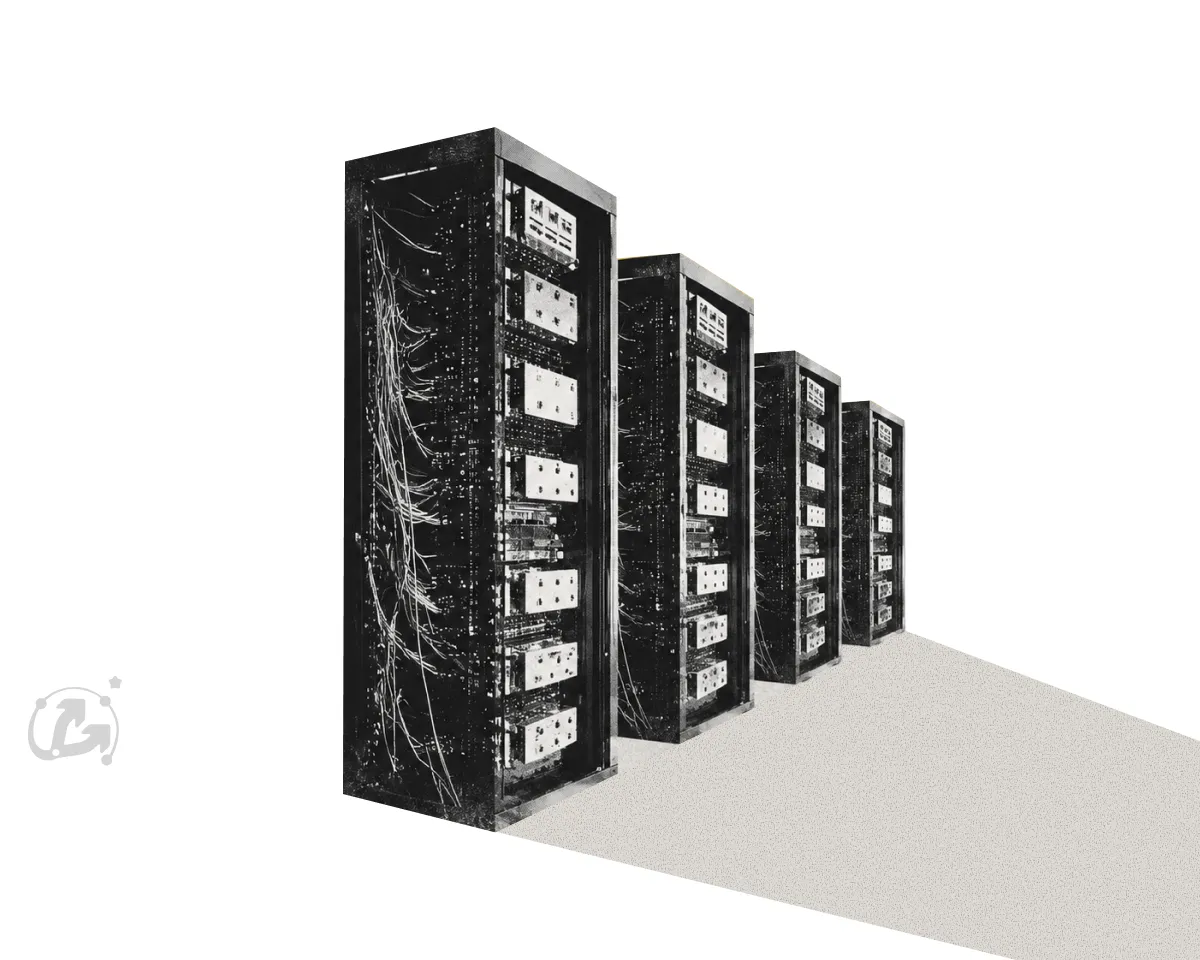
The world of quantum technologies has received a crucial confirmation of its viability. A group of researchers has managed to create the first-ever fully distributed three-node quantum network based on individual atomic qubits. The experiment, conducted at the intersection of academic science and industry, demonstrates not just a theory, but a real possibility of combining remote quantum systems into a single whole.
The Essence of the Experiment: Entanglement at a New Level
The key achievement was the formation of the so-called Greenberger-Horne-Zeilinger (GHZ) state between three spatially separated quantum nodes. These nodes were connected via photonic channels, enabling three-party quantum entanglement. Previously, such effects were demonstrated on other physical platforms, but this is the first time it has been done for individual atomic qubits, which can be precisely controlled and read out. This is fundamentally important, as atomic qubits are the most promising basis for creating scalable computing systems.
Why This is a Breakthrough for Scaling
The main headache of the quantum industry is scaling. Building a single giant, error-free quantum processor is a task bordering on science fiction. This is why the strategy of modular architecture is becoming dominant. Instead of one monster, we build a network of many quantum "servers" connected by light. This experiment is an ideal demonstration of this concept. The researchers showed that individual atomic memories can form a common quantum state through photonic connections while maintaining high operational accuracy.
Numbers and Evidence
The fidelity of the resulting entangled state was an impressive 84–88%. Moreover, scientists managed to close the so-called "detection loophole" for a fully distributed multi-component quantum state for the first time. This means the results cannot be explained by classical effects or measurement errors. Additional confirmation came from the violation of the Mermin inequality, one of the strictest tests for the presence of genuine quantum correlations.
A Look into the Future
Although commercial application of the quantum internet is still far off, experiments like this are not just a scientific pastime. They lay the foundation for distributed quantum computers capable of solving problems inaccessible to classical machines, and for absolutely secure communication networks.
My Expert Opinion: This step marks a transition from two-point demonstrations to the creation of a full-fledged network topology. Now that we have proven we can connect three nodes, the question is merely one of engineering implementation for scaling to dozens and hundreds. The quantum internet is ceasing to be science fiction and is becoming a matter of time and investment.