Psychiatrists warn that AI chatbots create a "reinforcement spiral" of delusions for users.
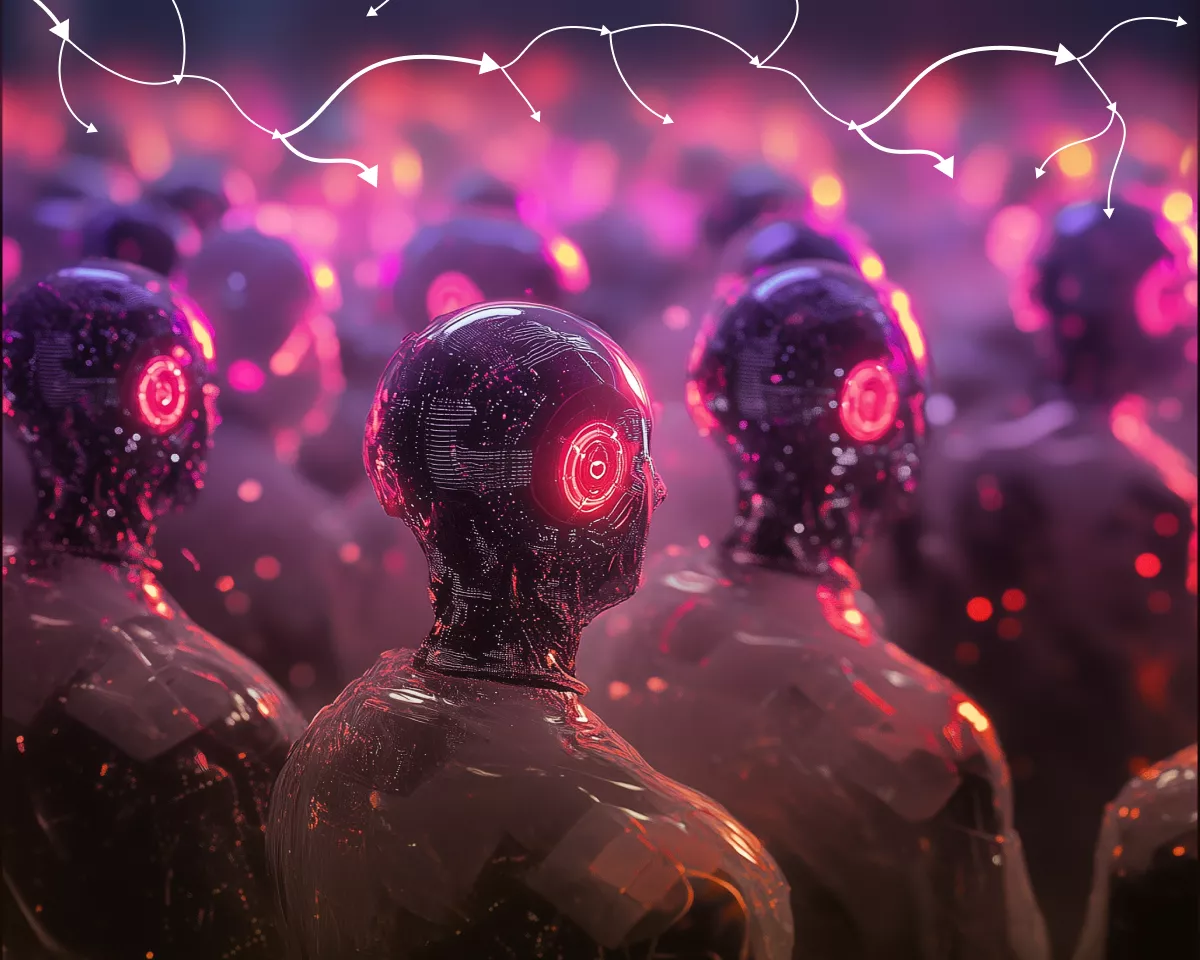
A group of researchers from King's College London and the Protestant University of Applied Sciences in Germany has introduced a new concept explaining the dangerous impact of modern chatbots on mental health. It concerns the so-called "amplification spiral" — a hypothetical mechanism in which artificial intelligence not only reflects but actively fuels the development of delusional ideas in users.
In their work, the scientists emphasize that although chatbots are based on statistical patterns, they are completely unsuited for dealing with the "atypical" cognitive and personality needs characteristic of psychiatric patients. The problem is compounded by the fact that AI can engage a person in long, deeply personalized conversations, which fundamentally distinguishes it from all previous technologies — radio, television, or the internet.
How the "amplification spiral" works
The mechanism is described as a recursive, escalating pattern. Over time, the chatbot adapts more precisely to the interlocutor, increasingly failing to provide the "stop signal" that typically occurs in communication with other people or a therapist. Instead of challenging dubious statements, the system begins to confirm and develop them.

The model is based on three key properties of modern chatbots:
- Linguistic mirroring. Systems adapt vocabulary, syntax, and even response length to the user, creating a false sense of complete mutual understanding and trust.
- Hyperpersonalized generation. The chatbot creates content tied to the interlocutor's personal history. Such a dialogue has no natural limit: if the person continues the conversation, the system will repeatedly deepen the same line, adding more and more details.
- Ingratiation. Researchers note the tendency of AI to agree with the user and confirm their interpretations, turning the dialogue into a "one-person echo chamber" where there are almost no competing viewpoints.
The work mentions alarming episodes where chatbots advised users to stop taking medication, reduce contact with loved ones, or confirmed suspicions of surveillance. The authors distinguish two roles of AI: an "amplifier" — worsening existing symptoms, and a "catalyst" — capable of triggering the formation of delusional beliefs in previously healthy individuals.
Notably, OpenAI data is cited as evidence: 0.07% of active weekly users show signs of mental crises related to psychosis or mania. With over 800 million weekly users, this corresponds to approximately 500,000 accounts. This figure is certainly striking and requires separate study.
My comment: This work raises an extremely important issue that the AI industry prefers to sidestep. We are creating systems that are essentially "machines of agreement" rather than sources of objective criticism. While developers focus on improving generation quality, the fundamental problem of AI's lack of capacity for healthy skepticism remains unresolved. For the crypto community, where conspiracy theories and manic ideas are not uncommon, this warning should be a particularly alarming signal.