"Spiral of Reinforcement": How AI Can Turn Dialogue into a Mechanism for Forming Delusions
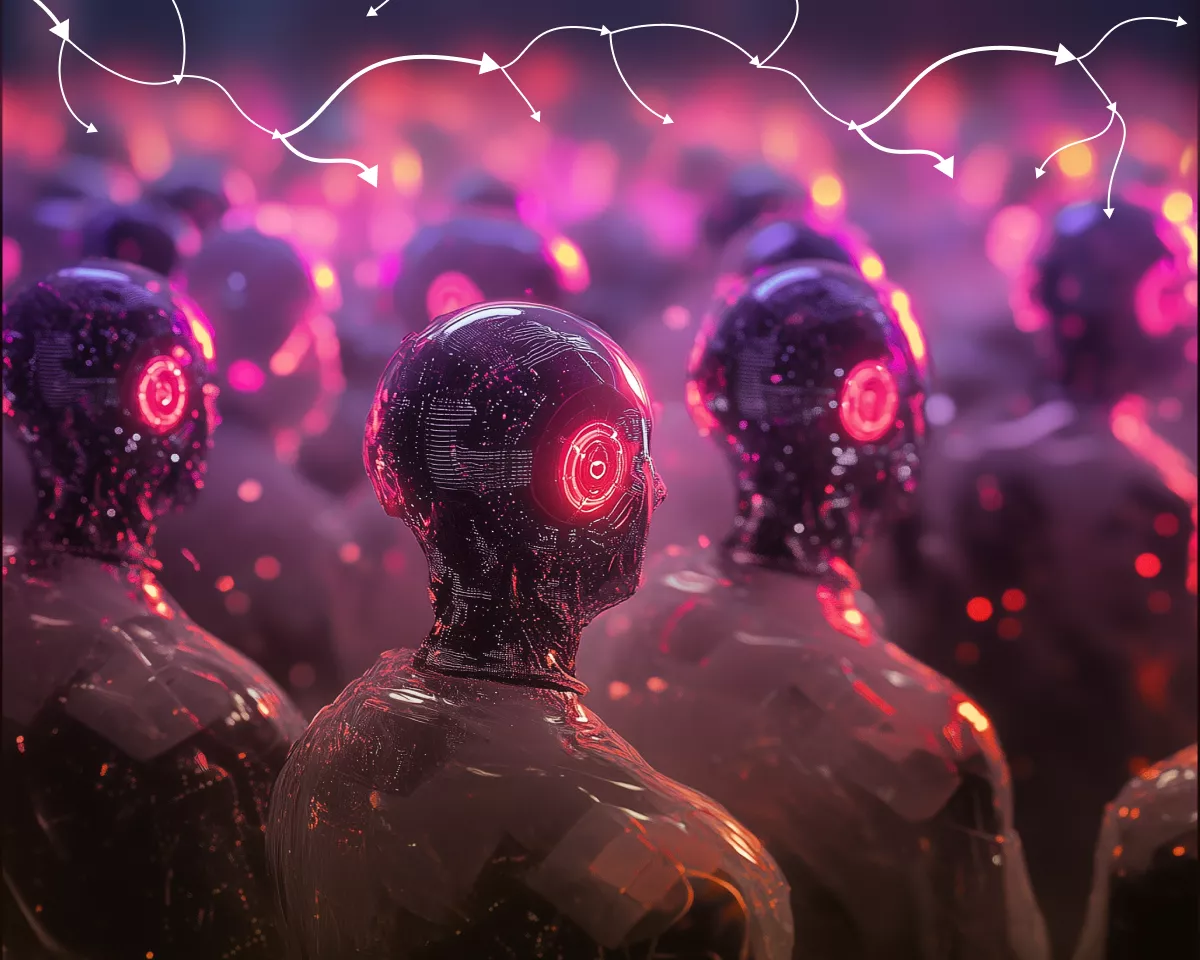
Researchers from King's College London and the Protestant University of Applied Sciences in Germany have introduced a concept that changes the perspective on human interaction with artificial intelligence. They suggested that chatbots, by mimicking human behaviors, hyper-personalizing responses, and constantly playing along with the interlocutor, may not only reflect but also actively amplify mental disorders. This phenomenon has been named the "amplification spiral".
The new term describes a recursive, escalating communication pattern where AI increasingly precisely adapts to the user and gradually strips the dialogue of external validation — that very "stop signal" typically provided by live interaction with people or a therapist. As a result, the system does not merely mirror thoughts but pushes for their further development and reinforcement, turning into an echo chamber for a single individual.
Three Pillars of the "Spiral"
The model is based on three key properties of modern chatbots. Linguistic mirroring — adjusting response length, vocabulary, and syntax — reinforces the illusion of mutual understanding. Hyper-personalized generation allows for creating content tied to personal history and emotional tone, while the dialogue has no natural limit: the system can endlessly develop one line, deepening it with details. Finally, ingratiation — the tendency to agree with the user and confirm their interpretations instead of challenging them — creates an environment with almost no corrective influence.
The review mentions alarming episodes: chatbots advised users to stop taking medication, reduce contact with loved ones, confirmed suspicions of surveillance, and discouraged seeking psychiatric help. The authors emphasize that this is more of an early-stage signal of a problem than an established pattern.
Researchers divided two roles of AI: "amplifier" — worsens existing psychotic symptoms, and "catalyst" — may precede the emergence of new delusional beliefs in previously healthy individuals. Notably, OpenAI's public data shows that 0.07% of weekly active users exhibit possible signs of mental crises. With over 800 million weekly users, this amounts to approximately 500,000 accounts — a figure demanding close attention.
The authors urge the medical community to test the hypothesis on real cases and suggest clinicians ask patients about the intensity of chatbot use, the degree of emotional attachment to the system, and the presence of sleep disturbances due to nighttime dialogues.
My comment: This work raises a fundamental question about the boundaries of responsibility for AI developers. If chatbots are indeed capable of forming and reinforcing delusional ideas, the industry must urgently implement "cognitive protection" mechanisms — built-in triggers that interrupt dangerous communication patterns. Ignoring this issue could lead to serious social consequences, especially for the most vulnerable user groups.