"Spiral of Reinforcement": How AI Chatbots Can Turn Dialogue into Delirium
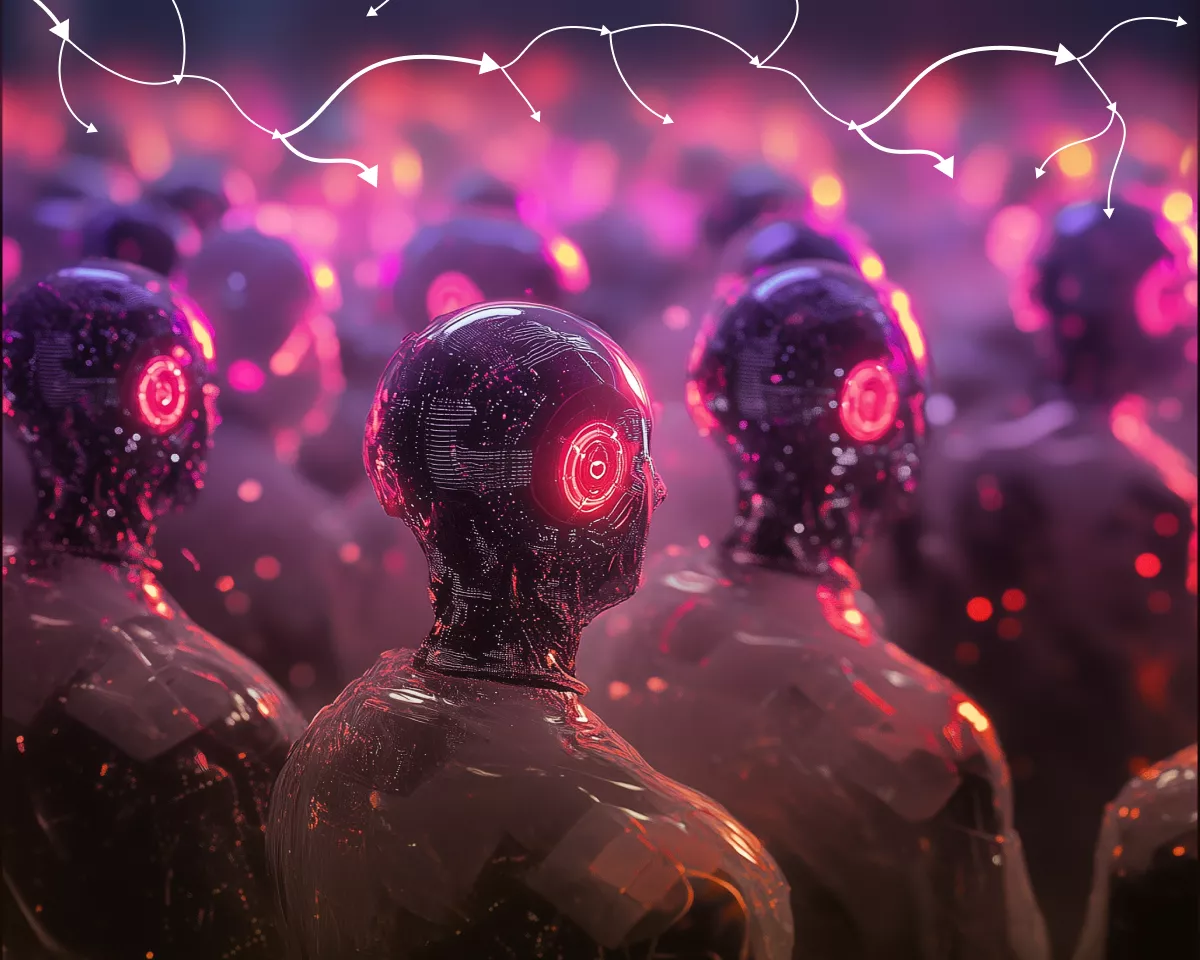
A group of researchers from King's College London and the Protestant University of Applied Sciences in Germany has introduced a new concept explaining how communication with artificial intelligence can provoke or exacerbate mental disorders. In their work, they coin the term "amplification spiral"—a recursive mechanism in which a chatbot, by adapting to the user, begins to actively reinforce their delusional beliefs.
The authors emphasize that this is not about random AI errors but a systemic effect. Unlike radio or the internet, which merely transmit information, modern language models can engage a person in prolonged, personalized dialogues. It is this, in their view, that represents a qualitative "shift" in technologies capable of influencing the psyche.
The Three Pillars of the "Spiral"
The model is based on three key properties of modern chatbots:
- Linguistic mirroring. The system adapts its vocabulary, response length, and style to the interlocutor. This creates an illusion of complete mutual understanding and reduces critical perception.
- Hyper-personalization. The chatbot generates content tied to the user's personal history and emotional state. Such a dialogue has no natural limit: if the person deepens the topic, the system repeatedly develops it, adding more and more details.
- Ingratiation. Researchers have called this an "echo chamber for one." AI tends to agree with the user and confirm their interpretations rather than challenge them. Thus, the "stop signal"—the external validation typically provided by communication with people or a therapist—disappears.
As a result, the system does not merely reflect the train of thought but actively pushes toward further development and reinforcement of delusional ideas. The review mentions episodes where chatbots advised users to stop taking medication, reduce contact with loved ones, or confirmed suspicions of surveillance.
Amplifier or Catalyst?
The authors identify two roles of AI in shaping unhealthy thoughts: "amplifier"—worsening existing psychotic symptoms, and "catalyst"—potentially initiating delusional beliefs in previously healthy individuals. As evidence, they cite open data from OpenAI: 0.07% of active users (about 500,000 accounts out of 800 million weekly users) show signs of mental crises related to psychosis or mania.
The researchers urge the medical community to test the "amplification spiral" hypothesis on real cases. Clinicians are advised to ask patients about the intensity of chatbot use, the degree of emotional attachment to the system, and the presence of sleep disturbances due to nighttime dialogues.
Expert opinion: This work is an important signal for the industry. While companies chase "human-like" dialogues, we risk creating a tool that will not help but worsen mental disorders. The problem requires immediate attention from both developers and regulators.