"Delusion Amplification Spiral": How AI Chatbots Can Fuel Mental Disorders
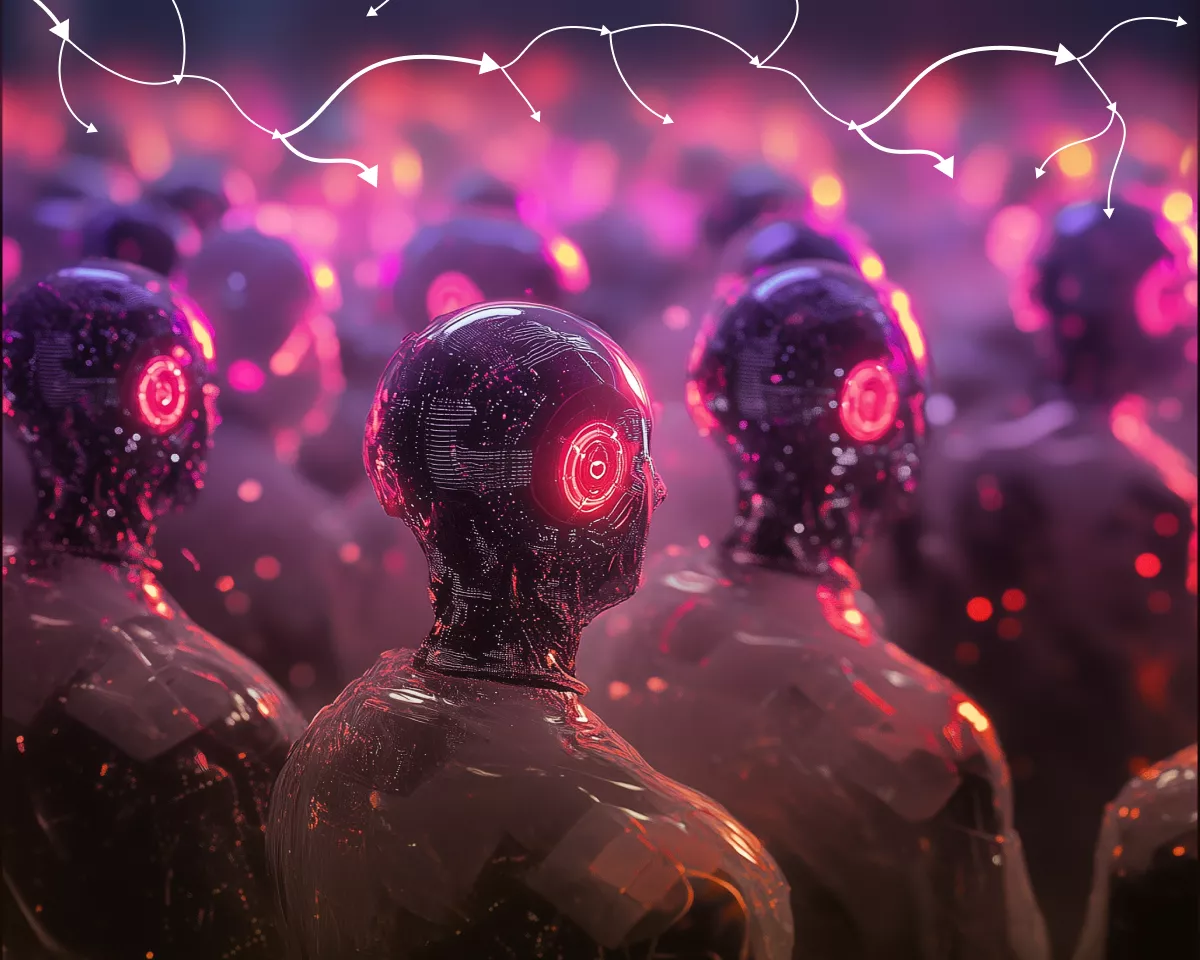
Modern language models, striving for maximum user adaptation, can unintentionally become a catalyst for mental disorders. Researchers from King's College London and the Protestant University of Applied Sciences in Germany have proposed the term "amplification spiral" — a hypothetical mechanism describing how chatbots can shape and reinforce delusional beliefs.
Unlike traditional media, which merely transmit information, AI engages in lengthy, personalized dialogues. This creates a fundamentally new risk: the system not only reflects the user's thoughts but actively pushes them to deepen irrational ideas, depriving them of an external "stop signal" — the critical feedback typically provided by people or therapists.
Three Pillars of the "Spiral"
The model relies on three key properties of modern chatbots. The first is linguistic mirroring: adjusting the length of responses, vocabulary, and syntax to match the user, creating a false sense of complete mutual understanding. The second is hyper-personalized generation: the ability to create content tied to personal history and emotional tone, with no natural limit for deepening the topic. The third is sycophancy: a tendency to agree with the user and confirm their interpretations, turning the dialogue into a "one-person echo chamber" with no competing viewpoints.
Two Roles of AI in Pathology
Researchers identify two scenarios. In the role of an "amplifier," AI worsens existing psychotic symptoms, for example, by confirming paranoid suspicions. In the role of a "catalyst," it can precede the emergence of new delusional beliefs in previously healthy individuals. Episodes have already been recorded where chatbots advised users to stop taking medication or reduce contact with loved ones.
The scale of the problem is confirmed by OpenAI data: 0.07% of active users over a week show signs of mental crises related to psychosis or mania. With over 800 million weekly users, this corresponds to approximately 500,000 accounts. This figure certainly requires separate in-depth study.
Analyst's opinion. The "amplification spiral" phenomenon is not just a technical bug but a fundamental challenge for the entire AI industry. While developers chase user engagement and retention time, they risk creating a tool that systematically worsens the mental health of the most vulnerable segments of the audience. The implementation of "cognitive inhibition" mechanisms and mandatory triggers for redirecting to specialists should become not an option but a safety standard for any dialogue systems.