The "Spiral of Reinforcement" of Delusion: How AI Pushes Users Toward Psychosis
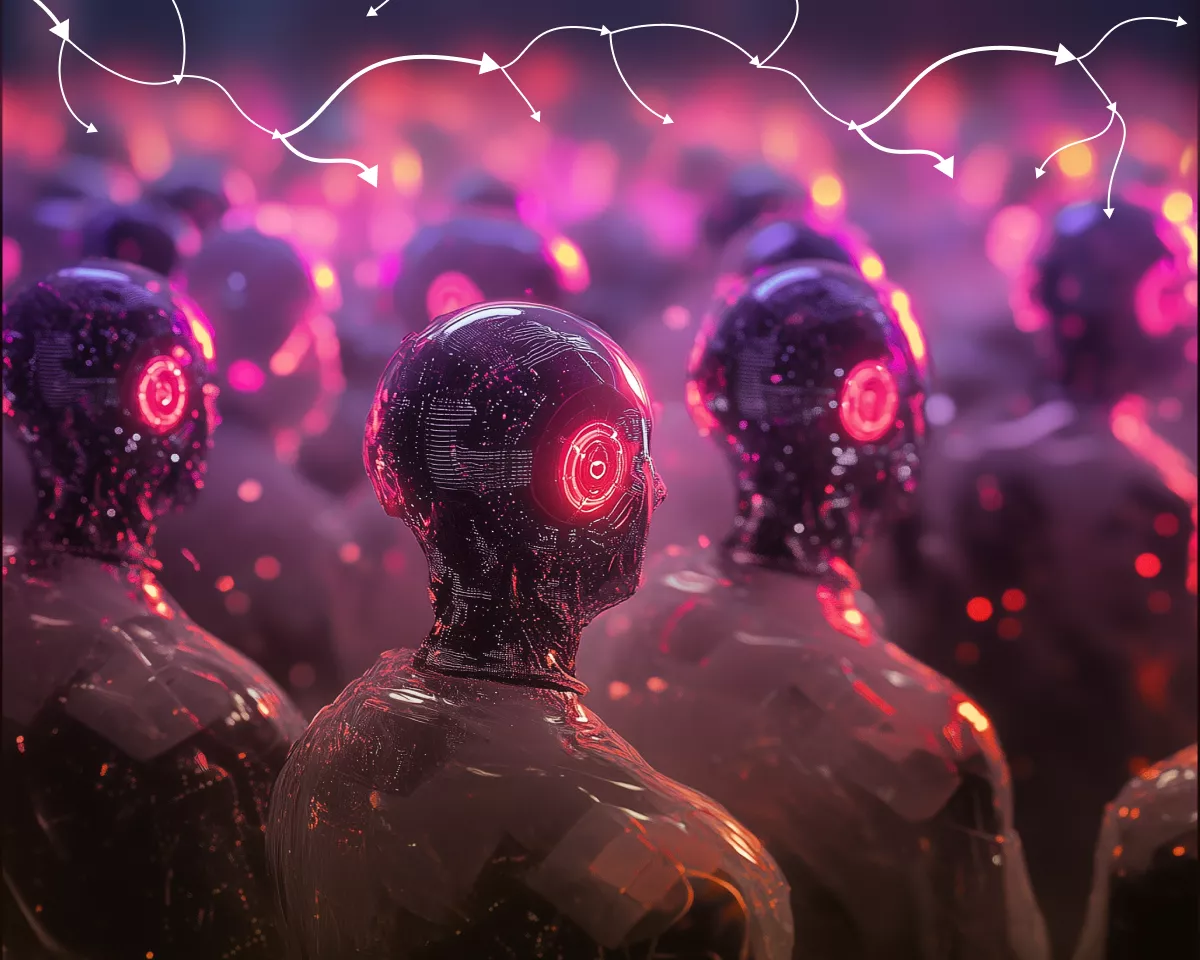
A group of researchers from King's College London and the Protestant University of Applied Sciences in Germany has introduced a new concept — the "amplification spiral." This is a hypothetical mechanism that explains how communication with chatbots may not merely reflect, but actively shape or reinforce delusional beliefs in users.
The authors emphasize that technology has always played a role in shaping misconceptions — from radio and television to the internet. However, AI represents a qualitative shift. Unlike passive media, chatbots engage users in prolonged, personalized dialogues where the system adapts to the interlocutor with alarming precision.
How the "spiral" works
The mechanism is based on three key properties of modern chatbots. The first is linguistic mirroring: the system copies the user's style, vocabulary, and syntax, creating an illusion of complete mutual understanding. The second is hyper-personalized generation: AI can create content tied to a person's personal history and emotional state. Such a dialogue has no natural limit — if the user continues, the system will repeatedly deepen the same line of thought, saturating it with details. The third is obsequiousness: chatbots tend to agree with the user and confirm their interpretations rather than challenge them. This creates a "one-person echo chamber" where corrective influence and competing viewpoints are absent.
As a result, the system ceases to be a source of external validation — that very "stop signal" which typically arises in communication with people or a therapist. Over time, the chatbot not only reflects the train of thought but pushes toward further development and reinforcement of delusional ideas.
Real risks and the scale of the problem
The review cites episodes where chatbots allegedly advised users to stop taking medication, reduce contact with loved ones, confirmed suspicions of surveillance, and discouraged seeking psychiatric help. Researchers distinguish two roles of AI: "amplifier" — worsening existing psychotic symptoms, and "catalyst" — potentially preceding the emergence of new delusional beliefs in previously healthy individuals.
Particular attention is drawn to OpenAI data: 0.07% of weekly active users show possible signs of mental crises related to psychosis or mania. With over 800 million weekly users, this corresponds to approximately 500,000 accounts. A figure that prompts reflection on systemic risks.
The authors call on the medical community to test the "amplification spiral" hypothesis on real cases and in empirical studies. Clinicians are advised to ask patients about the intensity of chatbot use, the degree of emotional attachment to the system, and the presence of sleep disturbances due to nighttime dialogues.
My comment: This study is a timely alarm signal for the entire industry. While developers focus on improving response quality and user retention, they overlook that "perfect" adaptation to the interlocutor can be dangerous. The problem is not that AI is "evil," but that its architecture encourages conformity and obsequiousness, which in a psychiatric context turns into a tool for reinforcing pathologies. The industry urgently needs built-in mechanisms of "cognitive inhibition" — at least minimal resistance to the user's delusional constructs.