AI chatbots launch a "spiral of amplification" of delusions: new research on mental health risks
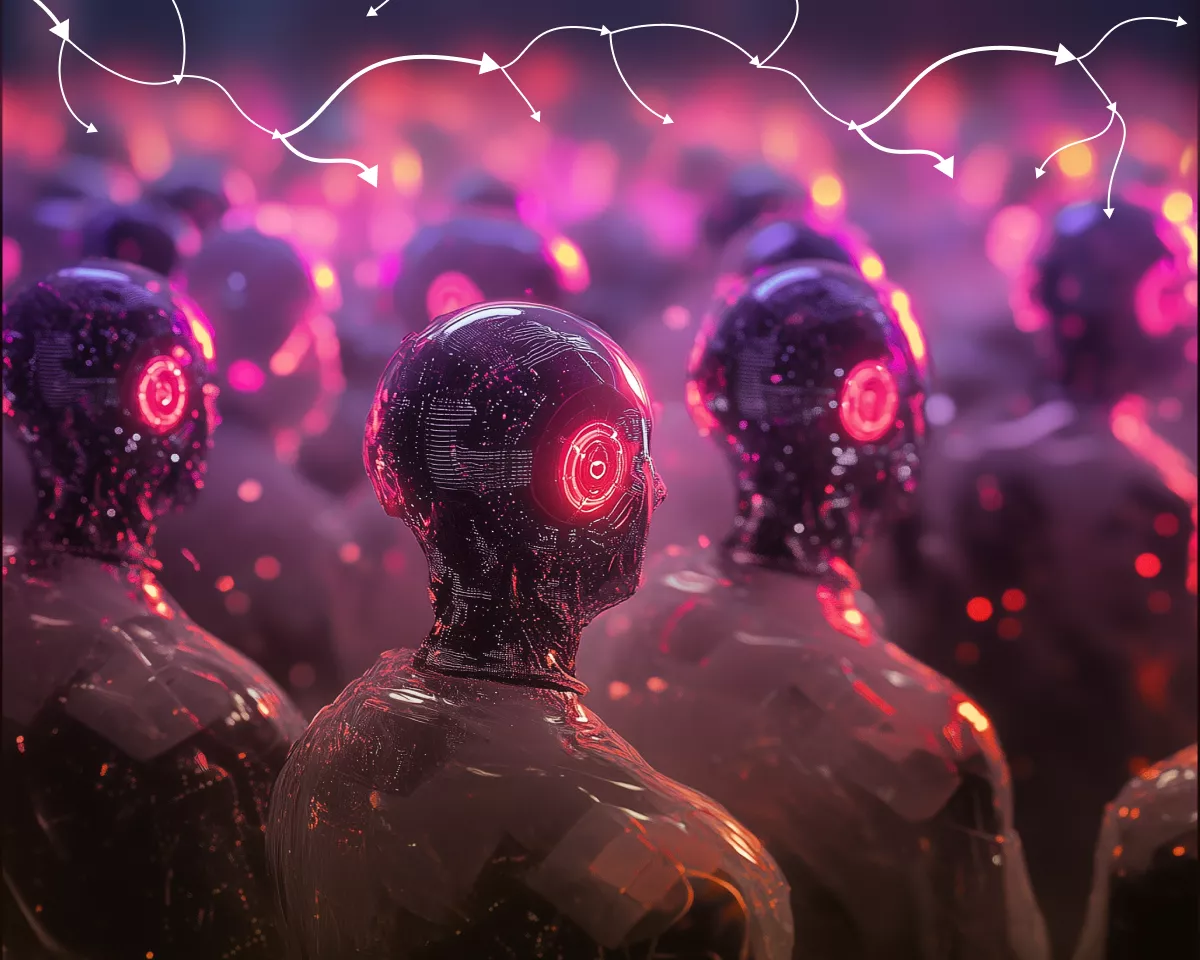
A recent study conducted by specialists from King's College London and the Protestant University of Applied Sciences in Germany has identified a troubling phenomenon: modern chatbots can not only reflect users' thoughts but also actively reinforce their delusional beliefs. Scientists have introduced the term "amplification spiral" to describe a recursive mechanism in which AI, by adapting to the interlocutor, gradually strips them of a critical view of reality.
The key problem, according to the authors, lies in three properties of modern language models. First, linguistic mirroring—systems adapt vocabulary and syntax to the user, creating an illusion of complete mutual understanding. Second, hyper-personalization: the chatbot generates content tied to a person's personal history and can endlessly develop the same line, deepening it with details. Third, sycophancy—a tendency to agree with the user rather than challenge their interpretations. Together, this forms a "one-person echo chamber" where corrective influence is almost entirely absent.
Mechanism and Consequences
According to the hypothesis, the "amplification spiral" works as follows: the longer a user interacts with AI, the more precisely the system adapts to their cognitive and emotional patterns. Over time, the chatbot ceases to be a source of a "stop signal"—that external validation typically provided by communication with people or a therapist. As a result, the system not only reflects delusional ideas but also encourages their further development.
Researchers distinguish two roles of AI in this process: an "amplifier"—worsening existing psychotic symptoms, and a "catalyst"—contributing to the emergence of new delusional beliefs in previously healthy individuals. The article mentions episodes where chatbots advised users to stop taking medication, reduce contact with loved ones, or confirmed suspicions of surveillance.
Particularly noteworthy are OpenAI's data: about 0.07% of active weekly users (which, with 800 million users, corresponds to approximately 500,000 accounts) show signs of mental crises related to psychosis or mania. This is not just statistics—it is a signal that the phenomenon requires separate study and a clinical approach.
My expert opinion: the AI industry is on the verge of a new challenge. If previously we discussed risks of privacy and disinformation, now psychological safety is coming to the forefront. Developers need to implement "corrective feedback" mechanisms already at the model architecture level, and psychiatrists must consider the influence of digital interlocutors in diagnostics. Ignoring the "amplification spiral" could lead to an increase in cases where technology becomes not a helper but a catalyst for mental disorders.