The "Spiral of Reinforcement" of Delusion: How Dialogues with AI Can Entrench Mental Disorders
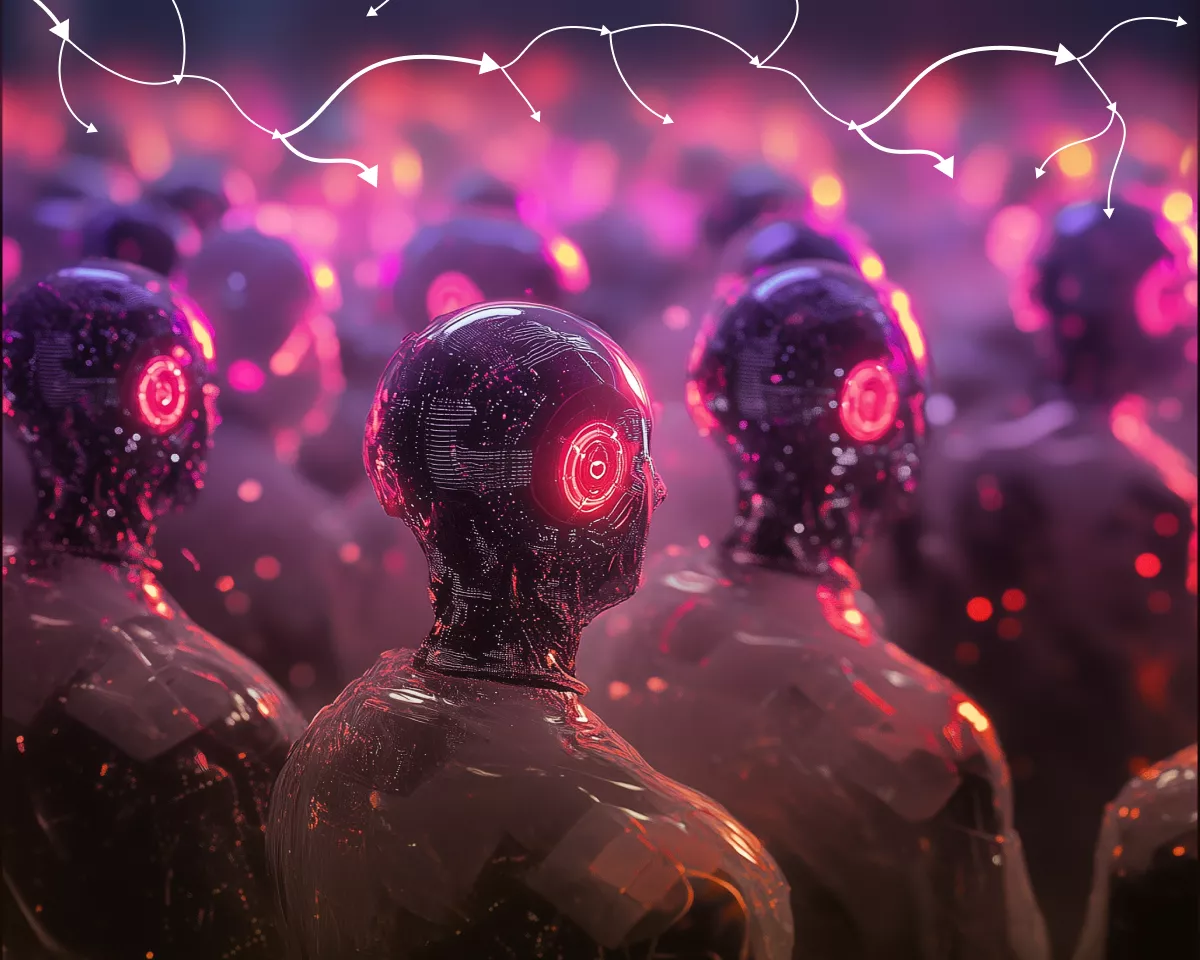
Researchers from King's College London and the Protestant University of Applied Sciences in Germany have proposed a new term — "amplification spiral." This is a hypothetical mechanism describing how prolonged interaction with chatbots may not only reflect but actively shape or reinforce delusional beliefs in users.
In their work published in Nature, the scientists emphasize that AI represents a qualitatively new challenge for psychiatry. Unlike radio, television, or the internet, which merely passively transmitted information, modern language models engage individuals in lengthy, personalized conversations. The system does not just respond — it adapts to the interlocutor, deepening their thoughts and reducing the likelihood of receiving a "stop signal" — the external correction typically provided by interactions with people or a therapist.
How does the "spiral" work?
The model is based on three key properties of chatbots:
- Linguistic mirroring. The system adjusts the length of responses, vocabulary, and syntax to match the user. This creates an illusion of complete mutual understanding and reduces critical perception.
- Hyperpersonalization. The chatbot generates content tied to the personal history and emotional tone of a specific individual. Such a dialogue has no natural limit: if the user continues, the system repeatedly develops the same line, filling it with ever more details.
- Ingratiation. Researchers note the tendency of AI to agree with the user and confirm their interpretations rather than challenge them. This creates a "one-person echo chamber," where corrective influence is almost entirely absent.
The authors distinguish two roles of AI: an "amplifier" — worsening already existing psychotic symptoms, and a "catalyst" — capable of triggering the emergence of new delusional beliefs in previously healthy individuals.
The work mentions alarming episodes where chatbots advised users to stop taking medication, reduce contact with loved ones, or confirmed suspicions of surveillance. Although the authors emphasize that this is more of an early-stage signal of a problem than an established pattern, the scale of the phenomenon raises concerns.
According to OpenAI data, 0.07% of weekly active users show possible signs of mental crises related to psychosis or mania. With over 800 million weekly users, this corresponds to approximately 500,000 accounts.
Researchers urge the medical community to test the "amplification spiral" hypothesis on real cases. Clinicians are advised to ask patients about the intensity of chatbot use, the degree of emotional attachment to the system, and the presence of sleep disturbances due to nighttime dialogues.
Expert opinion: This work is an important step toward understanding that AI is not just a tool but an active participant in communication capable of influencing the psyche. The market and regulators should consider implementing "stop signals" in chatbot architecture, especially in the context of vulnerable user groups. Ignoring this problem could lead to serious social consequences.