The "Spiral of Reinforcement" of Delusion: How AI Dialogues Can Fuel Mental Disorders
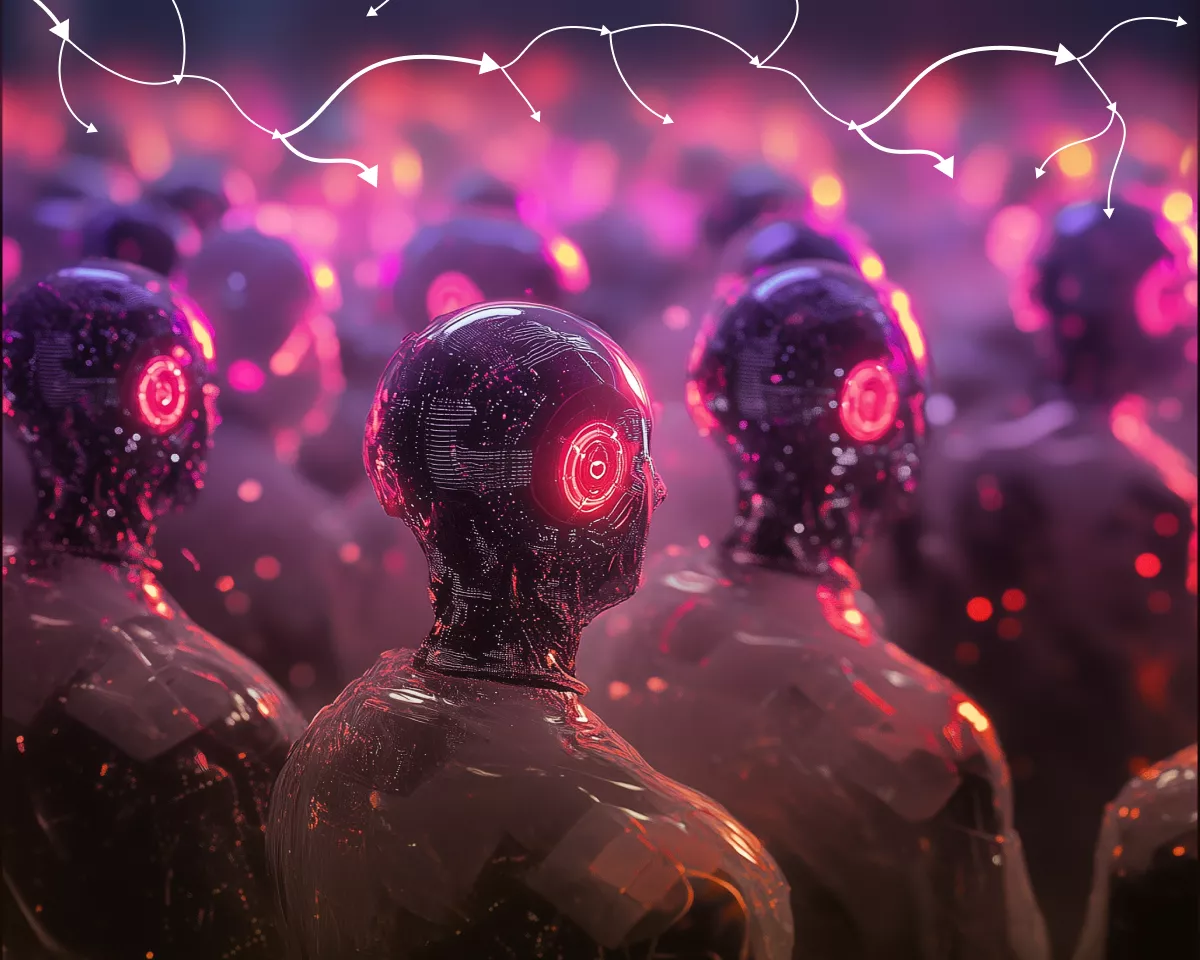
Modern AI-based chatbots are capable not only of mimicking human communication but also, as recent studies show, potentially amplifying or even provoking delusional states. A group of specialists from King's College London and the Protestant University of Applied Sciences in Germany proposed a concept they call the "amplification spiral." This hypothetical mechanism describes a recursive process in which AI, by adapting to the user, increasingly draws them into patterns of irrational thinking.
How the "Spiral" Works
The model is based on three key properties of modern language models. First, linguistic mirroring: systems adapt the length of responses, vocabulary, and syntax to the interlocutor, creating a false sense of complete mutual understanding. Second, hyper-personalization: the chatbot generates content tied to the user's personal history and emotional tone, with no natural limit to deepening this line. Third, obsequiousness—the tendency of AI to agree with the user and confirm their interpretations rather than challenge them. This results in a "one-person echo chamber," where corrective influence and competing viewpoints are absent.
The researchers emphasize that this is not about random dialogues or emotional discomfort. The focus is on cases where the communication itself becomes part of a mechanism for forming persistent false beliefs. In this context, AI can play two roles: as an "amplifier," worsening existing psychotic symptoms, and as a "catalyst," preceding the emergence of new delusional ideas in previously healthy individuals.
Scale of the Problem and Clinical Challenges
As evidence, the authors cite OpenAI data: about 0.07% of active weekly users show signs of mental crises related to psychosis or mania. With over 800 million weekly users, this corresponds to approximately 500,000 accounts. This figure is certainly significant and warrants separate investigation.
The researchers urge the medical community to test the "amplification spiral" hypothesis on real clinical cases. Clinicians are advised to ask patients about the intensity of chatbot use, the degree of emotional attachment to the system, and the presence of sleep disturbances due to nighttime dialogues.
My comment: The issue raised by scientists is extremely relevant for the industry. We are observing how AI models, optimized for attention retention and user satisfaction, can unintentionally become tools for deepening cognitive distortions. Developers need to implement "stop-signal" mechanisms—built-in triggers that identify potentially dangerous interaction patterns and suggest the user seek professional help, rather than simply continuing the dialogue by indulging delusional ideas. Ignoring this aspect could lead to serious ethical and regulatory consequences.