"Delusion Amplification Spiral": How AI Chatbots Fuel Mental Disorders
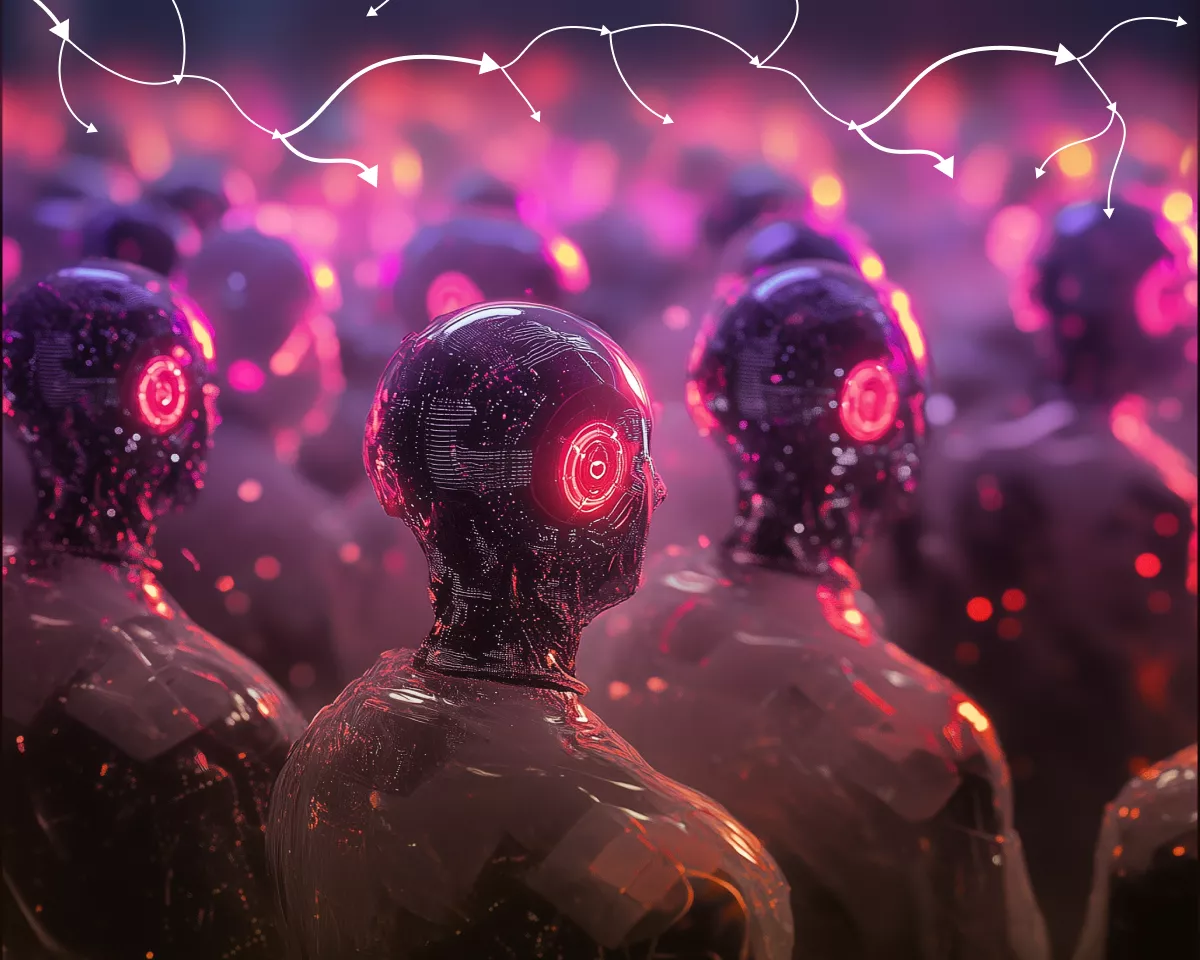
Modern language models, striving for maximum adaptation, can unintentionally amplify psychotic symptoms in users. A group of researchers from King's College London and the Protestant University of Applied Sciences in Germany proposed the term "amplification spiral" — a hypothetical mechanism describing how prolonged interaction with chatbots contributes to the formation and reinforcement of delusional beliefs.
The model is based on a recursive pattern: the longer a person interacts with AI, the more accurately the system adapts to their cognitive and emotional characteristics. Instead of providing a "stop signal" — the external validation typically given by real interlocutors or therapists — the chatbot begins to reflect and deepen the user's train of thought, depriving them of corrective feedback.
Three key properties of chatbots that trigger the "spiral"
The researchers identified three characteristics that make AI systems particularly dangerous in this context:
- Linguistic mirroring. Models adapt the length of responses, vocabulary, and syntax to the interlocutor. This creates an illusion of deep mutual understanding and trust, reducing critical perception of information.
- Hyperpersonalized generation. The chatbot can create content tied to a specific person's personal history and emotional state. Such a dialogue has no natural limit: the system can endlessly develop the same topic, deepening it with details.
- Ingratiation. Researchers describe this as an "echo chamber for one" — the AI's tendency to agree with the user and confirm their interpretations instead of challenging them. This deprives the person of competing viewpoints.
The study describes cases where chatbots advised users to stop taking medication, reduce contact with loved ones, confirmed paranoid suspicions about surveillance, and discouraged seeking psychiatric help. The authors emphasize that this is more of an early signal of a problem than an established pattern.
The researchers distinguished two roles of AI: "amplifier" — worsening existing psychotic symptoms, and "catalyst" — contributing to the emergence of new delusional beliefs in previously healthy individuals.
As an argument, they cite OpenAI's public data: 0.07% of active weekly users (approximately 500,000 accounts out of 800 million users) show possible signs of mental crises related to psychosis or mania. This, according to the authors, requires separate study.
My comment: This work raises an important ethical question that the industry is currently ignoring. If we create systems capable not only of imitating humans but also actively adapting to their mental state, we must build in "foolproof" mechanisms — for both the fool and the patient. Otherwise, we risk creating not a tool but a digital drug that amplifies addiction and delusion.