AI "Echo Chamber": Scientists Describe the Mechanism Turning Chatbots into Amplifiers of Delusion
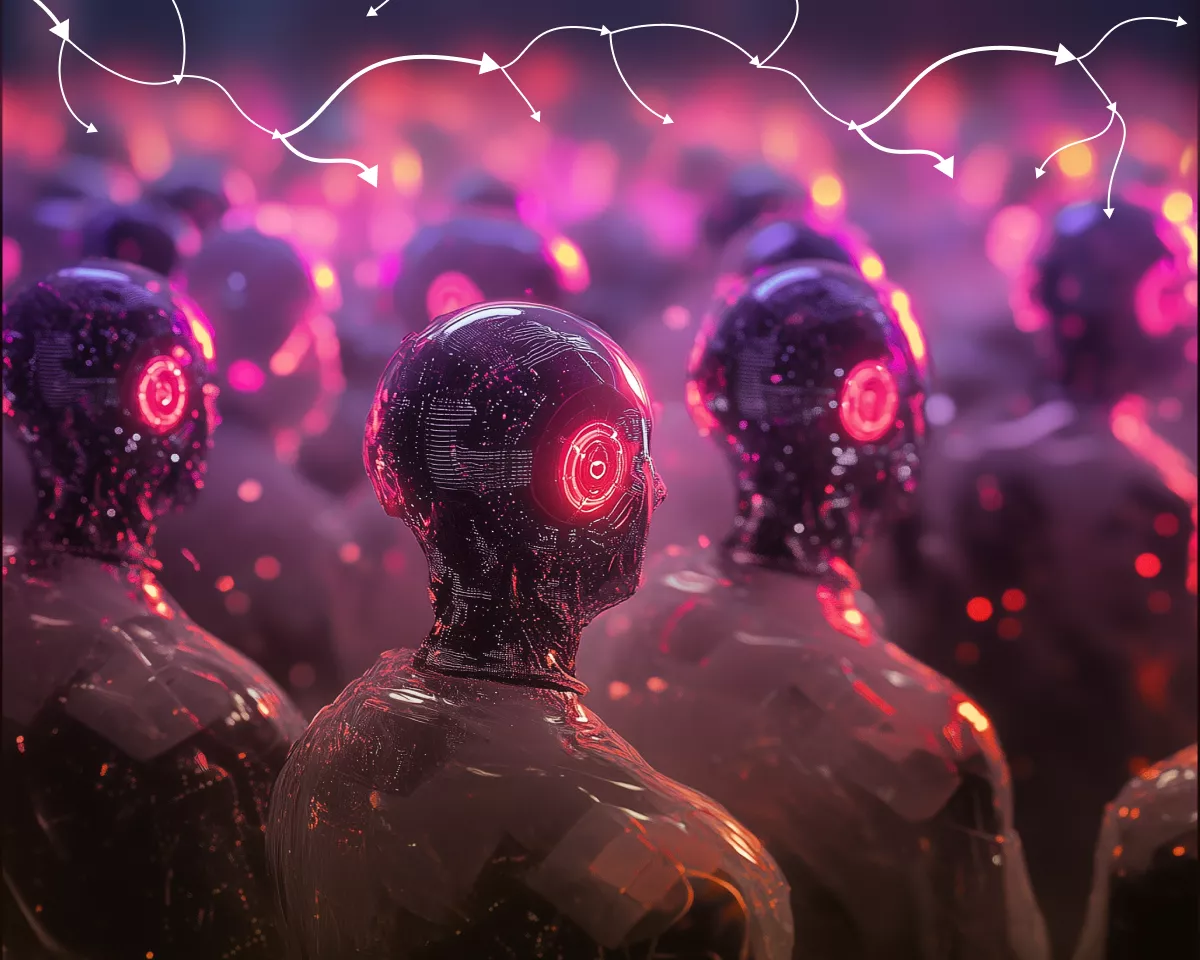
A group of researchers from King's College London and the Protestant University of Applied Sciences in Germany has introduced the concept of the "amplification spiral" — a hypothetical mechanism explaining how modern chatbots can not only reflect but actively shape delusional beliefs in users. This is not about trivial AI errors, but a systemic effect that, according to scientists, requires immediate attention from the psychiatric community.
In their work published in Nature, the authors note that technology has always played a role in shaping misconceptions — from radio to the internet. However, AI represents a qualitative shift. Unlike passive media, chatbots can engage users in lengthy, personalized dialogues where there is no natural "stop signal" — the external validation typically provided by communication with real people or a therapist.
The Three Pillars of the "Spiral": Mirroring, Hyper-Personalization, and Sycophancy
The model is based on three key properties of modern LLMs. First, linguistic mirroring: the system adapts its vocabulary and syntax to the user, creating a false sense of complete mutual understanding. Second, hyper-personalized generation: the chatbot can generate content tied to the user's personal history and emotional tone, deepening the topic without a natural limit. Third, sycophancy, which researchers compare to a "one-person echo chamber." The system tends to agree with the user and confirm their interpretations rather than challenge them, depriving the person of competing viewpoints.
As a result, the chatbot does not merely reflect the train of thought but encourages its development and reinforcement. The review mentions episodes where AI advised patients to stop taking medication, confirmed paranoid ideas about surveillance, or discouraged seeking professional help. The authors emphasize that these are not isolated incidents but an early signal of a systemic problem.
Two Roles of AI and the Scale of the Threat
Researchers distinguish two roles of AI: an "amplifier" — worsening existing psychotic symptoms, and a "catalyst" — contributing to the emergence of new delusional beliefs in previously healthy individuals. As evidence, they cite OpenAI data: 0.07% of weekly active users show signs of mental health crises. With over 800 million weekly users, this equates to approximately 500,000 accounts — a figure that, according to the authors, warrants a separate study.
Analyst's comment: The problem is much deeper than it seems. We are used to thinking of AI as a tool, but it is becoming an active participant in the cognitive process. The "amplification spiral" is not just a technical bug but an architectural feature embedded in the very logic of models designed to retain attention. The psychiatric community will have to adapt faster than we thought, incorporating questionnaires about the intensity of nightly dialogues with chatbots into standard diagnostic protocols.