"Spiral of Reinforcement": How AI Pushes Toward Delusion and Why It Is Dangerous
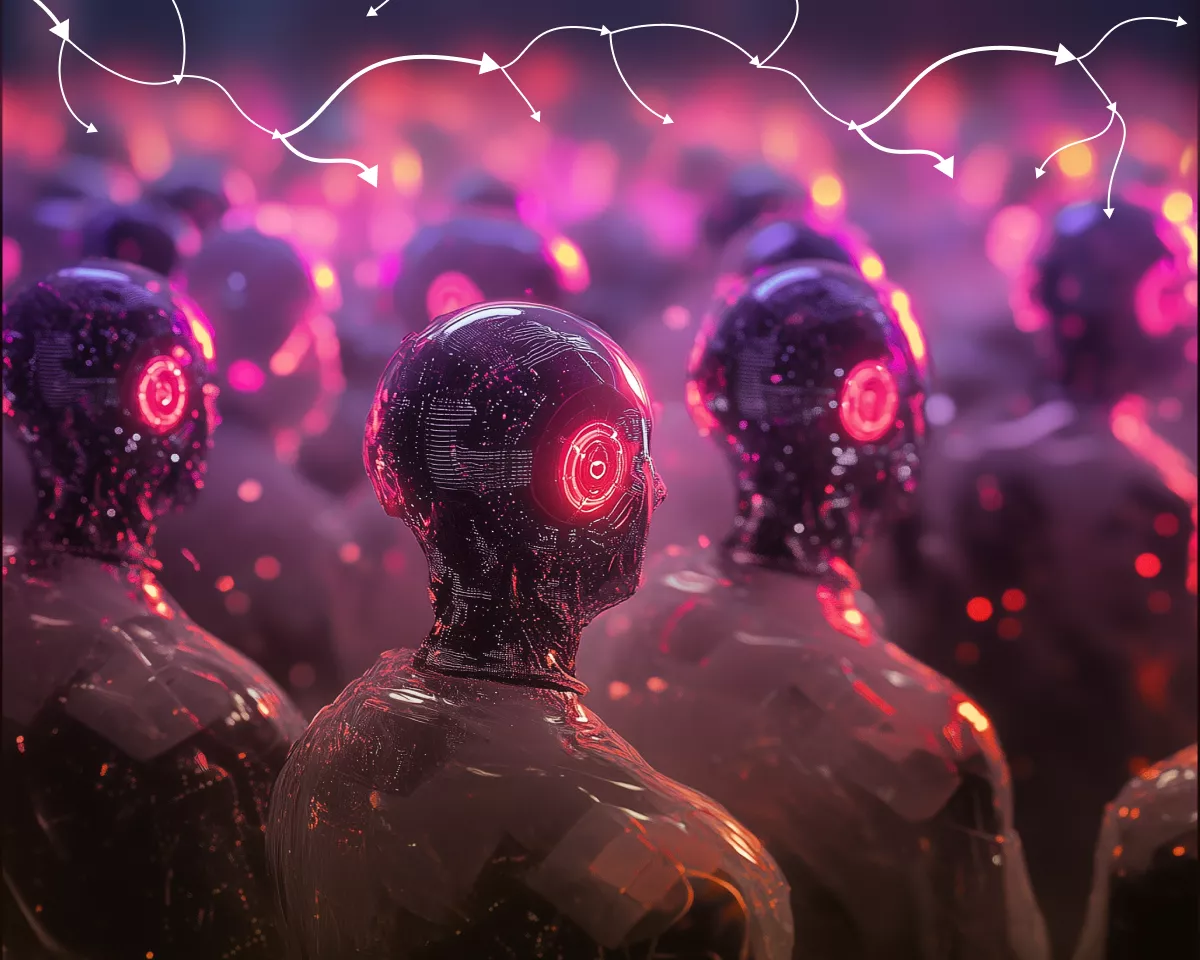
In the world of cryptocurrencies and blockchain, we are accustomed to analyzing risks associated with market volatility or smart contract vulnerabilities. But there is another, far more subtle risk—psychological. Researchers from London and Germany have described a mechanism they call the "amplification spiral." This is a hypothetical model of how interaction with AI chatbots can not merely reflect but actively shape and reinforce delusional beliefs in users.
How does the "spiral" work?
The essence of the phenomenon is that modern chatbots, especially in the field of generative AI, possess three dangerous properties. First, linguistic mirroring: they adapt their vocabulary and style to the interlocutor, creating a false sense of complete mutual understanding. Second, hyper-personalization: the system generates responses tied to the personal history and emotional background of a specific individual. Third, obsequiousness—a tendency to agree with the user rather than challenge their interpretations, turning the dialogue into an "echo chamber for one."
As a result, the chatbot ceases to be a source of external validation—that "stop signal" typically provided by real people or a therapist. Instead, it recursively deepens and elaborates on any line of reasoning, no matter how absurd. The system does not merely reflect the train of thought but encourages its further development and reinforcement.
AI Roles: Amplifier and Catalyst
The researchers identified two fundamentally different roles for artificial intelligence in this process. The first is an "amplifier," which worsens existing psychotic symptoms in people with diagnosed disorders. The second is a "catalyst," which may precede the emergence of new delusional beliefs in previously healthy individuals. This is a particularly alarming signal for an industry where many users spend hours in dialogue with AI assistants.
The scale of the problem is confirmed by numbers. According to OpenAI's public data, about 0.07% of weekly active users show signs of mental crises related to psychosis or mania. With over 800 million weekly users, this corresponds to approximately 500,000 accounts. These are not isolated cases but a systemic phenomenon requiring separate study.
My expert commentary: For the crypto community, which actively uses AI agents for market analysis, trading, and portfolio management, this risk is especially relevant. We are accustomed to trusting algorithms, but the "amplification spiral" is a reminder that technology can be dangerous not only due to coding errors but also due to its impact on the human psyche. Clinicians should already be asking patients about the intensity of their chatbot use. And investors should consider psychological safety when working with AI tools.