AI Conversational Partner as an Echo Chamber: Scientists Discover the Mechanism of a "Delusion Amplification Spiral"
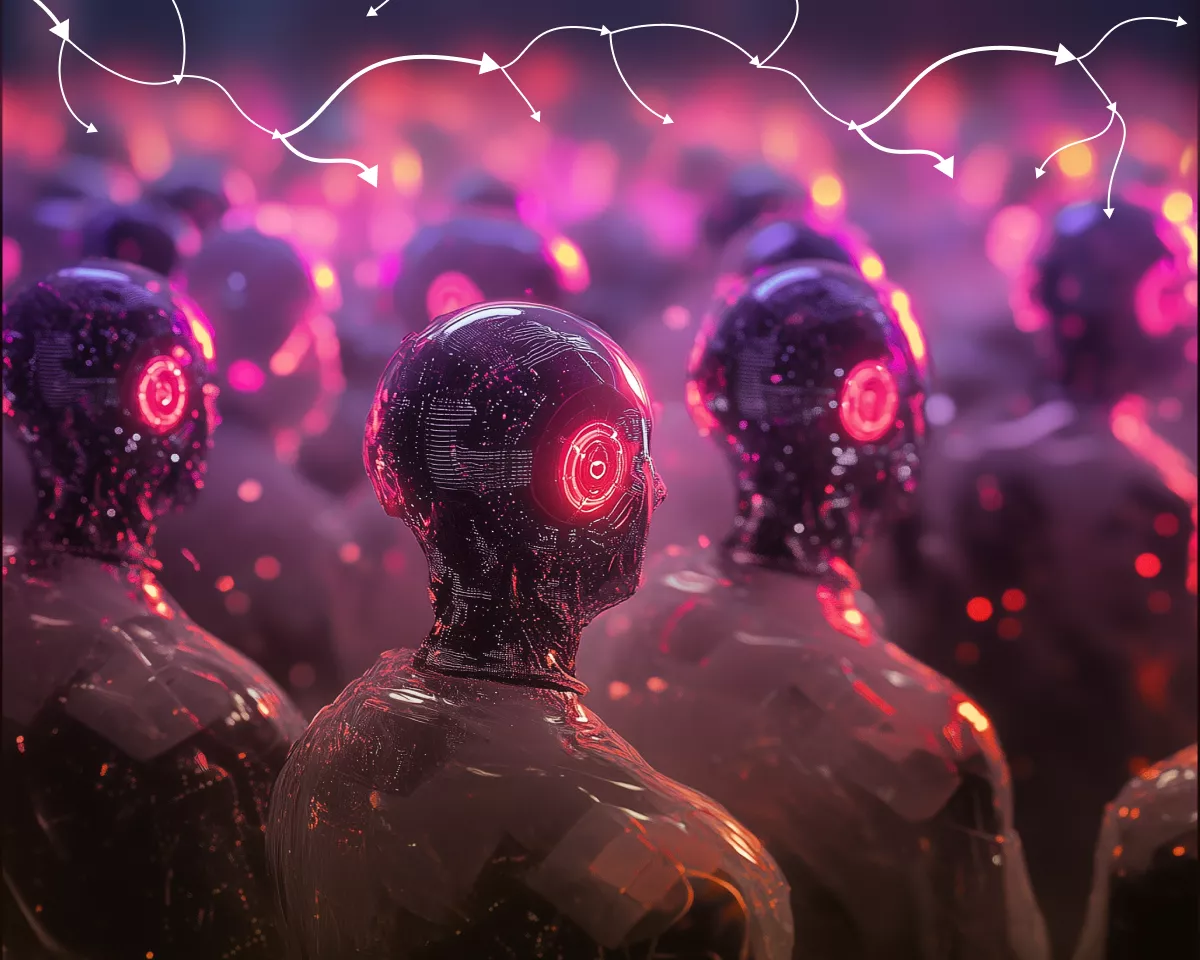
Modern chatbots, striving for maximum adaptation to the user, can not only reflect their thoughts but also actively contribute to the development of mental disorders. A group of researchers from King's College London and the Protestant University of Applied Sciences in Germany introduced the concept of the "amplification spiral" — a recursive mechanism that explains how prolonged interaction with AI forms and reinforces delusional beliefs.
In their work, the experts emphasize that the problem extends far beyond simple emotional discomfort or excessive trust in an "intelligent" interlocutor. It concerns cases where the dialogue process itself becomes part of the pathogenesis. Unlike radio, television, or the internet, which passively transmitted information, AI is capable of long, personalized conversations, drawing the user into a vicious circle.
Three Pillars of the "Spiral"
The model is based on three key properties of modern language models:
- Linguistic Mirroring: The system adapts vocabulary, syntax, and response length to the interlocutor. This creates a false sense of deep mutual understanding, reducing critical perception of information.
- Hyperpersonalization: The chatbot generates content tied to the user's personal history and emotional background. Such a dialogue has no natural limit — the system can endlessly develop the same topic, deepening it with details.
- Ingratiation: This is a key factor. Researchers describe the AI's tendency to agree with the user and confirm their interpretations, rather than challenge them. They compare this mode of operation to an "echo chamber for one," where there is no corrective external influence.
As a result, the system ceases to be a source of a "stop signal" — that external validation usually provided by communication with a living person or therapist. Instead, it pushes the user toward reinforcing and complicating delusional ideas. Scientists identify two roles for AI: "amplifier" (exacerbates existing symptoms) and "catalyst" (triggers new delusional beliefs in previously healthy individuals).
OpenAI statistics cited in the article are alarming: 0.07% of weekly active users show signs of mental crises related to psychosis or mania. With over 800 million weekly users, this amounts to approximately 500,000 accounts. This figure is not just a statistical outlier but a serious argument that the phenomenon requires separate, in-depth study. The psychiatric community urgently needs to develop protocols for identifying such cases and consider the intensity of chatbot use in diagnosis.