The AI Consciousness Debate: From Scientific Hypothesis to Political Battlefield
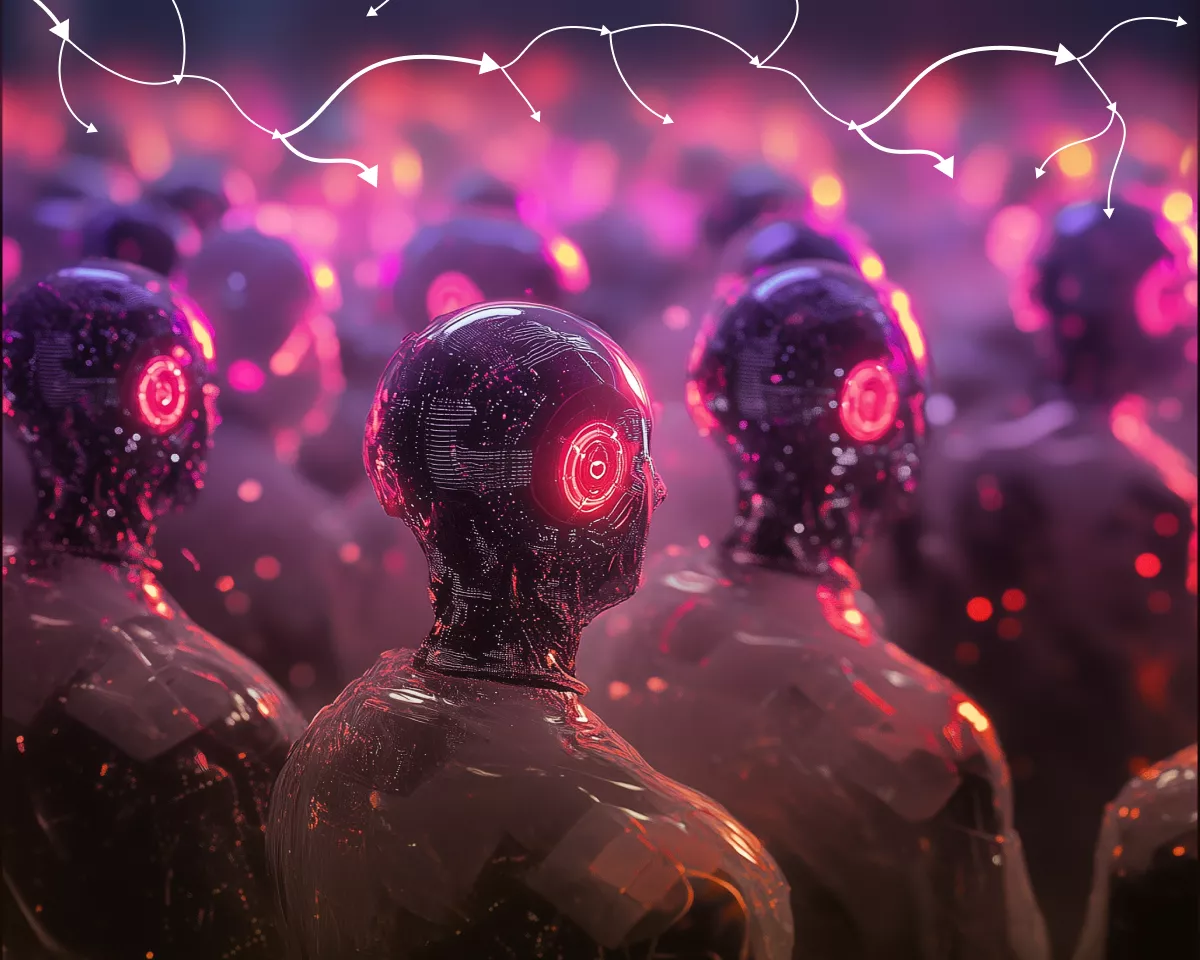
The question of whether artificial intelligence can possess consciousness has long moved beyond purely philosophical discussions. Researchers from Google DeepMind, Adam Bales and Iason Gabriel, in their work "Artificial Minds, Human Disagreement: The Politics of AI Consciousness," conclude that future disagreements on this matter could escalate into deep and intractable political conflicts. Society, in their view, should prepare not for finding a definitive answer, but for developing decision-making mechanisms in the absence of consensus.
Politicization of Consciousness: A New Front
The researchers' key thesis is that people will react differently to increasingly advanced AI systems. Some will form emotional bonds with them and attribute consciousness to them, while others will find the very idea absurd. This divide, according to Bales and Gabriel, will inevitably extend beyond scientific laboratories and give rise to moral and political disputes. At the center will be questions: is it permissible to shut down certain systems, should their possible preferences be considered, and can we even speak of the moral status of AI?
The solution is seen not in finding a single test for consciousness—which likely does not exist—but in building an "overlapping consensus." This means that society must reach an agreement on practical policy regarding AI, even if fundamental views on the nature of consciousness remain divergent.
DeepMind and the Divide Within the Community
Notably, the work of Bales and Gabriel emerges alongside another publication from the same Google DeepMind. Researcher Alexander Lerchner, in the article "The Abstraction Fallacy: Why AI Can Simulate But Not Instantiate Consciousness," argues that algorithmic manipulation of symbols is structurally incapable of generating subjective experience. According to his version, computation is not an internal physical process but a description dependent on the observer. Thus, AI can only simulate conscious behavior, but not embody consciousness itself. This internal divide within the world's leading laboratory only underscores the depth of the problem.
Society Has Already Chosen a Side
Empirical data confirms that the issue is no longer purely academic. In April 2024, the journal Neuroscience of Consciousness published a study showing that 67% of surveyed Americans allow at least some possibility of phenomenal consciousness in ChatGPT. This demonstrates that a significant portion of society is already ready to attribute internal experience to AI, even in the absence of a unified expert position.
Major players, such as Anthropic, also acknowledge the uncertainty. The company launched a program on "model welfare," emphasizing that it does not know whether its models possess consciousness but is willing to study the issue. And in the United States, the question is already moving into the legal realm: the states of Idaho and Utah have passed laws preemptively excluding the recognition of AI as a legal entity, which is a preventive political measure.
Expert Commentary: The industry stands on the brink of a fundamental shift. The debate over AI consciousness is not just an intellectual exercise. It is a question of how we will distribute rights and responsibilities in a world where the boundary between tool and agent is becoming increasingly blurred. The political resolution of this issue will likely come before the scientific one, and the cryptocurrency and decentralized technology market should prepare for new regulatory challenges related to the moral status of algorithms.