The AI Consciousness Debate: From Scientific Discussion to Political Crisis — A Cryptalist Analysis
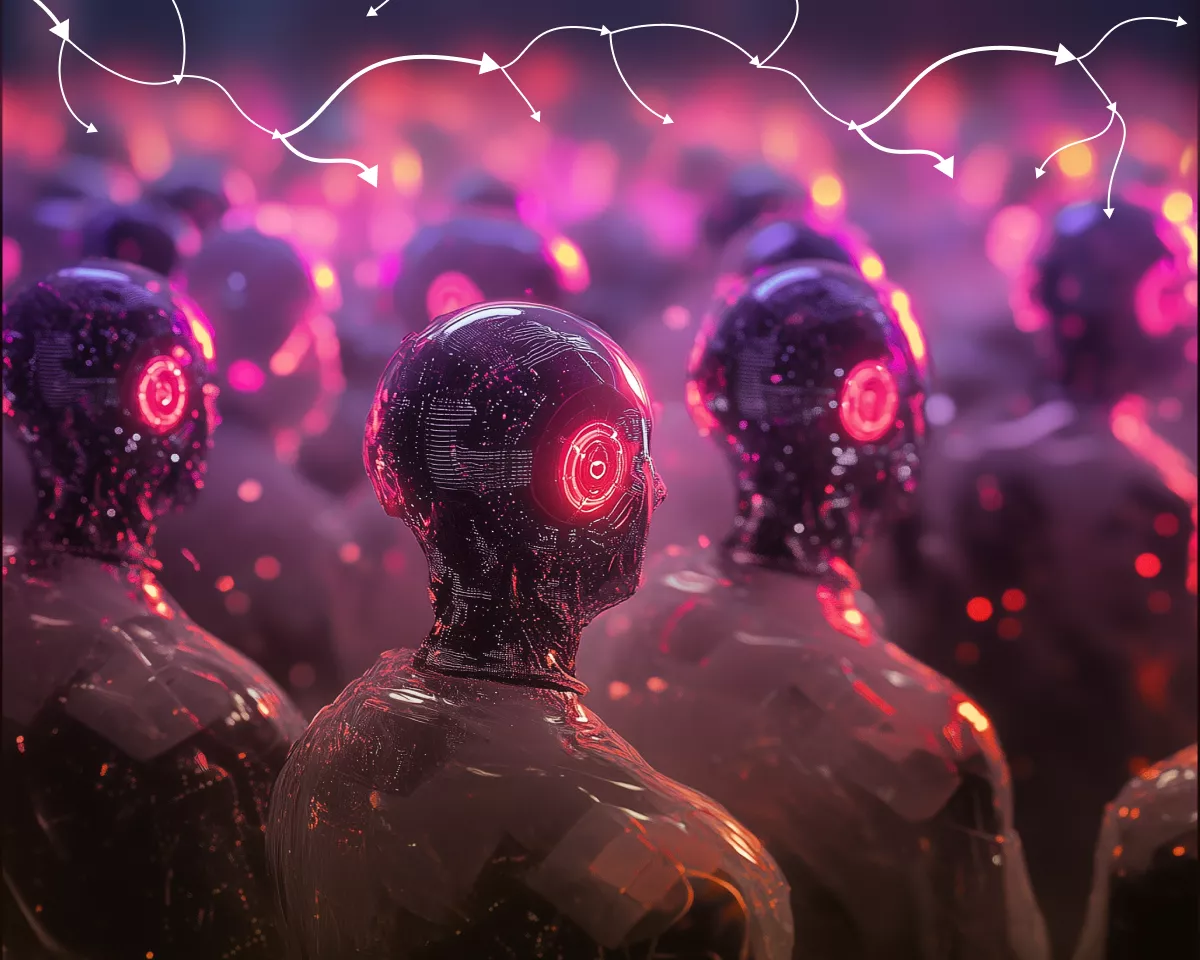
The question of whether artificial intelligence possesses consciousness has long moved beyond purely philosophical discussions. My colleagues from Google DeepMind, Adam Bales and Iason Gabriel, have presented work that fundamentally shifts the perspective: they argue that future disagreements on this issue could become not a scientific, but a political problem, capable of leading to deep and intractable conflicts.
The Political Aspect of Consciousness
The researchers' key thesis is that society should prepare not only to seek an answer to the question "is AI conscious," but also for a scenario where no single answer exists. As technology develops, people will react to AI systems differently: some will attribute emotions and subjective experience to them, while others will consider this idea absurd. Such a divide, according to the authors, will inevitably lead to moral and political debates: can such systems be turned off? Should their "preferences" be considered? What moral status should be assigned to them?
The solution proposed by Bales and Gabriel is not the search for a single truth, but the construction of an "overlapping consensus." This is a situation where parties agree on specific rules and policies regarding AI, even if their fundamental views on the nature of consciousness remain diametrically opposed. This is a pragmatic, yet extremely complex approach that requires a high level of mutual respect and willingness to compromise from all participants.
Why is Science Powerless Here?
The problem is compounded by the fact that there is no single, universally accepted test that could definitively confirm the presence of subjective experience in AI. As the authors aptly note, the question shifts from a technical plane to an institutional one. Society risks facing a situation where technologies are already widely deployed, people are already building relationships with them, but there is still no scientific or political consensus. This creates a vacuum that could be filled with conflicts affecting law, corporate responsibility, and even norms of communication.
Notably, there is no unity within DeepMind itself. Almost simultaneously with the work of Bales and Gabriel, an article by Alexander Lerchner was published, arguing that algorithmic manipulation of symbols is structurally incapable of creating subjective experience. He insists that AI can only simulate conscious behavior, but not embody it. This internal discussion only underscores the depth of disagreement even among leading experts.
Reality: Society is Already Ready to Attribute Consciousness
While experts debate, society is already making its choice. A 2024 study published in the journal Neuroscience of Consciousness showed that 67% of surveyed US residents allow at least some possibility of phenomenal consciousness in ChatGPT. This is a colossal figure that demonstrates that the question of AI consciousness is not an abstract theory, but an already existing social fact.
Major players are also beginning to act. In April 2025, Anthropic launched a research program on "model welfare," and in February 2026, when decommissioning Claude Opus 3, the company left it a public channel for essays. This is an experimental measure, but it shows that the industry is beginning to seriously consider the "rights" of AI. In parallel, the issue is moving into the legal field in the US: Idaho and Utah have already passed laws directly prohibiting the recognition of AI as a legal entity.
My expert opinion: While the crypto industry is focused on token prices and blockchain innovations, we are overlooking a fundamental shift happening before our eyes. The debate over AI consciousness is not futurism. It is a direct impact on regulation, corporate responsibility, and ultimately, the future of decentralized systems. If AI receives moral or legal status, it will completely change the rules of the game for smart contracts and DAOs. A market that does not account for this risk is moving blindly.