Breakthrough in quantum computing: logical qubit survival rate reaches 96% on IBM Heron
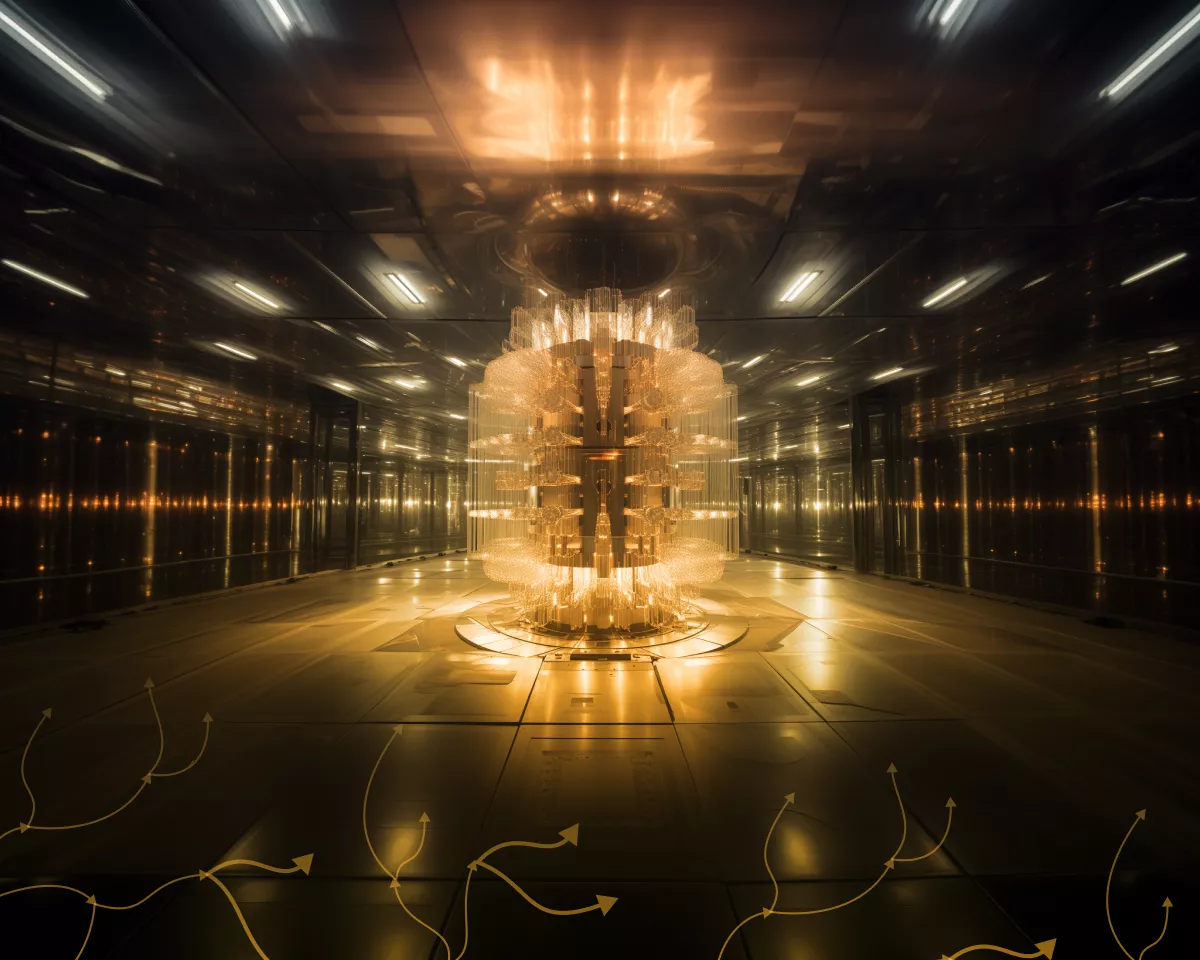
A significant shift has occurred in quantum computing. A team of researchers working on the cutting-edge 156-qubit superconducting processor IBM Quantum Heron r2 has achieved an increase in logical qubit survival rate to 96% per error correction cycle. This is a critically important step toward fault-tolerant quantum systems (FTQC).
The main stumbling block for creating stable quantum machines has been the so-called "idle noise." In modern systems, to correct errors, the processor is forced to regularly conduct internal checks. It is during these pauses that the remaining qubits lose coherence, generating new failures. This problem is the primary bottleneck on the path to practical quantum computing.
New Error Correction Architecture
To solve this problem, physicists completely redesigned the architecture of correction schemes. Instead of tolerating idle periods, they radically reduced the computation downtime. Optimization of algorithms allowed raising the survival rate from less than 90% to 96% — this is not just a number, but proof that "idle noise" can be controlled.
It is important to understand: this result was obtained in laboratory conditions on one specific processor. However, it demonstrates that scalability and fault tolerance, long considered the main barriers for the industry, are beginning to yield. Without such breakthroughs, quantum supremacy would remain merely a theoretical concept.
My comment as an analyst: IBM has already announced plans to obtain the first confirmed cases of quantum advantage by the end of 2026. Given the current pace of improvements and the focus on error correction, these timelines look increasingly realistic. The quantum computing market should closely monitor this direction — it directly impacts the future of cryptography and high-performance computing.