Quantum Breakthrough: Logical Qubit Survival Rate Reaches 96% on IBM Heron Processor
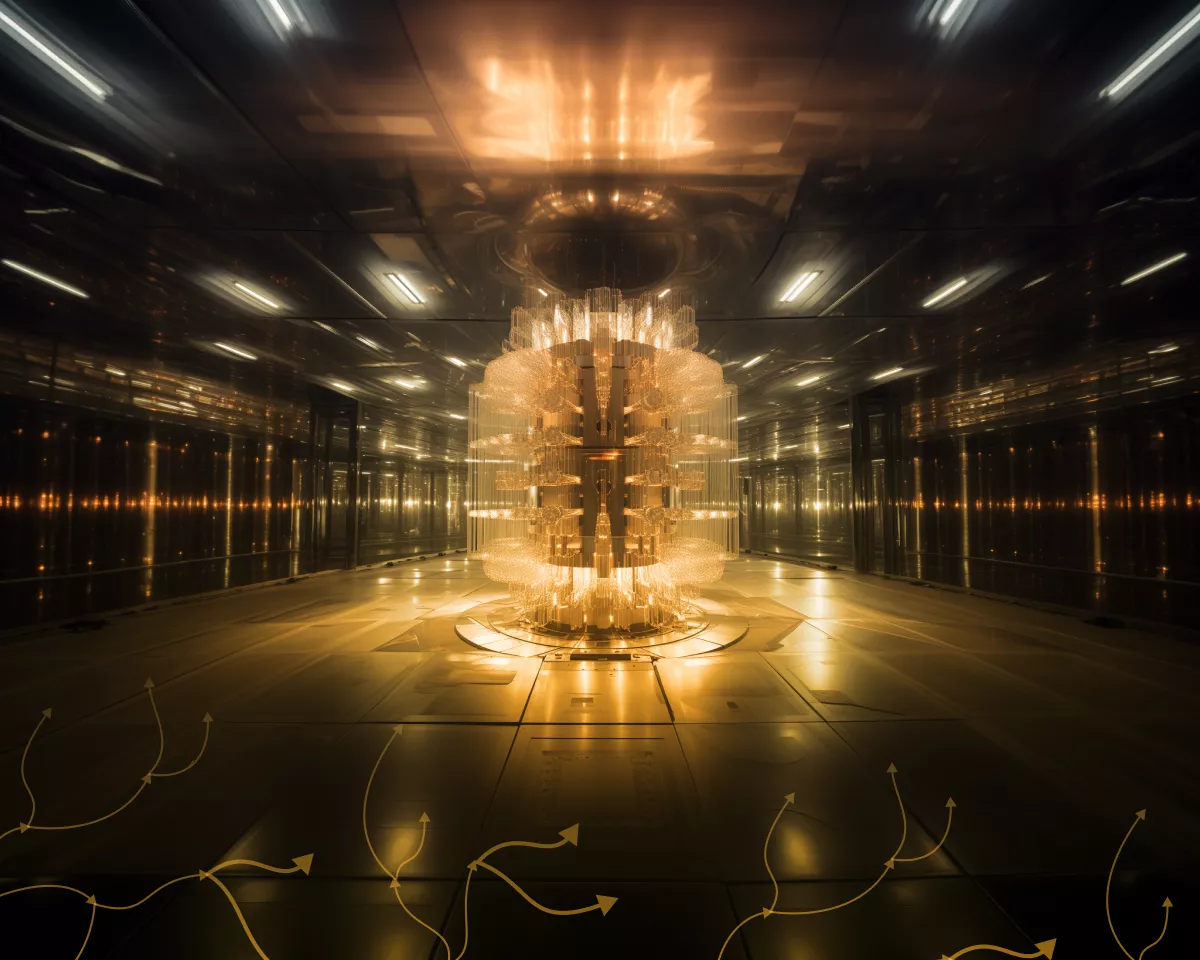
The quantum computing industry is gaining significant momentum: a joint team of researchers and engineers has achieved an increase in logical qubit fidelity to 96% on the latest IBM Heron processor. This is a major step forward in combating the main enemy of quantum systems—errors arising from the instability of quantum states.
A key problem that has long hindered progress in fault-tolerant quantum computing (FTQC) was the so-called "idle noise." In current architectures for error correction, the processor must regularly perform intermediate measurements of qubits. During these pauses, the remaining components lose coherence, generating new errors and negating correction efforts.
To solve this problem, physicists completely redesigned the error correction scheme. The new architecture radically reduces the time of forced computation halts. The method was tested on the 156-qubit superconducting processor IBM Quantum Heron r2. The result is impressive: the survival rate of logical qubits per correction cycle increased from less than 90% to 96%.
The project leader noted that the correction process occurs repeatedly at each stage of computation, and forced idle time of elements is a "serious obstacle" to reliable operation. Optimizing the algorithms made it possible to minimize these idle periods.
Although the result has so far been obtained in laboratory conditions on a single processor, this research direction is critically important. Scalability and fault tolerance remain the main barriers to practical quantum computers. Recall that IBM previously announced plans to achieve the first confirmed cases of quantum advantage by the end of 2026.
Analyst comment: Achieving 96% fidelity is not just a number. It is a demonstration that engineering solutions can circumvent fundamental physical limitations. If this approach scales to thousands of qubits, we may see the first commercially significant quantum algorithms sooner than predicted. For the crypto industry, this is a signal: the resilience of modern cryptosystems to quantum attacks needs to be reassessed now.