Breakthrough in Quantum Computing: Logical Qubit Retention Increased to 96% on the Latest IBM Heron
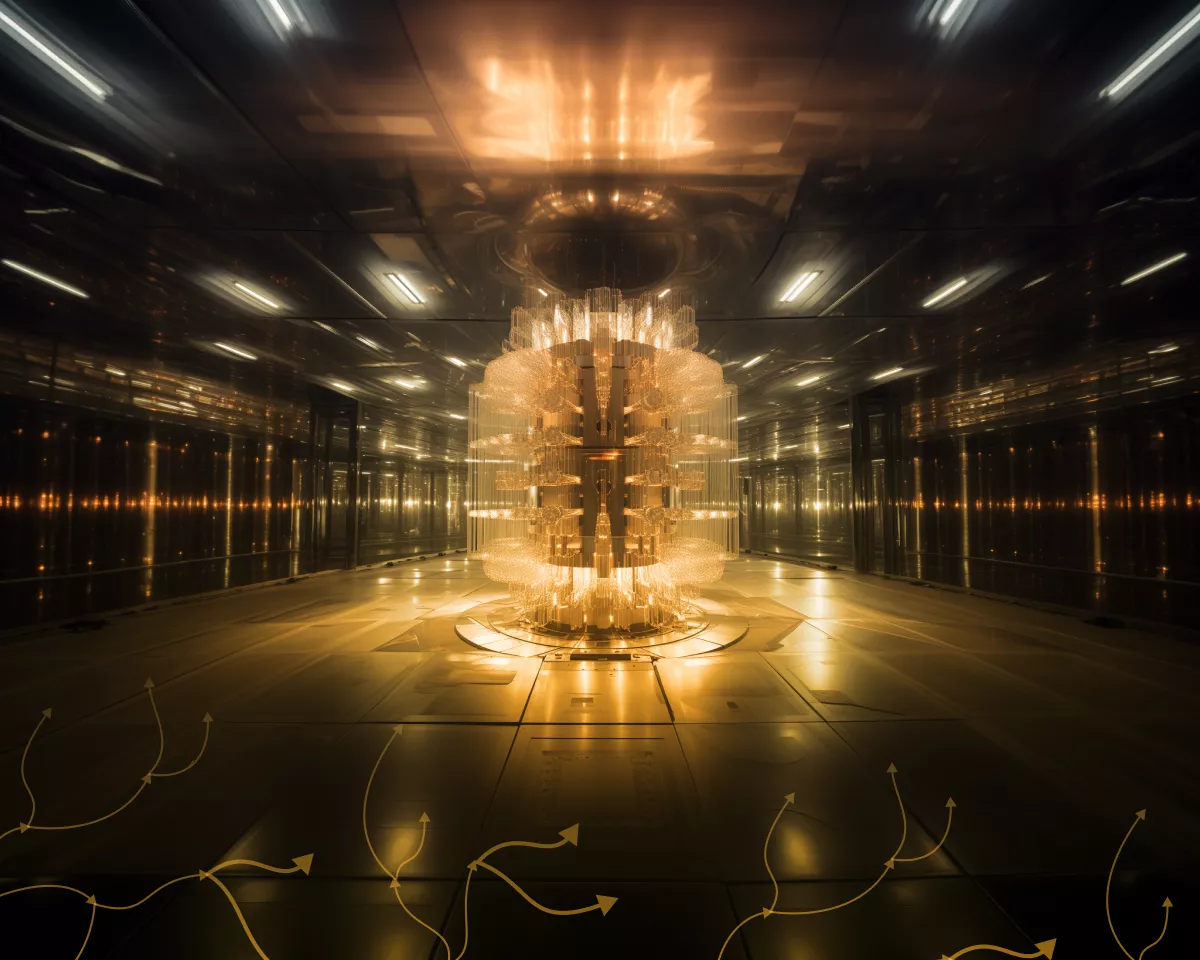
Quantum computing, long the domain of theoretical physics, is taking a decisive step toward practical implementation. A joint research group from the University of Sydney and IBM has presented impressive results in error correction—one of the most challenging problems on the path to creating fault-tolerant quantum systems. The preservation of logical qubits has been increased to 96%.
The main stumbling block so far has been the so-called "idle noise." The essence of the problem is that to correct errors, a quantum computer must periodically pause computations to perform internal measurements. During these moments, the remaining qubits lose their quantum coherence, generating new errors and negating the correction efforts.
To solve this problem, physicists completely redesigned the architecture of error correction circuits. They managed to drastically reduce the time of forced pauses. The key experiment was conducted on the advanced 156-qubit superconducting processor IBM Quantum Heron r2. Optimization of the algorithms allowed raising the survival rate of logical qubits per correction cycle from less than 90% to an impressive 96%.
The project leader from Sydney Nano emphasized that such idle periods occur repeatedly at every stage of computation and are a "serious obstacle" to reliable operation. The achieved result, obtained in laboratory conditions on a single processor within a single grant, is nonetheless critically important for the entire industry. Scalability and fault tolerance remain the main barriers, and this step brings us closer to overcoming them.
Let me remind you that IBM previously announced plans to achieve the first confirmed cases of quantum advantage by the end of 2026. The current progress in error correction makes this timeline increasingly realistic.
My analysis:
Increasing qubit preservation from 90% to 96% is not just numbers. It is an exponential reduction in the number of physical qubits needed to build a single reliable logical one. If previously hundreds of physical qubits were required for efficient operation, now, with each such improvement, the threshold for entering the era of fault-tolerant computing is lowered. Keep an eye on further announcements from IBM—their roadmap is becoming increasingly tangible.