Quantum computing reaches a new level: logical qubit survival rate reaches 96% on IBM Heron
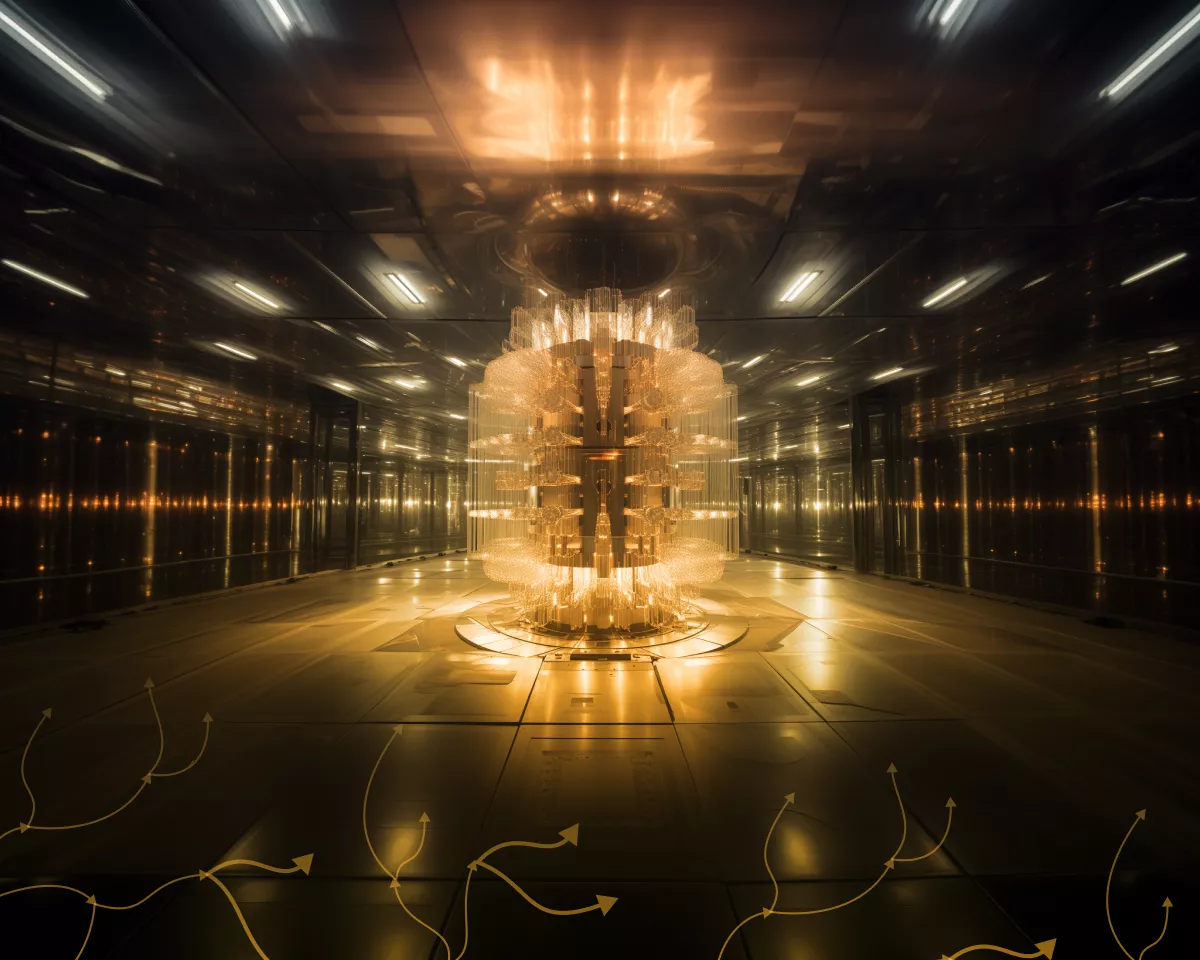
The quantum computing industry has taken a significant step forward. In recent experiments on the advanced 156-qubit superconducting processor IBM Quantum Heron r2, researchers achieved an impressive increase in logical qubit survival rates — up to 96% per error correction cycle. This is a major breakthrough, given that this metric previously barely exceeded 90%.
The main stumbling block on the path to stable and fault-tolerant quantum systems remains the so-called "idle noise." The problem arises when the system performs intermediate measurements of qubits for error correction. During these pauses, the remaining processor components lose stability, generating new errors and negating efforts to correct previous ones.
To solve this fundamental problem, the architecture of the correction circuits was completely redesigned. The key innovation was a radical reduction in computation downtime. Instead of tolerating stability loss during checks, the researchers optimized algorithms to minimize idle periods. Testing on the IBM Heron r2 processor confirmed the effectiveness of the new approach: logical qubit survival rates jumped to 96%.
It is important to understand that such a correction process is repeated multiple times at each stage of computation. Each forced idle period is a potential point of failure. Minimizing this effect is a critically important condition for scaling quantum systems. Although the result was obtained in laboratory conditions on a single processor, it demonstrates the viability of a new direction in error mitigation.
Recall that earlier this year, IBM already announced plans to achieve the first confirmed cases of quantum advantage by the end of 2026. Achieving 96% logical qubit survival is not just a laboratory success, but a concrete step toward fulfilling this ambitious goal.
My Analysis and Conclusions
From a long-term perspective, this result is one of the most encouraging in recent months. If previously the main focus was on increasing the number of physical qubits, now we are seeing a qualitative leap in managing logical qubits. Resilience to "idle noise" is precisely what separates modern experimental machines from truly commercial and fault-tolerant quantum computers. For cryptography and blockchain, this means that the threat from quantum computing is becoming not just theoretical, but increasingly tangible, and the transition to post-quantum algorithms can no longer be delayed.