Quantum computing: logical qubit survival rate reaches 96% on IBM Heron processor
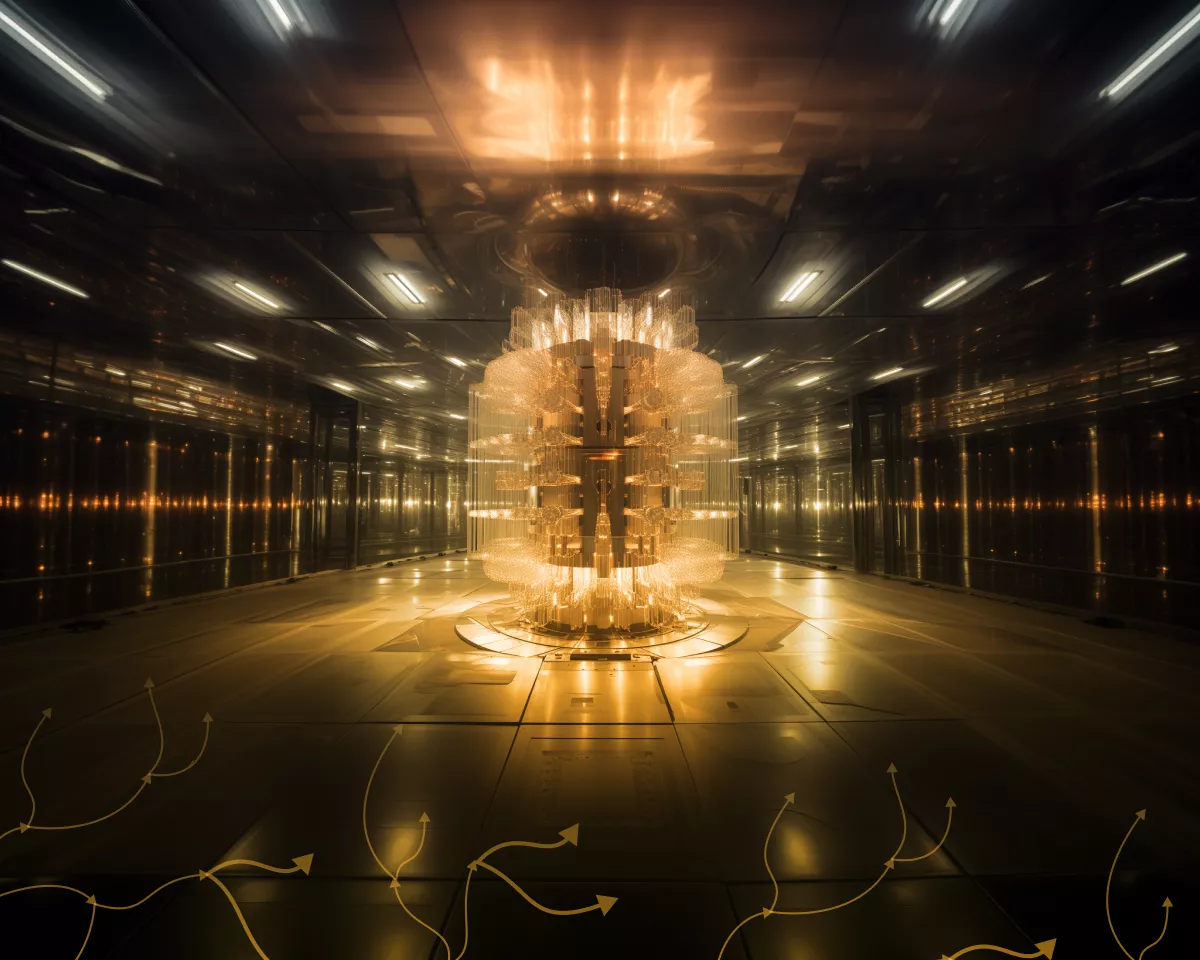
A group of researchers, in collaboration with IBM engineers, has achieved a breakthrough in the field of quantum error correction. Using the advanced 156-qubit superconducting processor IBM Quantum Heron r2, they managed to increase the survival rate of logical qubits to 96% per single error correction cycle. This is a significant step forward compared to previous figures, which fell short of 90%.
The main stumbling block on the path to fault-tolerant quantum computing (FTQC) is the so-called "idle noise." The problem arises during moments when the system forcibly halts the operation of some qubits to perform intermediate measurements and error correction. During these pauses, the remaining components of the processor lose stability, generating new errors, which negates the correction efforts.
To solve this fundamental problem, physicists completely redesigned the architecture of the correction circuits. The new method allowed for a radical reduction in the time of forced computation halts. Optimizing the algorithms on the Heron r2 processor yielded an impressive result: over 96% of logical qubits successfully survive the error correction cycle.
The project leader emphasizes that the correction process is repeated multiple times at each stage of computation, and even a slight idle time of elements becomes a serious obstacle to reliable operation. Although the result has so far been obtained in laboratory conditions on a single processor, this is a critically important achievement for the entire industry.
My Analysis and Forecast
A 6% breakthrough in qubit survival may seem modest, but in the world of quantum computing, it is equivalent to a change of eras. Scalability and fault tolerance remain the main barriers. This success brings us closer to IBM's stated goal — demonstrating the first practical quantum advantage by the end of 2026. If the pace of progress continues, we will witness a transition from laboratory experiments to real commercial applications within the next 2-3 years.