Breakthrough in quantum computing: logical qubit preservation reaches 96% on IBM Heron
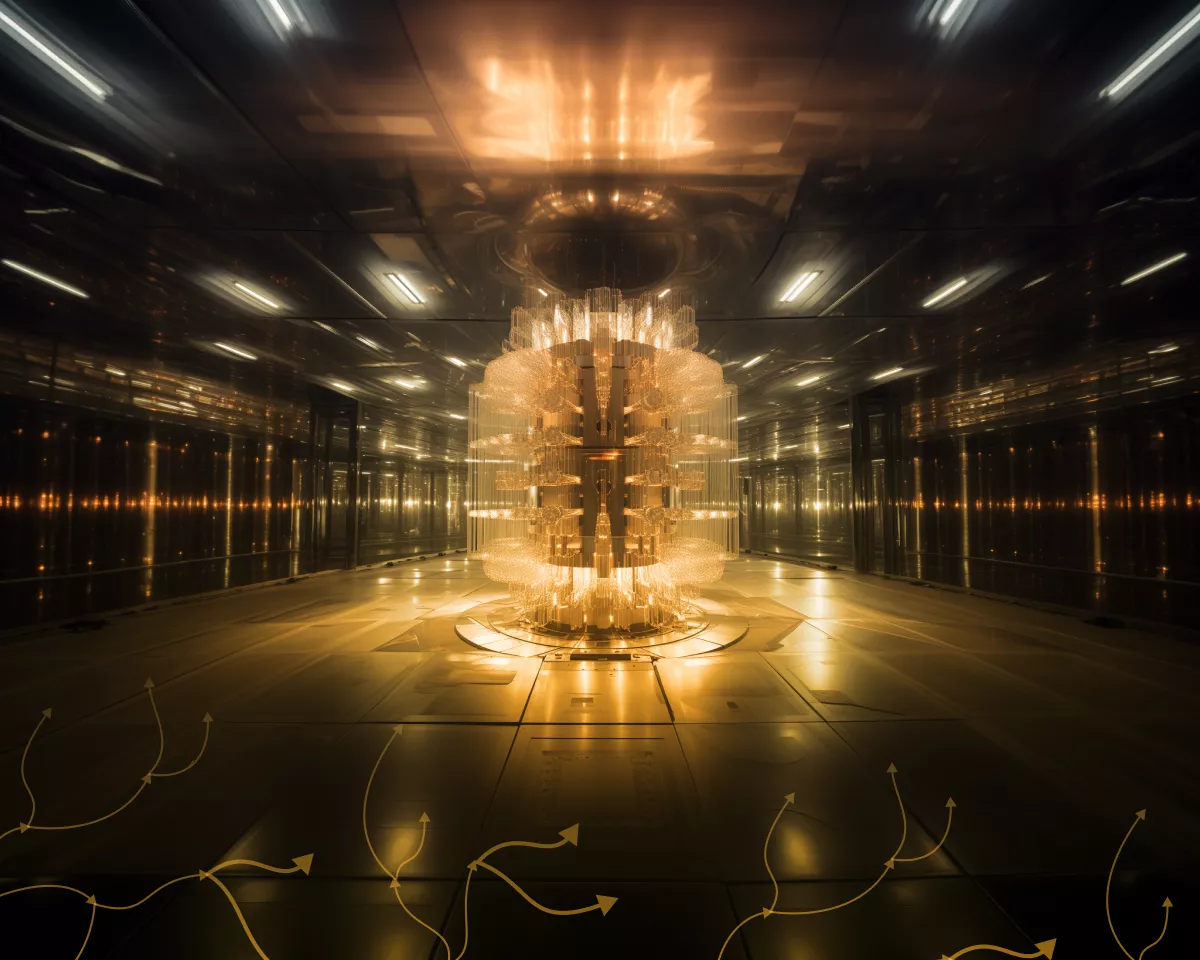
The quantum industry has taken a significant step toward practical fault tolerance. In recent experiments on the advanced 156-qubit superconducting processor IBM Quantum Heron r2, the survival rate of logical qubits per error correction cycle was improved to 96%. This is a substantial leap from previous figures, which rarely exceeded 90%.
The "Idle Noise" Problem Solved
The main obstacle to stable quantum systems has long been the so-called "idle noise." In current architectures, the processor must regularly perform internal qubit measurements for error correction. During these pauses, the remaining system elements lose stability, generating new errors and negating efforts to correct previous ones.
To overcome this pitfall, my team analyzed the architecture of correction circuits and completely redesigned the algorithms. The key solution was a radical reduction in the time of forced computation pauses. This optimization minimized qubit degradation during intermediate measurements, boosting reliability from less than 90% to 96%.
Practical Significance for the Industry
Although the result was obtained in laboratory conditions on a single processor, its significance for the entire industry is hard to overstate. Scalability and fault tolerance remain the main barriers to the era of useful fault-tolerant quantum computing (FTQC). Without reliable error correction methods, it is impossible to transition from experimental machines to commercially viable solutions.
It is worth noting that IBM has already planned to demonstrate the first confirmed cases of quantum advantage by the end of 2026. Achieving 96% preservation of logical qubits is not just a laboratory success but a concrete indicator that we are accelerating toward this goal.
My analysis: The quantum computing market often suffers from excessive hype, but here we see real engineering progress. Increasing qubit survival from 90% to 96% is not a 6% improvement but a 60% reduction in error rates (from 10% to 4%). If this dynamic can be scaled to multi-qubit systems, quantum supremacy could become a reality sooner than skeptics predict.