Quantum Breakthrough: Researchers Achieve 96% Preservation of Logical Qubits on IBM Heron Processor
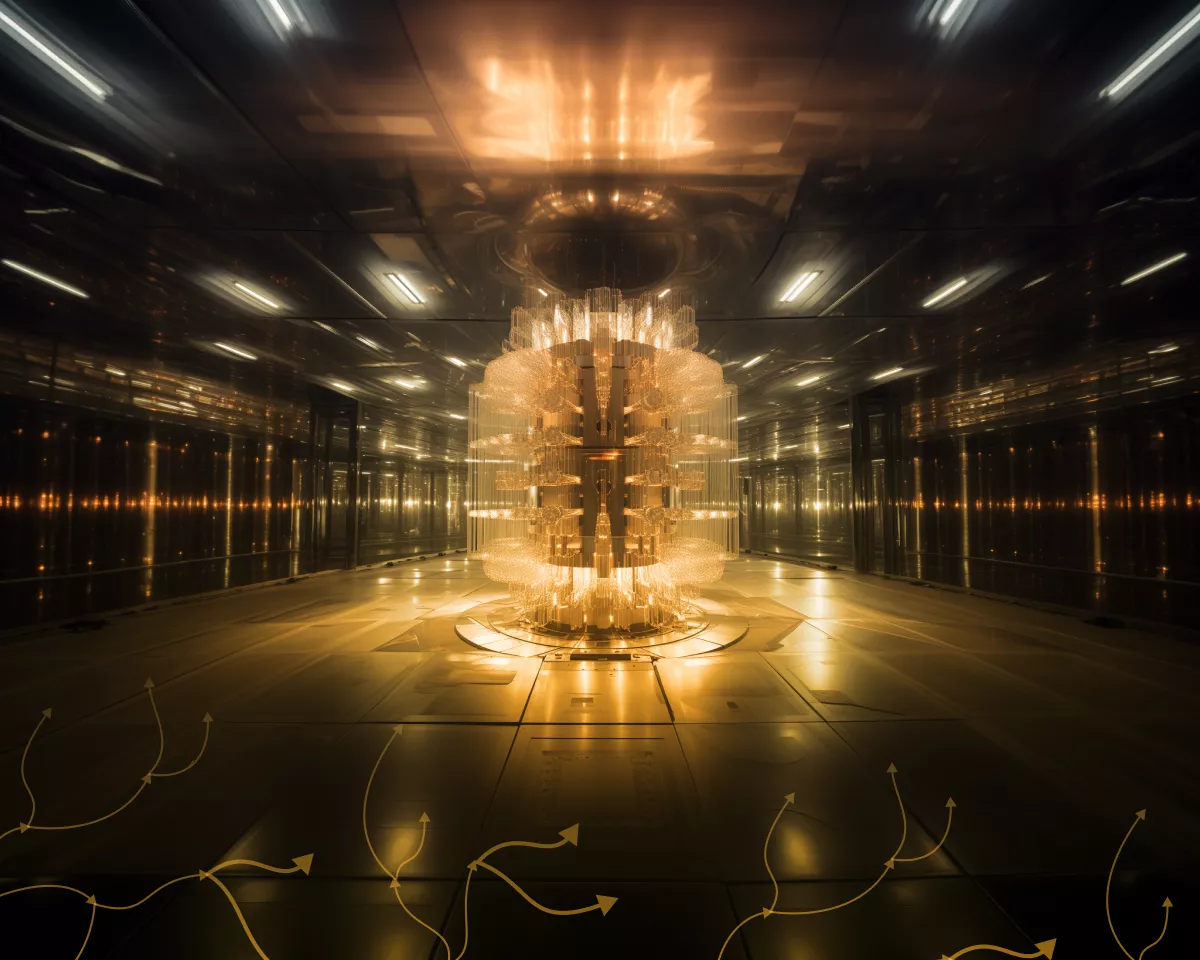
An event has occurred in the world of quantum computing that could significantly bring the era of fault-tolerant machines closer. A group of physicists from the University of Sydney, together with engineers from IBM, has introduced a new error correction mechanism that increased the survival rate of logical qubits to 96% per computation cycle. The testing was conducted on the flagship 156-qubit superconducting processor, the IBM Quantum Heron r2.
The main enemy of the stability of quantum systems is the so-called "idle noise." In modern architectures, to correct errors, the processor is forced to regularly pause to perform internal measurements. During these pauses, the remaining qubits lose coherence, which generates new failures and negates correction efforts. Until recently, this effect was considered one of the main barriers to the practical application of quantum computers.
To overcome this limitation, scientists completely redesigned the architecture of the correction circuits. The key innovation was a radical reduction in idle time: optimization of algorithms made it possible to reduce stability losses during measurement moments. The result is impressive: the survival rate of logical qubits per cycle increased from less than 90% to 96%. This is not just a statistical improvement — it is a qualitative leap that makes it possible to build more complex and longer-lasting quantum algorithms.
The project leader, director of Sydney Nano Stephen Bartlett, emphasized that forced pauses occur repeatedly at every stage of computation, and their negative impact accumulates. Solving this problem was a "serious obstacle" to reliable operation, and it has now been partially removed.
It is important to understand that this result was obtained in laboratory conditions on a single processor and within the framework of a single grant. However, scalability and fault tolerance remain the main barriers for the industry. Each such step brings us closer to the moment when quantum computers will be able to solve problems inaccessible to classical systems.
Recall that earlier IBM announced plans to achieve the first confirmed cases of quantum advantage by the end of 2026. Achieving 96% preservation of logical qubits is a powerful signal that the company is moving toward this goal ahead of schedule.
My expert commentary: The breakthrough in combating "idle noise" is precisely the incremental innovation that transforms quantum computing from experimental science into engineering reality. 96% is not just a number; it is the threshold beyond which trust in the system begins. If this approach can be scaled to larger processors, we will witness the beginning of the practical era of quantum computing within the next two to three years.