Breakthrough in Quantum Computing: Logical Qubit Preservation Reaches 96% on IBM's Newest Processor
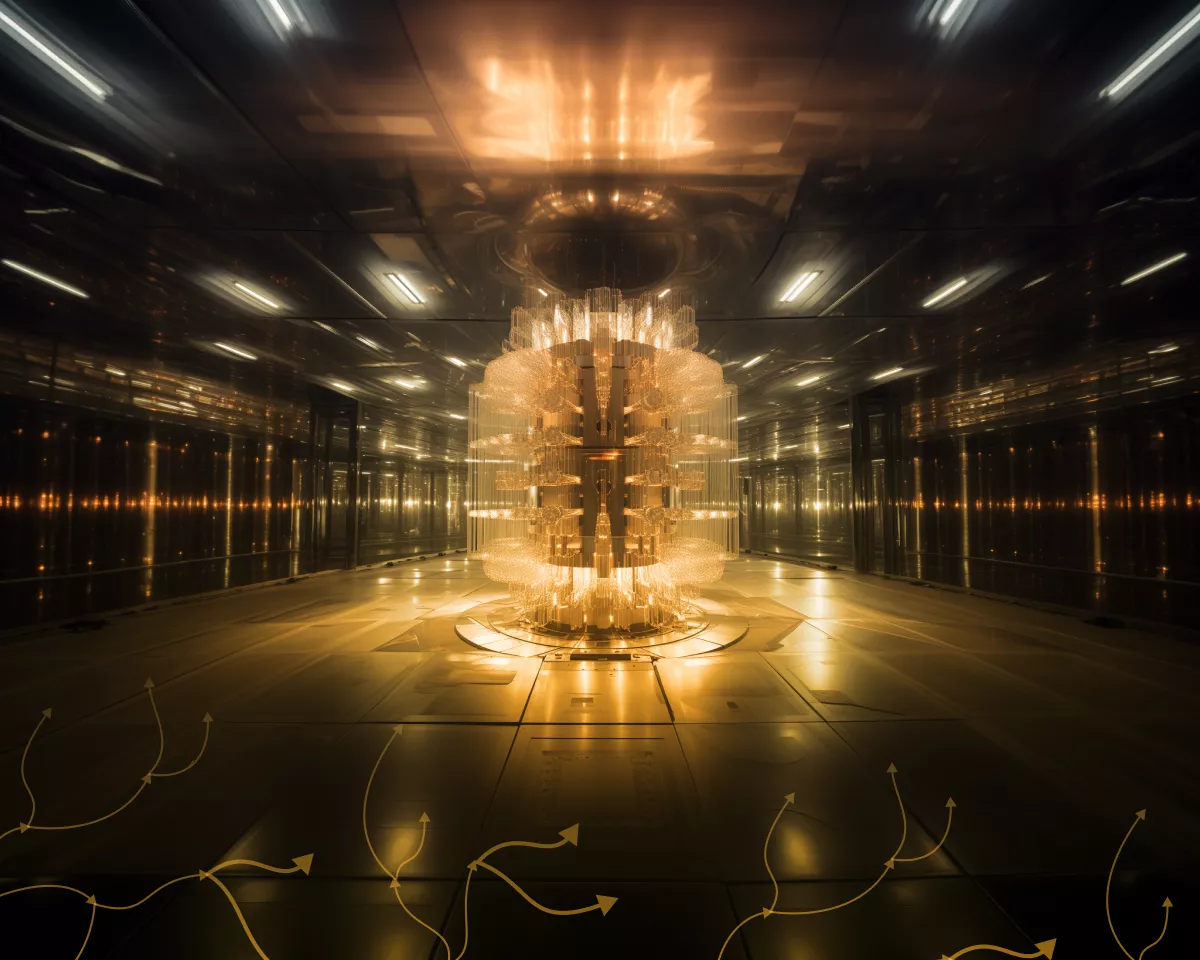
A team of researchers from the University of Sydney, in partnership with IBM, has taken a significant step toward building fault-tolerant quantum computers. They have managed to increase the survival rate of logical qubits to 96% in a single error correction cycle. This achievement was realized on the 156-qubit superconducting processor IBM Quantum Heron r2.
A key obstacle to stable quantum computing is the so-called "idle noise." It occurs when the system pauses its main computations to perform intermediate measurements and error correction. During these moments, the remaining qubits lose coherence, generating new errors. This effect has long hindered progress in the field of FTQC (fault-tolerant quantum computing).
New Error Correction Architecture
To overcome this problem, physicists completely redesigned the architecture of the correction circuits. They radically reduced the time of forced pauses in computations. Thanks to algorithm optimization, they managed to raise the survival rate of logical qubits from less than 90% to an impressive 96%.
The project leader, Professor Stephen Bartlett, emphasized that the correction process is repeated multiple times at each stage of computation. The forced idle time of elements becomes a "serious barrier" to reliable operation. Although the result was obtained in laboratory conditions on a single processor, its significance for the industry cannot be overstated. Scalability and fault tolerance remain the main challenges for the entire sector.
For context, IBM previously announced plans to achieve the first confirmed cases of quantum advantage by the end of 2026. This work is an important step on that path.
My analysis: The breakthrough to 96% is not just a number. It is a demonstration that "idle noise" can be controlled at the hardware level. If this technique can be scaled to thousands of qubits, we will see a transition from experimental machines to the first commercially useful quantum systems within the next 3-5 years. Investors should closely monitor the development of error correction technologies—this is a key driver of growth for the entire industry.