Quantum Breakthrough: Scientists Achieve 96% Preservation of Logical Qubits on the IBM Heron Processor
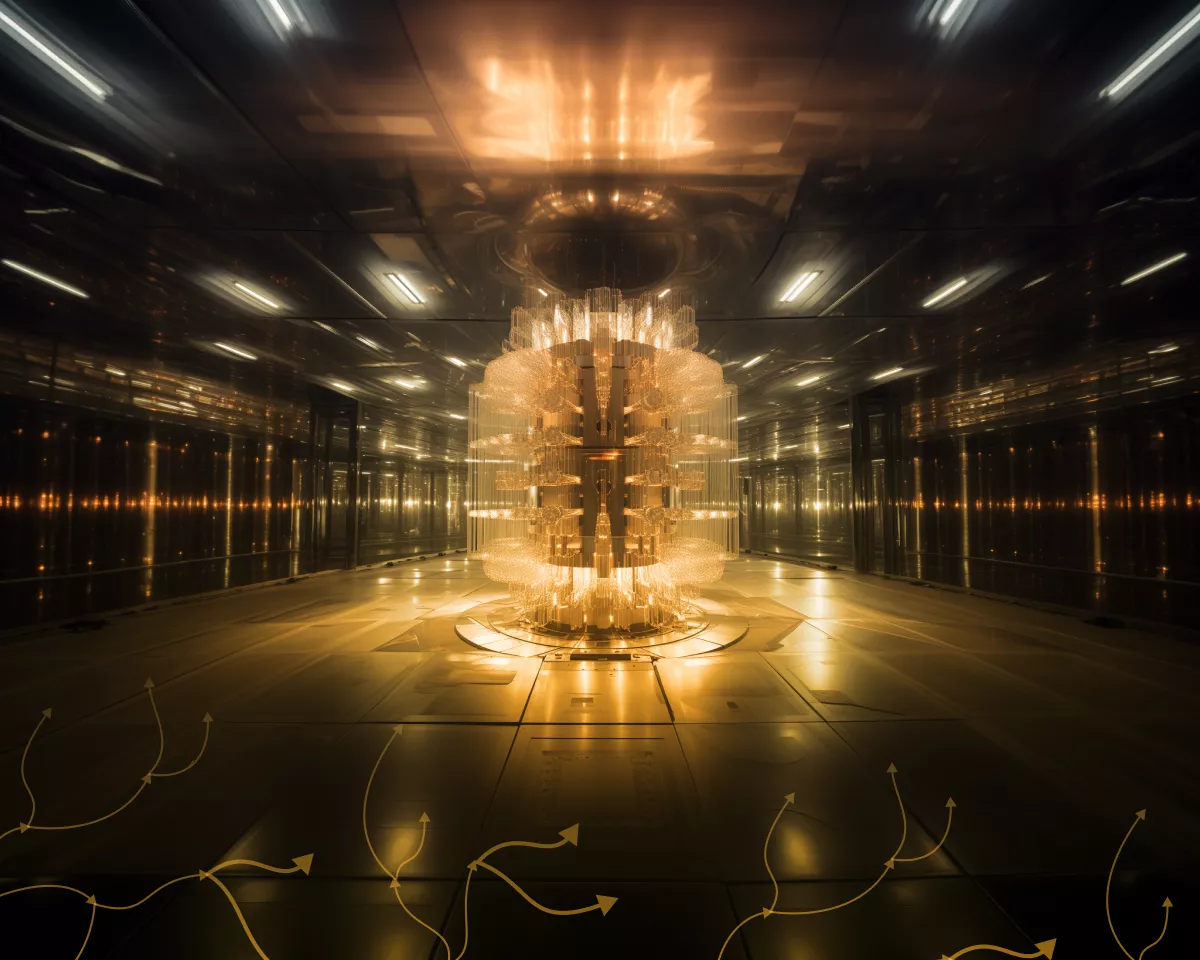
The quantum computing industry is taking another step toward practical fault tolerance. This time, researchers have managed to increase the survival rate of logical qubits to 96% — a significant improvement over previous figures, which rarely exceeded 90%.
The key challenge developers faced is the so-called "idle noise." In modern quantum systems, error correction requires regular intermediate measurements, but during these pauses, other processor components lose stability, generating new errors. This paradox has long remained one of the main barriers to scalable FTQC (fault-tolerant quantum computing) systems.
New Error Correction Architecture
To solve this problem, a team of physicists completely redesigned the architecture of error correction schemes. The main focus was on radically reducing computation downtime. The new method was tested on the advanced 156-qubit superconducting processor IBM Quantum Heron r2. Thanks to algorithm optimization, the survival rate of logical qubits per error correction cycle was raised from less than 90% to 96%.
The project leader notes that this process occurs repeatedly at each stage of computation, and the forced idle time of other elements becomes a "serious obstacle" to reliable operation. Although the result was obtained in laboratory conditions on a single processor, this research direction is critically important for the entire industry.
Scalability and Fault Tolerance — Key Challenges
Despite impressive progress, full quantum supremacy is still far off. Scalability and fault tolerance remain the main barriers to quantum computing. IBM, for its part, has already planned to achieve the first confirmed cases of quantum advantage by the end of 2026.
My analysis: Achieving 96% survival of logical qubits is not just a laboratory curiosity but a crucial indicator that the industry is moving in the right direction. If such improvement rates continue, we could see the first commercially significant quantum computations within the next 3-5 years. However, it is worth remembering that the path from 96% to practically useful 99.99% will require no less, if not greater, effort.