Breakthrough in quantum computing: logical qubits achieve 96% survival rate on IBM Heron processor
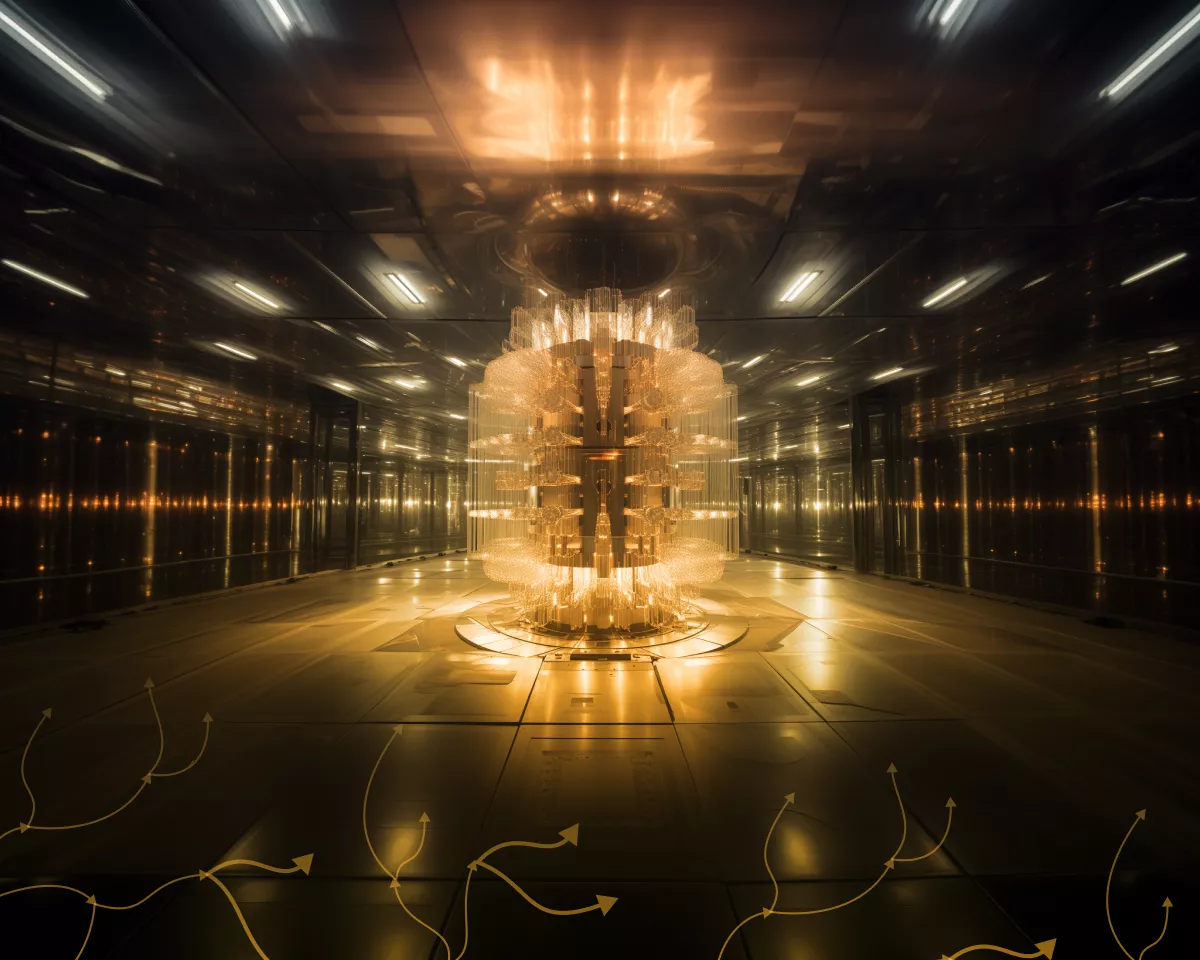
A group of researchers from the University of Sydney, together with engineers from IBM, has made a significant step forward in the field of fault-tolerant quantum computing. They managed to increase the preservation of logical qubits to 96% on the advanced 156-qubit superconducting processor IBM Quantum Heron r2. This result was achieved through the introduction of a fundamentally new error correction mechanism that addresses one of the most acute problems in modern quantum physics.
The main enemy of stable quantum machine operation remains the so-called "idle noise." It occurs at moments when the system is forced to pause computations to perform intermediate qubit measurements—a critically important procedure for detecting and correcting errors. The problem is that during these pauses, the remaining processor components lose coherence, generating new failures that negate correction efforts.
To break this vicious cycle, physicists completely redesigned the architecture of error correction circuits. The key innovation was a radical reduction in the time during which computations remain in a "frozen" state. Optimization of algorithms allowed raising the survival rate of logical qubits per error correction cycle from less than 90% to an impressive 96%. As project leader Stephen Bartlett notes, this process repeats multiple times at each stage of operation, and forced idle time is a serious obstacle to creating reliable systems.
From Laboratory to Industrial Scale
Although this result was obtained in controlled laboratory conditions on a single processor, its significance for the industry is hard to overestimate. Scalability and fault tolerance remain the main barriers to the practical application of quantum computers. Previously, IBM had already advanced in quantum error correction and planned to achieve the first confirmed cases of quantum advantage by the end of 2026. Achieving 96% preservation is not just a number; it is a demonstration that the path to stable quantum computing is real, although it requires further fundamental research.
Expert opinion: The industry has long been seeking ways to combat decoherence, and solving the "idle noise" problem is one of the most elegant ways to improve accuracy without increasing raw computational power. If this technique can be scaled to processors with thousands of qubits, we may see an acceleration in the timeline for commercially useful quantum machines sooner than many analysts predict.